- August 14, 2026

Daytona Beach unveils long-term vision for affordable housing redevelopment in historic Midtown
The Daytona Beach Housing Authority unveiled an ambitious long-term vision to transform historic Midtown through a redevelopment plan that combines new affordable housing, parks, flood mitigation and mixed-income neighborhoods while ensuring current residents can remain in the community.
During a June 17 presentation to the Daytona Beach City Commission, Housing Daytona Beach CEO Charles Woodyard and Housing Trust Group Senior Vice President of Development Bryan Finnie outlined a master plan that would replace aging public housing with modern developments while creating new recreational amenities and infrastructure improvements throughout the area.
Woodyard explained that public housing authorities across the country have been forced to become more entrepreneurial as federal funding has declined over the past two decades.
"Affordable housing is at the center of an economy," Woodyard said, explaining that transportation systems, employers and economic development all depend on workers having stable, affordable places to live. He said Housing Daytona Beach's mission is to maximize its assets while increasing housing opportunities and helping families become more self-sufficient.
Vision for historic Midtown
The presentation centered on the "Transform Midtown" master plan, which officials said was developed through extensive public outreach involving nearly 1,000 residents.
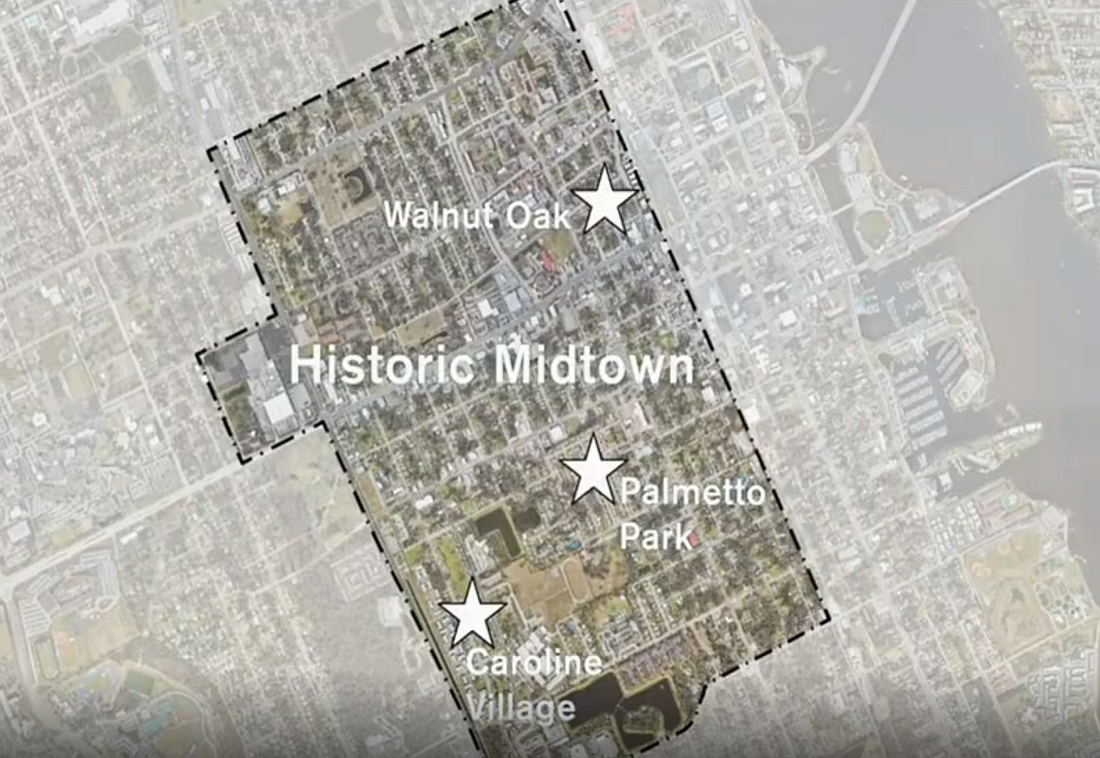
The redevelopment focuses on Caroline Village, Palmetto Park and Walnut Oak, replacing outdated public housing while creating mixed-income neighborhoods designed to integrate affordable, workforce and market-rate housing.
A centerpiece of the vision is the transformation of flood-prone Caroline Village into a community featuring a resilient linear park with athletic fields, walking trails, gathering spaces and stormwater improvements. Plans also include expanded sidewalks and shared-use paths, improved transit connections, a neighborhood network center with classrooms and community services, and new public spaces designed to reconnect the surrounding neighborhoods.
At neighboring Palmetto Park, officials plan to replace all 250 existing public housing units while adding 255 workforce and market-rate homes to create a mixed-income community with new streets, parks and gathering spaces.
Woodyard emphasized that replacing public housing units is not optional.
"When we tear it down and do new communities, we've got to replace it one for one," he said. "That's what our plan is."
First phase already planned
While officials described the overall redevelopment as a 10- to 20-year effort that could eventually exceed $1 billion in investment, the first phase is already moving forward.
Finnie presented plans for The Palms at Loomis, a proposed $51.7 million affordable housing community on approximately 9.2 acres adjacent to Turie T. Small Elementary School.
The project would include 130 affordable apartments with a mix of two-, three- and four-bedroom units. Residents from Caroline Village and Walnut Oak would relocate into the new development before their existing housing is redeveloped, allowing the project to proceed without displacing families.
Finnie said affordable housing serves more than traditional public housing residents.
"Affordable means some public housing, especially for the seniors. But it also means working people," he said. "There are working people who reside in affordable housing."
The project would be financed through approximately $28 million in loans, $21 million in tax-credit equity and deferred developer fees. Finnie said the development would not require direct city funding, although assistance with permitting and coordination would help keep the project on schedule.
If approvals proceed as planned, officials hope to break ground in about 14 months and welcome the first residents by December 2028.
Flooding remains a key concern
Although commissioners generally praised the proposal, concerns were raised about constructing new housing in one of Daytona Beach's most flood-prone areas.
Commissioner Monica Paris said she supports the mixed-income concept but wanted assurances that stormwater issues would be addressed before significant investment moves forward.
Woodyard said redevelopment would include stormwater improvements designed to mitigate flooding on the site without worsening flooding in surrounding neighborhoods. He added that the project cannot move forward unless it satisfies federal housing requirements.
"HUD will not allow a housing authority to erect a development that is detrimental to the surrounding area," Woodyard said. "We can't get it approved if we don't address that issue."
Woodyard acknowledged the redevelopment would not eliminate flooding throughout Midtown but said it is designed to reduce impacts on the redevelopment site while avoiding additional flooding elsewhere.
Commissioners voice support
Mayor Derrick Henry praised the proposal's emphasis on protecting existing residents while beginning what he described as a long-term transformation of Midtown.
"I like the way you framed it," Henry told Finnie. "You have to begin the journey."
Henry also applauded the commitment to preventing displacement, saying it was important that residents who currently live in the neighborhood have the opportunity to remain there as redevelopment occurs.
Commissioner Paula Reed also expressed support for the proposal.
"It's long awaited and long deserved," Reed said. "Those families deserve that."
Woodyard concluded by emphasizing that the redevelopment is intended to improve opportunities for existing residents rather than replace them.
"This is not a land grab for rich developers to come in and take over this part of our city," Woodyard said. "This is an opportunity for families who live in isolated communities... We want our families to live in 21st-century housing, and they're going to pay the same amount of rent that they pay right now."