- July 3, 2026

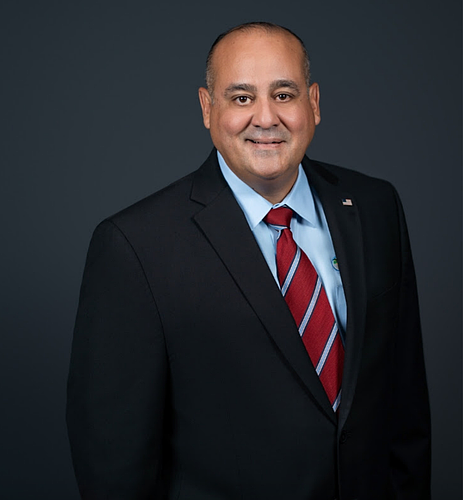
Palm Coast City Councilman Charles Gambaro recently joined Observer Now to discuss some of the biggest issues facing the city, including data centers, westward expansion, infrastructure funding, property tax reform and his campaign for Florida's 6th Congressional District seat.
A retired Army brigadier general and former Flagler County School Board member, Gambaro was appointed to the Palm Coast City Council in 2024. In May, he announced his candidacy for Congress, challenging incumbent U.S. Rep. Randy Fine in the Republican primary.
The conversation touched on growth management, economic development, transportation infrastructure and Gambaro's vision for both Palm Coast and Florida's 6th Congressional District.
The following transcript has been edited for length and clarity.
Data centers and growth
Data centers have become a major topic of discussion at both the county and city level. Andy Dance proposed a moratorium at the county level, and Vice Mayor Theresa Pontieri later suggested Palm Coast support a one-year pause. What's your take on what council ultimately decided?
It's a really important topic, not only for our community but for our state. As we look at the ramifications data centers can have on a community and on the environment, we need to take a hard look at them.
The reality is there are all sorts of different types of data centers. Some use tremendous amounts of water and power. Others use refrigerant cooling systems. Some use solar power. There are different technologies available today that don't necessarily place the same burden on local infrastructure.
I've always believed the use of the word "moratorium" can discourage economic development opportunities. I'm very proud of the work this council is doing to drive economic development, but in order to attract the right businesses we need the infrastructure, the land and the facilities necessary to support them.
That's why I supported Councilman Ty Miller's approach. Let's define what types of facilities are a good fit for Palm Coast. Let's lay out the facts and move forward with an ordinance through the normal legislative process.
Personally, I think attacking the issue is better than putting everything on hold. There may be types of data centers that are not compatible with Palm Coast, but there may also be technologies that create jobs and economic opportunities while remaining compatible with our community.
Talk about the infrastructure concerns. Right now residents are under Phase III water restrictions due to drought conditions. Does that strengthen the argument for slowing down or pausing projects like data centers?
I think it means we need to evaluate the issue carefully, but it doesn't mean we stop planning for the future.
We've made some difficult decisions as a city regarding our water and wastewater systems. We've invested heavily in our water and wastewater treatment facilities, and we're exploring additional well sites as part of our capital improvement planning.
We have a plan to address future water needs. We also have to recognize that not every data center has the same impact. For example, the cable landing station project involving DC Blox and Google uses refrigerant cooling rather than large quantities of water.
Certainly, current water levels are something we have to take into consideration. We need to be good stewards of our resources. But planning for future growth and economic opportunities doesn't stop simply because we're experiencing a drought.
How do you balance economic development with preserving Palm Coast's quality of life?
That's exactly why we have a comprehensive plan and why we're updating the land development code.
Last year we approved the comprehensive plan. Now we're moving into the next phase, which is implementing those policies through the land development code update.
There are safeguards built into that process. We want to preserve the natural beauty that makes Palm Coast attractive in the first place. That's why people move here. That's why people want to raise their families here.
At the same time, we have opportunities for economic development. We have companies interested in locating here. We have property owners interested in creating employment centers.
But economic development requires two things: land and buildings. It also requires confidence. Businesses want to invest in communities where leadership is stable and focused on results.
One of the biggest obstacles to economic development is uncertainty. We've had some speed bumps over the last year, but I believe this council is committed to working together and focusing on results for residents.
Loop Road and westward expansion
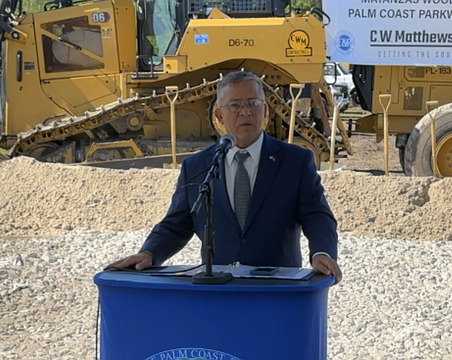
You were very supportive of the Loop Road project during the groundbreaking ceremony. Why do you see it as such an important project?
The Loop Road is much more than just a road.
We're fortunate the state provided approximately $126 million for this project. It's going to connect with State Road 2209 and create a significant transportation corridor extending south from the Jacksonville area.
This project creates tremendous opportunities for Palm Coast. It's going to support economic development. It's going to improve connectivity. It's also going to become a centerpiece of future westward expansion discussions.
I think Palm Coast has an opportunity right now to shape its future.
When ITT developed Palm Coast decades ago, they created the original vision for the community. Now it's our turn. We have an opportunity to help determine what Palm Coast 2.0 looks like.
Residents consistently tell us they want smart growth. To me, smart growth means infrastructure comes first. It means making sure roads, utilities and public services are in place before development occurs.
For too long we've been playing catch-up. The Loop Road helps us get ahead.
The Loop Road represents a tremendous opportunity. Anytime you're able to build infrastructure that improves connectivity and creates economic development opportunities, it's a positive thing.
This road will help connect future development with major transportation corridors and make Palm Coast more competitive economically.
Is Rayonier contributing enough toward infrastructure costs?
I think the negotiations have evolved significantly.
I want to recognize Community Development Director John Zobler and his team because they've done an outstanding job negotiating on behalf of the city.
From where these discussions began to where they are now, there's been a lot of movement.
At the same time, we have to recognize that property owners have rights too. Rayonier owns a substantial amount of land. Their interests matter just as the city's interests matter.
Ultimately, if our professional staff comes forward and recommends an agreement, that's a strong indication they've reached a point where both sides benefit.
The goal has to be a win for Palm Coast residents and a win for the property owner.
One concern residents continue to raise is water. Can Palm Coast support westward expansion?
The first thing people need to understand is that development doesn't move forward unless capacity exists and permits are approved.
The St. Johns River Water Management District isn't going to approve projects that don't have the necessary resources.
What's often overlooked is that many of Palm Coast's future well sites are located within the westward expansion area itself.
As we continue implementing our capital improvement plan, those resources become part of the city's long-term strategy.
On the wastewater side, we're already investing in expansion projects.
I remember being appointed to the council shortly before Hurricane Milton. Wastewater Treatment Plant 1 was designed for about 6.8 million gallons per day, but during the storm nearly 20 million gallons moved through the system because of infiltration issues.
That's one reason newer developments are being designed differently.
We're expanding treatment capacity. Wastewater Treatment Plant 1 is being upgraded to approximately 10.4 million gallons per day. Wastewater Treatment Plant 2 also provides additional capacity.
Nobody has told us we're out of water. We have a plan. We have identified future resources. We have projects underway.
That's why I disagree with the idea that westward expansion can't happen because of water concerns.
Road funding challenges
Road maintenance has become a major issue. Councilman Ty Miller said the city is "losing the battle." Do you agree?
I do.
The city has made investments in road maintenance, including micro-surfacing programs and reconstruction projects.
If you drive on roads like Belle Terre Parkway and Whiteview Parkway, you'll see examples of improvements we've already made.
But we still have a significant funding gap.
The reality is that micro-surfacing is only effective when roads are above a certain condition level. Once roads deteriorate beyond that point, they require more expensive repairs or reconstruction.
That's where we find ourselves.
We're going to have to make difficult decisions during the budget process.
Do we use reserves? Do we identify new funding sources? Do we tackle the problem in phases?
What I know is that we can no longer ignore it.
Just as we had to address wastewater infrastructure, we have to address road infrastructure.
Some residents have suggested bringing back a half-cent sales tax. Is that an option?
Historically, some infrastructure projects were funded through a half-cent sales tax.
Whether residents support that approach today remains to be seen.
We've already asked residents to absorb some difficult decisions over the past year, so any discussion about additional revenue sources has to be handled carefully.
But infrastructure costs don't disappear. Eventually we have to determine how we're going to pay for them.
Property tax reform
Florida lawmakers recently approved a proposal that could eventually reduce property taxes. What's your view?
I think there are some good ideas within the proposal.
For homesteaded properties, I understand the argument. Homeowners have faced rising costs across the board.
We already provide exemptions to certain groups, such as 100% disabled veterans, because they've earned that benefit through their service and sacrifice.
Where I become more cautious is when we start talking about commercial properties, vacation rentals and second homes.
Local governments still need revenue to provide services.
Public safety remains our top priority. Infrastructure still needs to be maintained. Schools still require funding.
So the details matter.
How it gets implemented matters.
The balance between tax relief and maintaining local services matters.
Do you understand why the proposal has broad support among voters?
Absolutely.
People are feeling financial pressure. Costs have gone up.
Many residents would welcome some tax relief.
I think that's why you're seeing strong public support.
The challenge is ensuring local governments can continue providing services while also giving residents some relief.
That's where policymakers need to be careful.
Congressional campaign
You've announced your campaign for Florida's 6th Congressional District. What motivated that decision?
First and foremost, I believe the person representing a district in Washington should live in the district.
This is my home. My family lives here. We're invested in the future of this community and the future of this district.
I also believe leadership matters. Members of Congress are supposed to serve constituents, solve problems and be present in the communities they represent. That's one of the reasons I decided to run.
You've been very critical of Congressman Randy Fine. Why?
I think representation matters, and I think accessibility matters.
Our current congressman lives about 150 miles away. When he leaves Washington, he doesn't come home to this district. He goes home to Melbourne Beach. I believe the people of the 6th Congressional District deserve someone who lives here, understands the issues here and experiences the same challenges they do.
I also think members of Congress should be accessible. Residents shouldn't feel disconnected from their representative. If someone needs help with a veterans issue, a federal agency or another constituent service matter, they should have confidence that their representative is engaged and available.
One of the things that motivated me was Memorial Day. For veterans, Memorial Day is a sacred day. It's a day to honor those who never came home. I felt there were missed opportunities to show the level of respect and engagement that our veterans deserve.
Ultimately, this campaign isn't about Randy Fine. It's about providing voters with a choice. I believe leadership is about service, and I believe the district deserves a representative who is present, engaged and focused on local issues.
You've said local representation is important. Why?
Because the people of this district deserve someone who understands the community firsthand.
When voters go to the polls, they should know the person they're electing is part of the community they're representing. They should know that person shops in the same stores, drives the same roads and experiences the same challenges as everyone else.
I think that's important. I think it matters.
What would be your top priorities if elected?
Infrastructure would be at the top of the list.
Infrastructure drives economic development. Economic development creates jobs. Jobs improve quality of life.
When I look across the district, I see communities facing many of the same challenges. Roads need improvement. Utilities need investment. Hospitals need support. Affordable housing remains a concern.
One of the first things I would focus on is identifying opportunities to bring federal resources back to the district for infrastructure projects.
Growing up in Florida, I watched projects like State Road 417 transform Central Florida. Those types of investments create long-term opportunities for communities.
If we improve infrastructure, we can attract businesses. If we attract businesses, we create jobs. If we create jobs, we strengthen families and improve quality of life.
How has your military career shaped your approach to public service?
The military teaches servant leadership.
Leadership isn't about titles. It isn't about being the loudest person in the room. It's about serving the people around you and accomplishing the mission.
I've carried that philosophy throughout my career. Whether serving in the Army, on the School Board or on the City Council, I've always approached public service from the perspective of serving others.
I've also spent seven years working in Washington, including time at the National Security Council, the Pentagon and within the intelligence community. I understand how the federal government operates and how to get things done.
At the end of the day, my family and I live here. We care deeply about this community. We care about the future of Palm Coast, Flagler County and the entire 6th Congressional District.
That's ultimately why I'm running for Congress.