- July 2, 2026

I read Lacy Martin’s recent "My View" column, Before we vote on property tax cut, we deserve answers, with great interest. I have great respect for Lacy and admire her courage to speak out on her beliefs. While I agree that local voters deserve clear answers before heading to the ballot box this November, I believe the current public debate is missing the most critical question of all. Before we buy into the narrative that our cities and counties will collapse or suffer significant financial hardship if Amendment 3 passes, we need to ask: Why is a system that worked seamlessly for decades suddenly labeled a financial emergency today?
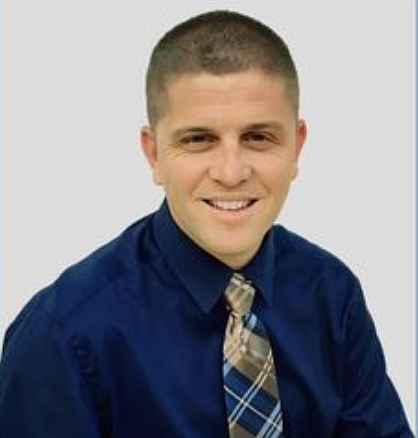
My perspective comes from deep local roots. I am a born-and-raised Florida native, a 20-year resident of Palm Coast, and this is where my wife and I are currently raising our two boys. I served our nation for over 20 years in the Air Force and Air Force Reserves, retiring as a Chief Master Sergeant where I oversaw large-scale budget operations. I also spent a decade working directly within Volusia County government in law enforcement. I have seen firsthand how public budgets operate, how easily they can spiral out of control, and where institutional waste hides.
Furthermore, as a second-generation real estate appraiser, I have walked through thousands of homes right here in Flagler County. I talk to our neighbors at their kitchen tables during some of the most stressful financial moments of their lives — families refinancing just to keep up with their bills, cover soaring insurance premium increases, handle emergency roof repairs, or make agonizing decisions on how to fund care for aging parents. In all my years working locally, I have never seen our residents under such extreme financial strain. Affordability has been stretched past its absolute limit.
What I am seeing right now is a local tax system that has become entirely disconnected from this daily reality.
To understand why we need this change, it helps to address the glaring elephant in the room that none of the existing articles or posts seem to answer: We did it before, so why can’t we do it again?
Look at the historical relationship between home values and tax protections in our state. When Florida updated the homestead exemption to $25,000 in 1980, the state's median home price was around $89,300. That meant 28% of a standard home's value was completely shielded from local taxes. When it was updated to $50,000 in 2008, the median price was roughly $185,000 —protecting a healthy 27% of a family's primary asset. This history shows that a meaningful tax shield was always intended to be a baseline feature of Florida homeownership.
Fast forward to 2026. The median home price in Florida has skyrocketed to over $410,000, yet that baseline homestead exemption remains frozen at $50,000. Today, our tax shield has eroded to an abysmal 12% of an average home's value.
Because the exemption sat completely stagnant while property values and tax bills doubled over the last five years, local governments have experienced an unprecedented financial windfall. Statewide property tax revenues have drastically outpaced standard consumer inflation — and economic reports show this growth has easily outrun municipal inflation and the rising industrial costs local governments face.
To make matters worse, we are trapped in a system penalizing homeowners even when the market cools. On my own property record card this year, Flagler County noted that my home’s market value actually decreased. Yet, due to the state’s counterintuitive "recapture rule," my taxable value was hiked anyway. How can we tell working-class families and retirees on fixed incomes that they must pay higher taxes for an asset that is worth less on paper?
Opponents argue that expanding the exemption to $250,000 will "starve" municipal budgets. But the math tells a different story. Forcing a tax correction doesn’t destroy a city; it simply rolls local government revenues back to the highly sustainable levels they operated on just a few years ago. Furthermore, Amendment 3 explicitly protects funding for public schools and mandates that remaining revenues must prioritize core needs like police, fire and infrastructure.
If our state and local governments successfully operated for 40-plus years when the homestead exemption protected over a quarter of a home's value, why is it suddenly a financial catastrophe to bring things back to the way they were?
In part, the long-term solution lies in proactive economic diversification. There are many ways in which our experienced local leaders can adapt, but for too long, Flagler County has relied almost entirely on a residential tax base. Now more than ever, the county must work diligently and partner with our municipal leaders in the City of Palm Coast, Bunnell, and Flagler Beach to develop impactful commercial and industrial options. Expanding our economic development will bring the alternative revenue sources necessary to sustain our unavoidable future growth without placing the entire burden on the backs of local homeowners.
People move to Florida to build a good quality of life. Property taxes should not be the reason our neighbors are priced out of their own backyards. As Florida voters, Amendment 3 is our opportunity to demand structural balance, rein in runaway spending, and protect the financial sanctuary of true homeownership. I'll be voting "Yes" in November, and I encourage my neighbors to look at the real math and do the same.
Chad Raymond is a state certified residential real estate appraiser living and working in Palm Coast.