- August 4, 2026

A marathon City Council meeting that stretched nearly six hours and ended just before midnight culminated in the first approvals for Palm Coast's controversial westward expansion, despite overwhelming opposition from a packed council chamber where dozens of residents urged officials to reject the proposal or delay action.
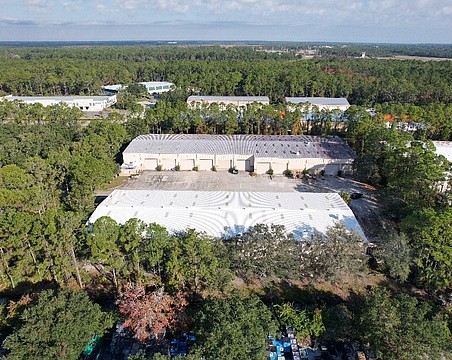
By the end of Tuesday night's meeting, the Palm Coast City Council had approved the first reading of three annexation ordinances tied to the proposed westward expansion. However, after hours of debate, the council unanimously voted to table the proposed Future Land Use Map (FLUM) amendment and master-planned development (MPD) until its Aug. 25 meeting, delaying action on the broader planning framework that would replace decades-old Development of Regional Impact (DRI) approvals governing roughly 20,000 acres west of the city.
Before the council ever debated the merits of the proposed development, much of the discussion centered on the legal relationship between the annexations, the FLUM amendment and the MPD.
Planning staff explained that although the annexations were the first items on the agenda, they were tied directly to the broader westward expansion proposal. Planning Manager Phong Nguyen told council that if the city ultimately denied either the FLUM amendment or the MPD, the voluntary annexations would not move forward.
"The annexation will also fail because part of the ask for the voluntary annexation is contingent upon the approval of the MPD and the FLUM," Nguyen explained.
That explanation, however, did little to ease Pontieri's concerns.
The vice mayor questioned whether the ordinance language actually accomplished what staff described, arguing that approving annexation without explicit contingency language could leave the city in a position where thousands of acres were annexed but lacked an approved city future land use designation or zoning.
Pontieri proposed delaying the annexation votes until the ordinance language clearly stated the annexations would automatically fail if either the MPD or FLUM amendment were rejected.
"I would move to table this annexation until we have language that is properly reflected to make that absolutely conditional," she said.
Rather than delaying the item, City Attorney Marcus Duffy outlined several procedural options, including simply amending the language before second reading. Radiant representative Mike Hahaj agreed to the change on behalf of the landowner.
"We would be comfortable with that condition and happy to make changes to address it appropriately in advance of the second read," Hahaj said.
Councilman Charles Gambaro instead moved to approve the first annexation with amended language making clear the property would not be annexed if either the MPD or FLUM amendment ultimately failed.
That compromise cleared the procedural hurdle, but it did nothing to calm a crowd that filled nearly every seat in council chambers.
Resident after resident urged council to reject the annexations altogether, repeatedly citing concerns over traffic, water supplies, infrastructure capacity, wetlands, wildlife and quality of life.
Many speakers reminded council that the Planning and Land Development Regulation Board had previously recommended denial of the project.
Others questioned why the city appeared to be moving forward before every detail had been settled.
Speaker after speaker urged council to slow down.
The public criticism continued for more than an hour, with numerous residents accusing the city of moving too quickly and placing development interests ahead of residents' concerns.
Despite the sustained opposition, the council ultimately voted to move forward with each annexation on first reading.
The annexation of approximately 440 acres passed 3-2, followed by approval of the roughly 6,601-acre annexation and the city's 1.9-acre well-site annexation by identical 3-2 votes. Norris and Pontieri cast the dissenting votes on each measure, while Gambaro, Ty Miller and Dave Sullivan voted in favor.
The annexation debate marked only the beginning of the evening.
With the procedural issues settled and the annexations approved on first reading, the council turned to the far broader debate over whether Palm Coast should fundamentally reshape the future of nearly 20,000 acres west of the city through a new future land use map and master-planned development—a discussion that would dominate the next several hours and include pointed questioning of Radiant representatives, renewed concerns over residential density, and debate over whether the project could finally deliver the employment base many council members say Palm Coast has lacked for decades.
As the meeting moved into the substantive debate over the proposed Future Land Use Map amendment and master-planned development, Councilman Ty Miller sought to distinguish the proposal before the council from the version rejected by the Planning and Land Development Regulation Board just weeks earlier.
Miller argued the applicant had addressed several of the board's concerns through revisions to the plan, including commitments related to transportation, conservation and economic development.
"This is not the same project that the Planning Board saw," Miller said, pointing to changes negotiated between city staff and the developer since the recommendation of denial. He said council's responsibility was to evaluate the proposal before them rather than simply follow the Planning Board's recommendation.
Throughout the evening, however, Mayor Mike Norris repeatedly questioned whether the proposed development provided enough certainty for residents or enough guarantees that Palm Coast would receive the commercial and employment opportunities supporters had promised.
Vice Mayor Theresa Pontieri echoed many of those concerns pressing representatives from Radiant Palm Coast on issues ranging from residential density to infrastructure, employment centers and long-term development commitments.
Pontieri repeatedly returned to one central concern — whether the city had any meaningful guarantee that the project would not ultimately become predominantly residential.
"If we're going to approve this," she said, "what assurances do we have that this doesn't become another residential development?"
Radiant representatives responded that the master-planned development intentionally established flexibility because buildout would occur over several decades. They argued market conditions would ultimately determine when commercial, industrial and residential uses developed, while emphasizing that employment centers remained a major component of the plan.
Later in the evening Ty Miller argued Palm Coast could not continue operating as a bedroom community if it hoped to stabilize taxes and improve its long-term economy.
He pointed to employment opportunities—including technology industries and even future data centers—as examples of the types of uses that could eventually locate within the employment districts planned for the westward expansion.
Miller argued the city needed to think decades into the future rather than simply focus on today's market conditions.
"If we don't plan for employment, we'll never get employment," he said while discussing the need to preserve flexibility for future industries, including data centers, advanced manufacturing and other major employers.
As discussion turned to the proposed Future Land Use Map amendment, Norris moved to table the item after learning Radiant had not yet provided a requested letter of agreement allowing the Palm Coast Historical Society and Flagler County Historical Society access to the property to conduct historical investigations. Norris argued the council had previously reached consensus that the agreement would be completed before moving forward and said the city should not consider the proposal until it was provided.
Following discussion, Norris' motion to table failed on a 3-2 vote, with Norris and Councilman Dave Sullivan voting in favor of postponement while Ty Miller, Charles Gambaro and Vice Mayor Theresa Pontieri voted against tabling so the council could continue its discussion that evening.
That decision set the stage for one of the night's longest exchanges as council members questioned representatives from Radiant Palm Coast about nearly every aspect of the proposed development.
Norris and Pontieri pressed the developer on infrastructure, transportation, environmental protection, commercial commitments and whether Palm Coast could be assured the project would evolve into more than another large residential subdivision.
Pontieri repeatedly returned to what she described as the central issue.
Without some type of enforceable guarantee, she questioned what would prevent future market conditions from shifting the balance almost entirely toward housing.
"I can't transmit the FLUM," Pontieri said.
After nearly six hours of debate that stretched to just before midnight, council members agreed additional work was needed before the city considered first-reading approval of the Future Land Use Map amendment and master-planned development.
Unlike the annexation ordinances approved earlier in the evening, the council did not vote on first reading of the FLUM or MPD.
Instead, the council unanimously agreed to table the remaining westward expansion items until its Aug. 25 meeting, allowing additional time for discussions regarding the Historic Preservation Board's comments, school mitigation and other unresolved issues raised during the marathon hearing.
The action left the project in an unusual position.
While the three annexation ordinances advanced on first reading by 3-2 votes earlier in the evening, the broader planning documents necessary for the westward expansion remain on hold, ensuring the debate over one of the largest development proposals in Palm Coast's history will continue later this month.