- July 17, 2026

The property tax reform proposed by Florida Gov. Ron DeSantis will be hugely beneficial for every Florida family’s outlook for their long-term future. In doing so, it would also increase revenue in the state coffers.
I’m a public safety retiree, currently working full time as a professional writer, conference speaker and law enforcement consultant. Today, I own more than one Florida residential property and the state government of Florida sounds like it is on my side in abolishing property taxes. Maybe.
Unlike the United Kingdom, not every retiree in Florida is a pensioner. Without a doubt, retiring in Florida, wherever you come from, is advantageous. At a certain bracket of property taxes, many taxpayers will retire. Why is this beneficial to the local economy? More recreation and more entertaining. That always equates to more retail spending. More sales tax sent to Tallahassee.
Property taxes are often the single largest ongoing housing expense after a mortgage is paid off. Eliminating that bill changes the retirement math by lowering the income threshold needed to stop working by hundreds of dollars per month.
For those opposed to property tax reform and those vocal about public safety concerns, I offer these two reminders.
First, the state of Florida doesn’t get a penny from local property tax. Not a red cent. Second, can anyone seriously believe that the most pro-public-safety governor in the country, and in Florida’s history, would leave Floridians hanging on public safety?
DeSantis was a JAG lawyer and sent a substantial number of military criminals to the brig. He was site counsel with a SEAL team making sure they were fully legal in extreme environments.
Again, this is a tax the state doesn’t even collect. And this is the same governor who personally handed generous recruitment bonuses to certified officers from out of state to combat the national law enforcement staffing crisis.
I’ve been critical of Chief Financial Officer Blaise Ingoglia for his unofficial audits of local governments and his less-than-transparent methodology. His road show should have been focused on how little this would impact local budgets and how the state would assist in filling in the gaps created by this reform.
Let’s look at three homes from a property tax perspective. The assessed values of the
homes are $1,200,000, $800,000, and $400,000. Does the $800,000 home receive double the level of service as the $400,000 home? Does the $400,000 home receive the same level of law enforcement and fire service as the $1,200,000 home? For the most part, yes.
But here is the shocker: the $150,000 (not homesteaded) rental home demands more than six times the services of the $400,000 home. It is a persistent pattern.
Decades ago, the neighboring property to my police department required 1,500 calls for service a year. My former commander, when he was an officer in the 1980’s would get tired of waiting in line for his radio and car keys and walk over to that fleabag hotel, make a valid arrest, and then go get his keys and radio. There is no way that their property taxes made up for the services they consumed.
What is the impact of 92% elimination of property taxes on homesteaded properties (at an eventual $500,000 exemption) on Florida? It will constitute a beneficial generational shift in affordability. With the five-year delay, it only applies to continually occupied or "ported" properties. It will certainly increase affordability and the desire for rising generations to consider Florida. This is not an abstract benefit: for a couple in Flagler County with a $300,000 home, the savings could mean retiring at 62 instead of 67.
What about "poorer" counties? I’ve traveled extensively around Florida and the only stamps left on my bingo card are Fort Myers and Sanibel Island. Those will likely remain as assumed prosperous locations yet also replete with rental and non-homesteaded properties.
While local governments receive appropriations from the state and may be opposed to property tax reform, I remember working in Orange County with the understanding that as a donor county, we would be funding infrastructure in perhaps Levy or Madison counties. Those appropriations came from the remittances of counties that obviously paid in more than they took out.
Can you imagine our community infused, and so many others around the state, with young seniors following their passions instead of working to pay taxes? That’s a vision I can embrace for the future.
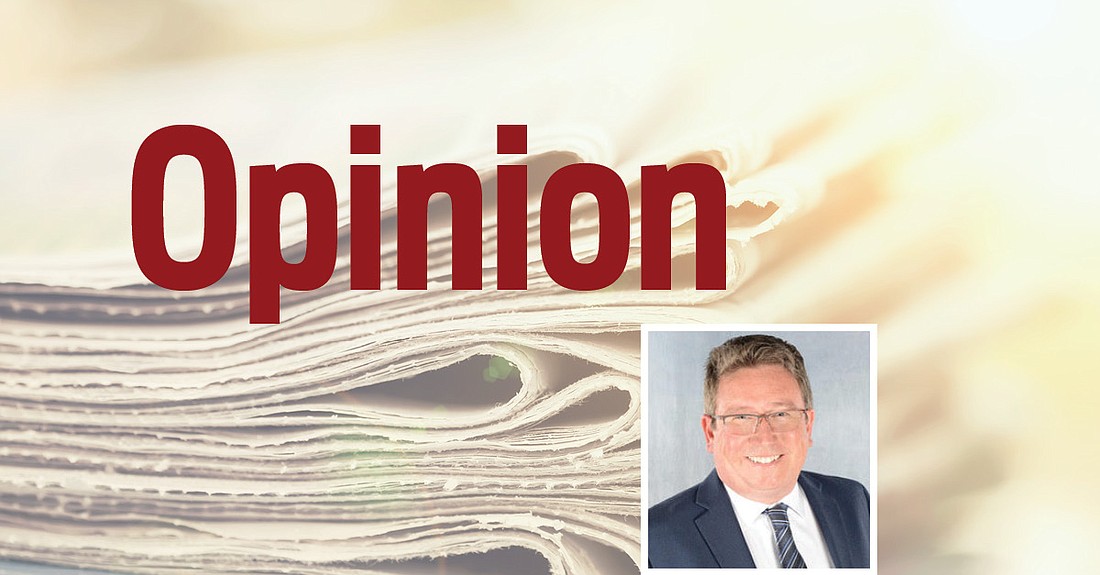
Roland Clee served a major Florida police department as a community service Oofficer for more than 26 years. He writes the American Peace Officer newsletter.