- August 14, 2026

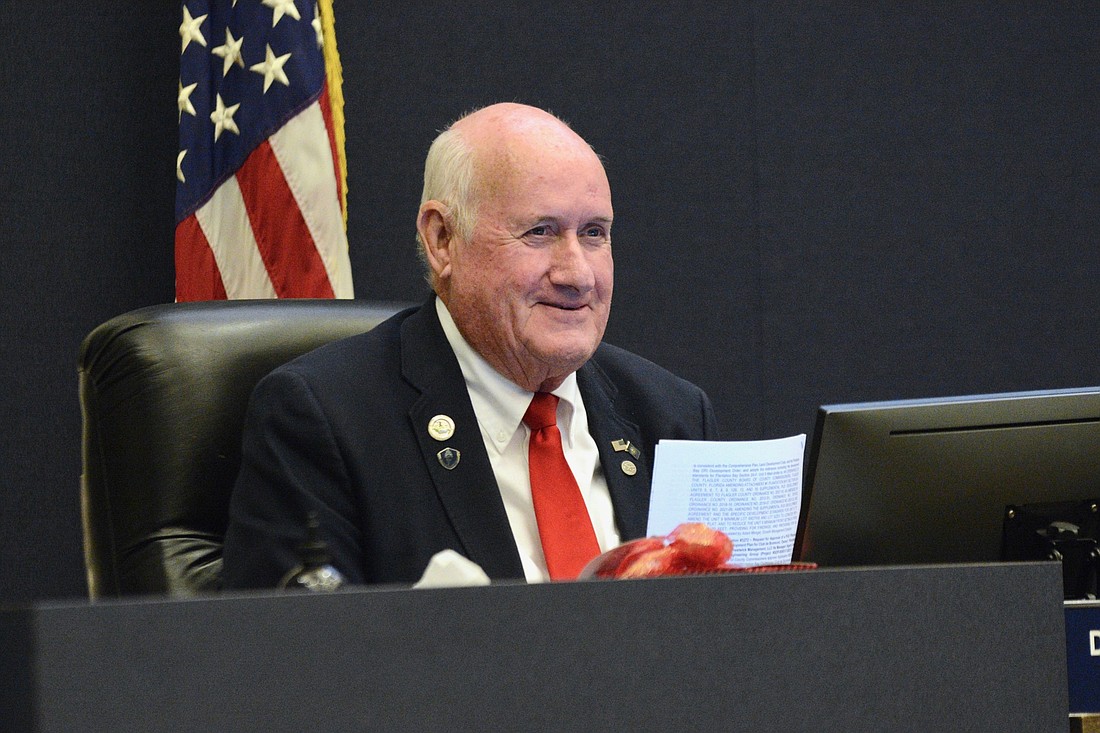
Palm Coast’s proposed westward expansion remains one of the biggest long-term growth issues facing the city. The discussion centers on thousands of acres west of U.S. 1, land owned largely by Rayonier/Radiant, a proposed Master Planned Development, or MPD, and questions over infrastructure, water capacity, taxpayer costs and the city’s future tax base. Palm Coast City Councilman Dave Sullivan discussed the project with the Observer, including where he stands on the MPD. What follows is a transcript, edited for clarity and length.
We’ve heard from a couple of City Council members who don’t seem like they’ll be voting for the MPD as it’s currently constructed. What does westward expansion mean to you?
Palm Coast is not a small city anymore. We’ve got 117,000 people, and we’ve pretty well built out the original ITT area that was laid out that could handle up to 200,000 people or more. But there is a large section of land owned by Rayonier, west of Route 1 north of Palm Coast Parkway and up to St. Johns County. They own that land and they have come forward and said they’d like to do an integrated development in that area.
So the council, prior to me getting there, approved starting that process. And the first big thing was to nail down what’s called “the loop road,” which will go west from Palm Coast Parkway and then circle up to the north, up to the Matanzas Woods/I-95 interchange. And funding for that was received from the state a couple of years ago, and it’s about $126 million. So that was approved by the state. And actually we’re going to have the groundbreaking for that road coming up here very shortly, a couple of weeks.
So that’s the first big step. And that money is funded by the state. So now we have to move on with additional steps to proceed with the development.
My feeling is that the city and the state have agreed that we’re going to do a westward development. Now we either do it in an integrated way, or we do it piece by piece.
My personal feeling is we’d be much better doing it in an integrated process with the developer, with the owner, and to make sure that we just don’t do a haphazard development which would end up in chaos up in that whole area.
So right now we’re working with Rayonier/Radiant on the initial steps. The next step is called an MPD and we received that from the developer, and we’re processing that right now, to see if it makes sense. It’s kind of the next step. It’s not a specific step. It doesn’t say, “We’re going to build this here, that there.” All that will be done later. But the MPD is important because it sets the guidelines for the future development.
And my feeling is, we want to make sure there’s nothing in that MPD that would cost us money later on. I know this is a very simplistic view of things, but I know that Palm Coast city staff is working hard with the developer to make sure that we can agree to what’s in the MPD.
I was up at Wildlight last Friday, by the way. First time I made a trip up there and got their side of the story.
Wildlight is one of Radiant’s developments?
Yeah, Wildlight is a large development northeast of Jacksonville. It’s pretty impressive what they’ve done there. And it was good to see that. You know, it’s a real deal. They’ve done some large developments in addition to Wildlight.
There are major differences between what’s going on up there and what would happen in the western development here in Palm Coast. Namely, there’s no big city in Nassau County, so it really is a suburb of Jacksonville.
We have a large city now. Palm Coast is now 117,000 people. We’re not really a suburb of Jacksonville, and we’re not really a suburb of Orlando. We’re kind of in the middle, and we’re kind of unique.
At this point today, the city staff and Radiant have pretty well come together, both sides adjusting the MPD to a point where we think we may be able to go ahead and approve it, but that remains to be seen. It’ll come back to the planning board and then it’ll come from the planning board forward to the council.
Some of the council members have said that, right now, as the MPD is currently constructed, the developers are not paying for certain infrastructure needs. Theresa Pontieri brought up a sports complex — that initially they were the ones who were supposed to pay for something like that. Do you think that the developer is paying a fair share for the loop road, or is that burden going to be on the taxpayers? Is the developer doing enough?
Well, that’s the gist of what’s going on right now. It’s not just one person on the staff; the whole staff is looking at this and did have some serious concerns concerning the MPD as it was presented. A lot of those concerns have been adjusted and taken care of.
And without going into a lot of detail, one of the big concerns is the impact fees and how the impact fees are going to be used to support the infrastructure and that kind of thing. I think we’ve come to pretty close to agreement on that, but that’ll happen later.
In other words, the whole thing right here is we don’t want to stop the process, but we don’t want to leave anything in there now that will be a problem later on. And I think that’s the easiest way I could explain it.
And right now, we think the MPD is getting to a form with agreements on both sides — but it doesn’t specify anything to the point where it can’t be properly handled as we go forward with the actual development.
So there are concerns that are valid. I don’t think the loop road is one of the concerns. The state and the city agreed to that. We’re starting to build it. We’re having the groundbreaking. The money is coming from the state. Now, that is taxpayer money. As Theresa Pontieri pointed out, that is taxpayer money.
But if you divide up the population of Florida into that cost, it’s not much money per taxpayer, including the Palm Coast taxpayers. So I don’t think the loop road is a big problem as far as funding, because the funding is coming directly from the state Department of Transportation. And we’re going forward with that. So that decision’s been made.
My feeling is, coming on the board here in the last year, onto the council the last year, the decision has been made to go forward with westward expansion. Now it’s where the rubber meets the road, where we have to start actually doing things. So the next step is the MPD, and that’s the crux of the issue right now, is the MPD good enough as far as Palm Coast is concerned to go forward with the overall effort?
Everything I’m hearing is the staff and Radiant are working on the individual issues within the MPD to make sure it’s worth going forward there.
During my last conversation with Mayor Mike Norris, he said something that a lot of people are disputing, and it has to do with water and water capacity in the city. He said that there are 19,000 homes in the queue to be built in Palm Coast and that we do not currently have the water capacity for them. So how could we possibly handle a westward expansion?
It depends on how you look at it. You can look at it the way the mayor looks at it, and it’s true: Today there’s not enough drinking water for 19,000 additional homes.
That doesn’t mean there isn’t enough water.
With the wells that are available, it comes down to the St. Johns River Water Management District getting together with the city and saying, “OK, next year we’re going to need this much water,” and so on.
So as the actual need, the actual hookups go into effect, we put more wells online and we’re able to pull more water out of the wells. Everything I’ve been told is, there’s enough water.
But the specific point from the mayor is, “Is there enough water today, already — the pipes already in and the wells working — to do the 19,000 additional homes?”
No, but that’s always the way it is.
You don’t want to build capacity if you don’t need it at the time, because the pipes are too big for the demand. There’s a lot of technical reasons why you don’t want to do that. And St. Johns doesn’t want to pull any more water out of the aquifer than we have to.
But everything I’ve been told by St. Johns River Water Management District, our utility director and everyone else is, as the need arises, we’ll have the capacity and there is enough water.
So let’s take a look at the big picture here. Westward expansion: Why is that good for Flagler County, for Palm Coast?
The positive is this, that right now our tax base is heavily pushed toward individual residences, where we’re getting less than 10% of our ad valorem real estate taxes from businesses. And no matter where you go, if you look at what the guidance should be, that’s not enough to support the future of the city currently and in the future.
So our tax base must increase.
One of the really good, positive things about the westward expansion is there’ll be a lot of commercial and industry included in the process. So simultaneously, we’ll be building homes, we’ll be building new commercial things, new sports things, so that a lot of things will happen.
Exactly how that’s going to happen and where everything’s going to be and what the new utility system is going to look like and all that — all that will be developed once we continue on. But the big advantage will be that our tax base will be sufficient, if we go forward with the western expansion, to handle the future of Palm Coast and its needs.
If we don’t go forward with development and growth in this way, we probably will not be able to sustain all the services and things that we have now.
And just to be clear, you said progress is being made with the developer. Do you think that progress is positive enough for you to say that you would vote for this MPD?
We had 19 pages of concerns about the MPD that the staff came up with. We had a meeting with the developer on that. They understood that there were some concerns.
My understanding is their staff is working through that, and we’re hoping that with the planning board meeting coming up shortly, there will be an MPD with modifications that will be acceptable first to the planning board, and then it will come forward to the council. And I’m hoping it will be something that we can agree to.
There is general agreement that we want to go forward with western development. I think everyone you talk to, including the mayor and including the other council members publicly, have said it’s the right thing to do.
We just want to make sure that mistakes aren’t made now that will hurt us later on. And when I say hurt, make an undue burden on the current taxpayers. We don’t want to do that. The whole point of the westward expansion is to expand the tax base and the commercial and industrial development so that we don’t have to increase taxes and that kind of thing.
So there’s a lot of good here, but there’s always danger when you go forward that we don’t want to do something that will cause harm in the future.
Coming up in November, you will no longer be a city councilman. Is that it for public service for Dave Sullivan?
On the day I leave office here in the City Council, I’ll be 85 years old, and that’ll be 10 years of elected service in Palm Coast, along with 28 years active duty in the military and another 12 years with industry. So I think I’ve done my part.
I’ll still be active in the volunteer organizations. But no, I think my time has come. I’ve got a great grandchild now, so it’s time for me to revert back to just a regular guy doing the best I can.
And for those who come after, any words of wisdom for them?
It’s very important that we attract top-notch people to run for office because the decisions we make at the local level are really important, and everyone from the president on down talks about it. It’s at the local level where the rubber meets the road, where we actually spend the money and have a tremendous effect on our local population.
I don’t think people quite understand how important it is that we have, first of all, good government people working on the staffs. But it’s also important that at the elected level we have people who don’t take anything for granted, willing to do the dirty work of reading the documents and going into the details.
Ninety-five, 98% of what you do as an elected official once you’re in office has nothing to do with politics. Are we following the land development code, the comprehensive plan? My feeling is let’s attract solid, knowledgeable people who will represent the people and do what’s best for the community.