- August 4, 2026

Up until about five weeks ago, legislators didn't know what Gov. Ron DeSantis had planned for his property tax reform proposal.
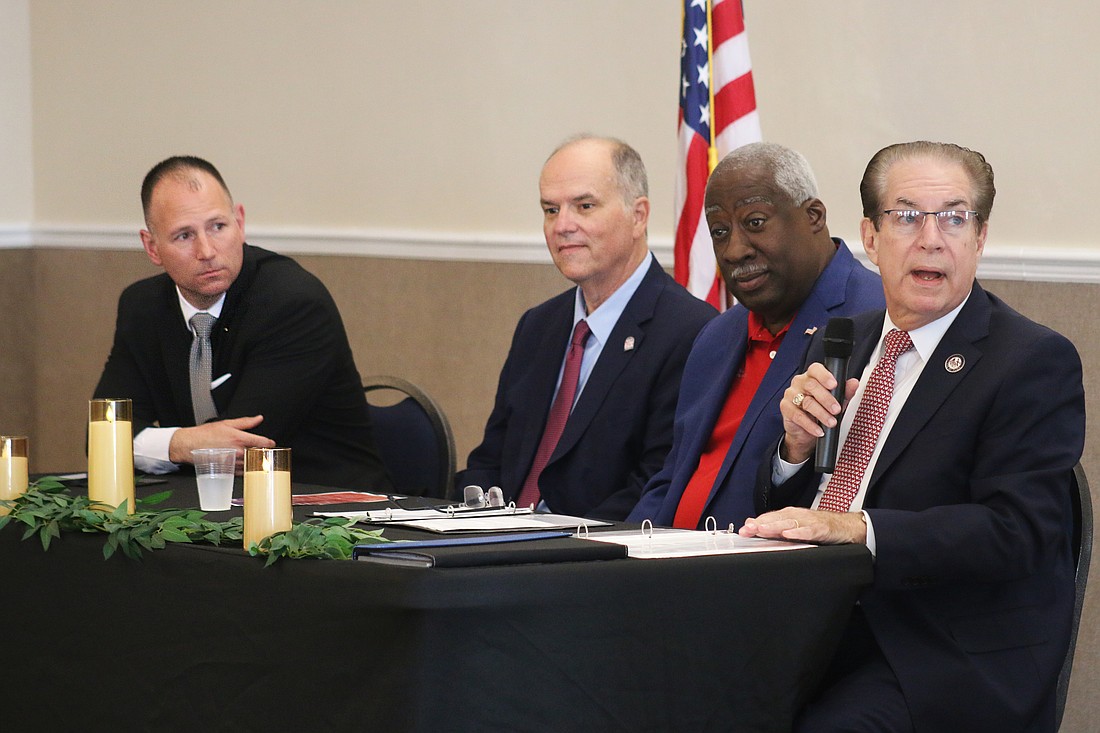
And what he discussed at an event in Brevard County at that time is different than what ended up before the Florida House and Senate, said Sen. Tom Wright during a legislative breakfast hosted by the Port Orange South Daytona Chamber of Commerce on Friday, June 19.
Is the governor's proposal viable? The feelings expressed by the Volusia legislators at the breakfast — Wright, and Representatives Webster Barnaby, Bill Partington and Chase Tramont — ranged from neutral to dubious, though they all voted to place it on the ballot for voters.
"He has not yet signed off on the budget," Wright said. "So in my belief, because I've seen it happen many times already, if we didn't vote yes on that bill, we would probably see all of our budget items zeroed out, and I'm under the belief that that bill was going to pass one way or another."
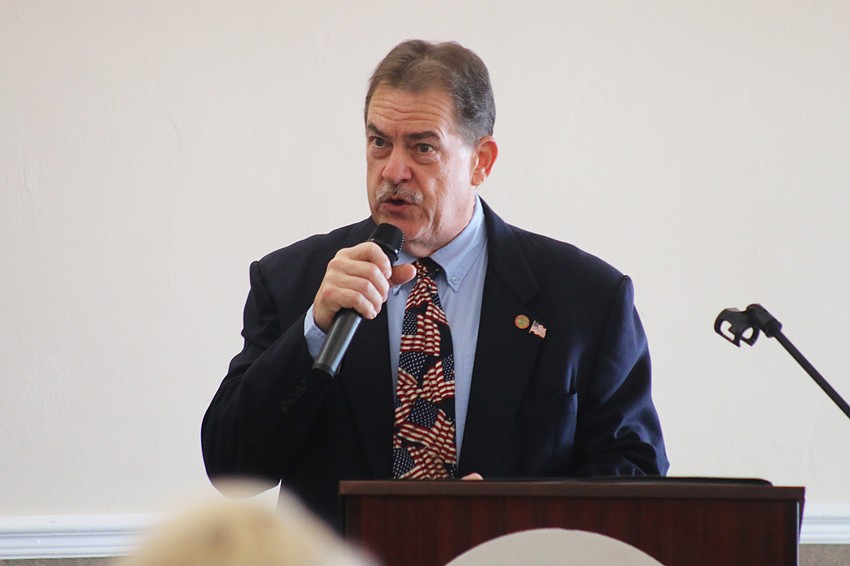
The state's $117.4 billion budget includes about $538 million of appropriations for Volusia County, so long as they escape the governor's veto pen.
Legislators discussed this and spoke about panhandling ordinances, growth and economic development.
This November, Florida voters will be given a choice on whether the state should raise its homesteaded property tax exemption. The constitutional amendment would increase the homestead exemption to $150,000 in 2027, and then $250,000 in 2028, for non-school property taxes.
New residents moving into the state after Dec. 31, 2026, would begin with a $50,000 exemption, and would need to have five years of residency before reaching the $250,000 exemption.
Municipalities and counties around the state have sounded the alarm on how the proposal would impact local budgets and Home Rule, as property taxes fund significant portions of their operating budgets. During a workshop earlier this month, Ormond Beach estimated the governor's proposed property tax reform would result in an $8.2 million shortfall as about 59% of homes would not pay ad valorem taxes to the city.
Volusia's potential loss hovers around $92.8 million.
"We're hoping that the cities and counties are going to get their stories out and let people know — because we made sure that the people get to choose, we didn't choose for you, the people of Florida get to choose on that bill — that we need the services of our communities and our counties," Wright said. "This is not going to be good for anybody if we have to raising all kinds of fees and collecting other taxes that we don't now collect."
Property taxes mean everyone chips in for public safety, infrastructure and schools, he added. The state currently subsidizes 27 counties in the state whose population is too low to fund their budgets. More cities may find themselves needing state funds to help if the homestead exemption is raised.
Tramont, a former Port Orange City Councilman, said he wasn't "a big fan of the bill."
"When my vote took place a few weeks ago in the special session, it was not for the policy itself," he said. "If it had gone through the legislative process as a legislative bill to be implemented right away, it wouldn't have passed the House — I doubt it would have passed the Senate. The vote was to allow you to decide for it."
Whether or not the amendment passes will come down to "massive education efforts," Tramont said. People need to know what services will have to be cut, or, how funds will be replaced to keep them.
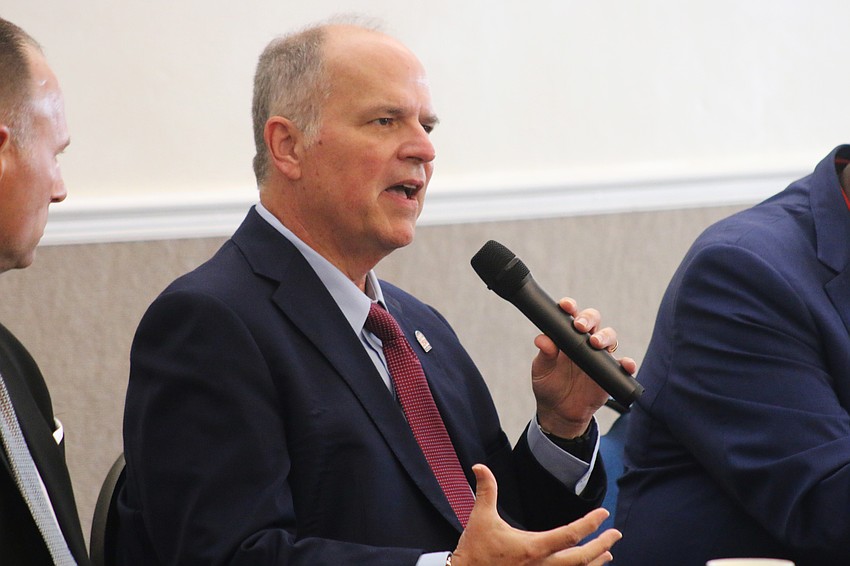
"So, is it really a tax relief?" Tramont said. "My fear is that it can hurt the lower-income people, because you get a lot of low-income homes and trailer parks that don't pay any property taxes. Now all of a sudden they're not exempt from getting an assessment to that property. Now, you're going to get people on fixed incomes. It could be a bad situation."
If the property tax issue makes it to the ballot, Partington said, he believes voters will make a good decision.
"There's nothing in the bill that prevents governments from backfilling lost revenue, either with fees or special assessments, or whatever they call it," he said. "I think cities are looking at that anyway, and it'll end up being, instead of a tax relief, it'll be a tax shift — it'll just be a tax by a different name."
If the voters approve the amendment, Barnaby said he believes municipalities and counties will make up the revenue to prevent the loss of services.
"I believe we have the wisdom and the wherewithal to make sure that we do not miss a beat," he said. "The sky will not fall."
Can the state prohibit panhandlers within 100 yards from an intersection?
Lawmakers said no, as it is treated as a form of free speech and attempts to regulate this have been struck down by courts. In 2021, the City of Port Orange passed an ordinance to address "aggressive panhandling," two years after the City of Daytona Beach enacted a similar ordinance. In 2024, a federal judge declared them unconstitutional.
Partington, however, said he is working on a bill for the upcoming year to regulate panhandling through traffic safety measures for the public. It's based on a 2024 bill by Florida Rep. Alex Andrade, which proposed prohibiting panhandlers from approaching drivers and passengers, as well as enacted criminal penalties for doing so.
The bill died in a subcommittee. Partington, an assistant public defender, said Andrade's proposal had great ideas, but was too harsh.
"When visitors come here and they see [panhandling], it's not a positive image of our community that we want to have," he said. "I understand what the state of the law is and what the courts living in their crystal palaces have decided, but I don't agree with it. I think we have to push back on that."
Florida residents want controlled growth, Wright said. And that growth should be controlled at the local level, where people understand their community and its needs.
"We live in this area because we like this area," he said. "We don't live in Naples. We don't live in Tampa, we don't live in Miami, for whatever reasons, and so to try and control growth from Tallahassee isn't fair to the rest of the state."
He also touched on Senate Bill 180, which was signed into law in 2025 and prohibits governments from adopting or implementing stricter land development regulations. The bill was aimed at helping communities recover from the 2024 hurricane season, but Wright said it "got a little too large and a little too controlling."
A bill to amend the impacts of SB 180 died in a subcommittee in March.
Wright said it'll likely resurface again next legislative session.
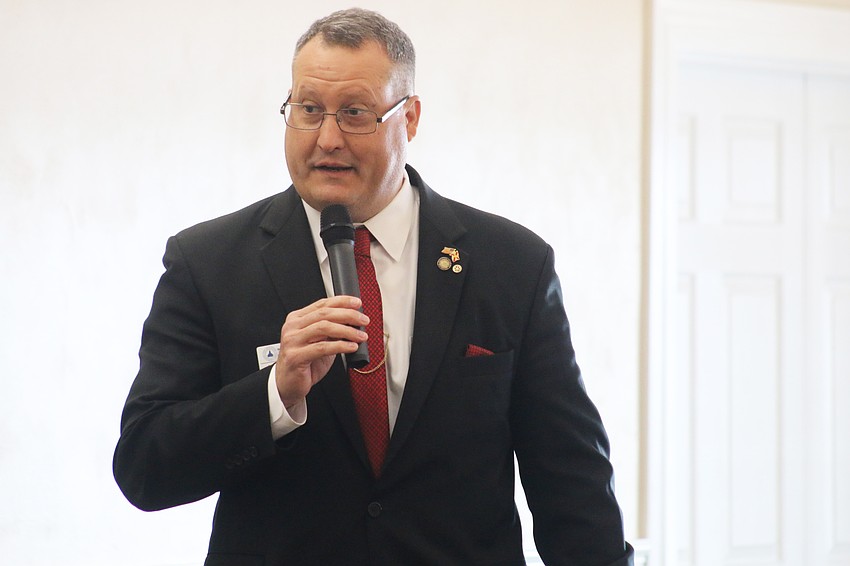
"It'll be the first bill probably heard in the Senate this coming year to tone down SB 180 and give local control back to the communities when it comes to new construction," Wright said.
Is economic development a core responsibility of cities and counties?
Tramont said it's a core responsibility to provide the environment for growth to be able to happen.
"If you squash development, you're going to squash business growth," he said.
And while he said he doesn't like that growth has occurred so fast, he acknowledged that private property rights exist.
Barnaby recalled the construction of Amazon's new distribution center in Deltona, a project that came before him for approval when he was a Deltona city commissioner. He wanted Amazon to pay higher impact fees to plan for future infrastructure improvements.
"We've got to have the wisdom to charge impact fees," he said.