- July 8, 2026

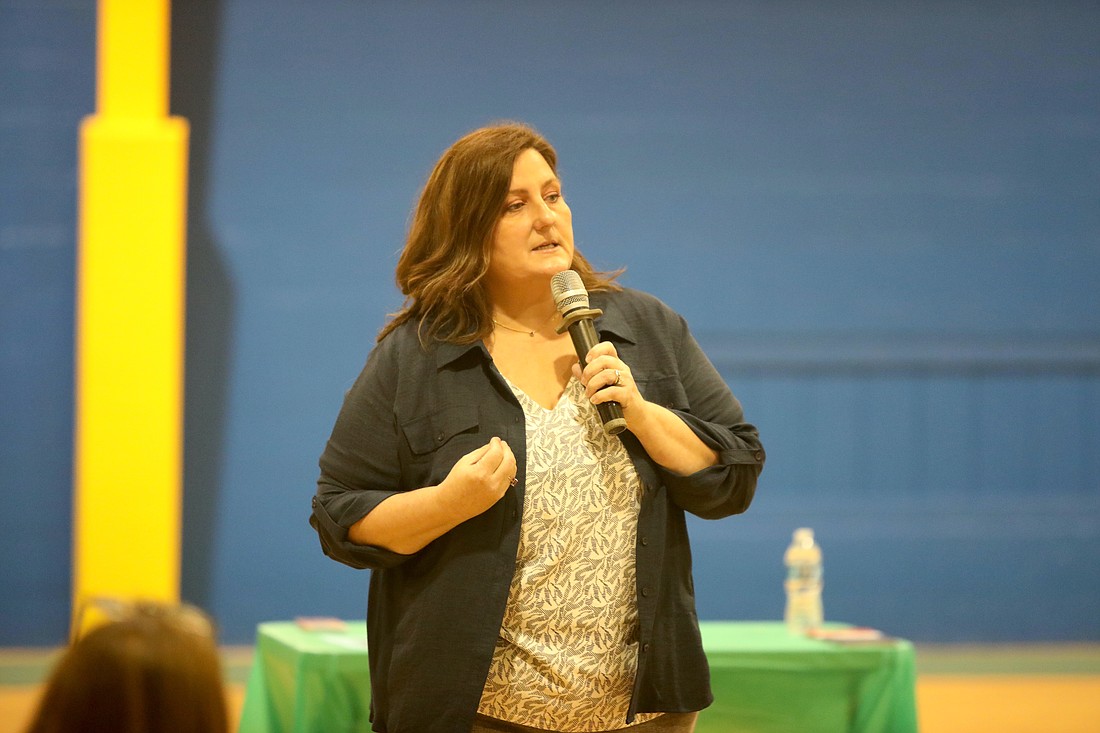
Flagler County School Board member Janie Ruddy recently joined Observer Now to discuss Flagler Schools' return to an A district, the financial challenges facing public education, school choice vouchers, artificial intelligence in the classroom, school safety, bullying and her message to the Class of 2026. During the interview, Ruddy shared her perspective on the district's recent accomplishments while outlining the challenges she believes will shape the future of education in Flagler County. What follows is a transcript edited for length and clarity.
For the first time since 2019, Flagler County Schools has earned an A rating. Explain what that means and the significance of that accomplishment.
Beyond proud. I'm proud of the students who worked incredibly hard and took these assessments seriously. I'm proud of the teachers, the support staff, the bus drivers who set the tone every morning, the school counselors helping students reach graduation, our district leadership and Superintendent LaShakia Moore, who has done an outstanding job establishing a clear vision that every student can succeed.
An A rating isn't simply based on one test score. It measures academic growth, proficiency, graduation rates and several other performance indicators established by the state. Every year those benchmarks change depending on how districts perform statewide. This year we needed approximately 67% of our students to meet the required growth goals across multiple categories.
Last year we were very close. This year Superintendent Moore challenged every school, every teacher and every student to improve by just one or two points in their individual areas. When everyone commits to improving a little, the district improves a lot. That's exactly what happened.
We're now one of only about 34 districts in Florida to earn an A rating this year, and that's something our entire community should celebrate.
At the same time, I don't want us measuring ourselves only by Florida's standards. My commitment as a School Board member is making sure our students can compete nationally. Families move. Students leave Florida for college or careers. We want them prepared no matter where life takes them.
It's been quite a journey since the district last earned an A. COVID disrupted education, and the district also experienced leadership changes. Talk about that road back.
Every superintendent has faced different challenges, and I think we've been fortunate to have leaders who cared deeply about students. Unfortunately, changes in leadership during critical years probably interrupted some of the momentum the district had built.
Then COVID happened.
Learning loss is real. It wasn't just test scores that suffered. Students' cognitive development and social growth were affected all across the country because of circumstances outside anyone's control.
One advantage Florida had was that we were already using learning management systems before the pandemic. Teachers had already begun incorporating technology into instruction and using those platforms to communicate with parents. That allowed us to transition more effectively than many other states.
Here in Flagler County, residents also continued supporting the half-cent sales tax. Those dollars allowed us to invest heavily in classroom technology and educational technology coaches who help teachers integrate technology into instruction instead of simply putting devices in front of students.
That's an important distinction. Technology should improve learning, not replace it. I think we've done a very good job using those resources wisely.
How would you assess the Flagler County School District's current financial outlook?
We're still digesting the newly adopted budget because every legislative session seems to bring new requirements that school districts must implement while funding continues getting tighter.
For example, guidance counselors now have more clearly defined responsibilities, which I actually support because I want counselors spending more time counseling students. At the same time, districts are being required to promote virtual school options even though students enrolled in virtual education don't generate the same funding as students attending traditional classrooms.
Those are additional responsibilities without additional revenue.
The bigger picture is that school funding simply hasn't kept pace with inflation.
If you imagine freezing your household income while everything else around you increases three, four or five percent every year, eventually you're going to struggle. That's what school districts are experiencing.
Fuel costs have increased dramatically. Utilities continue increasing. Supplies cost more than they did just a few years ago.
Many people also don't realize there are stabilization dollars provided because district budgets have become so thin. Those funds help keep districts operating, but there are questions about how long that support will continue.
If cuts become necessary, what areas should be protected?
There isn't an easy answer because every program benefits students in some way.
One issue we've discussed is teacher compensation. Several years ago Florida made significant investments in beginning teacher salaries, which was absolutely needed. The unintended consequence is that experienced teachers with 10, 15 or even 20 years in the classroom often make nearly the same salary as brand-new teachers.
The current budget attempts to address that imbalance, which I support because we have to retain experienced educators.
If we eventually had to reduce spending, I'd first evaluate which decisions would have the least impact on student learning.
For example, we might look at gradually reintroducing meal costs rather than continuing universal free breakfast and lunch exactly as they've existed since COVID. Those federal dollars have largely disappeared.
We could slow the pace of replacing classroom equipment or modernizing technology.
We might review hiring policies, such as how previous years of experience are credited for incoming teachers.
Those conversations are difficult, but my guiding principle would always be protecting academic excellence while minimizing disruptions for students and families.
As a School Board member, are you seeing inflation affect district operations every day?
Absolutely.
One example involved tariffs. As soon as tariffs began affecting prices, district leaders started asking whether we could strategically purchase certain materials before costs increased even further.
Facilities staff and our finance team worked hard to identify opportunities to reduce those increases wherever possible.
The bigger concern, though, has been health insurance.
We're a self-funded district, which means we're responsible for paying employee health care claims. Since last April we've seen health care expenses rise dramatically, much faster than anyone anticipated.
Fortunately, because of my background in health care administration, I was able to push for a different approach.
Instead of relying on a traditional insurance model, we're now working with an organization called ClaimDOC. The concept is encouraging providers to accept reimbursement rates based on a negotiated percentage above Medicare rates.
That requires some adjustment from employees because they have to verify participating providers, but I believe it's a strategy that can better control long-term costs.
Health care spending has become one of the biggest financial challenges facing the district.
School choice and vouchers continue generating debate across Florida. What is your perspective?
First, I absolutely believe in school choice.
Growing up, I saw schools that struggled, and I don't believe any child should be trapped in a failing school because of where they live.
Years ago, school choice largely meant allowing students to attend higher-performing public schools within their district. I fully support that concept.
Where I have concerns is when taxpayer dollars fund private education without the same accountability standards required of public schools.
Public schools operate with extensive financial transparency. We answer to taxpayers. We follow procurement laws. We operate under open government requirements.
Private schools receiving taxpayer dollars should have similar accountability.
My second concern is how the voucher program has been administered.
Florida created the Step Up organization to manage much of the voucher process, but there continue to be situations where funding doesn't properly follow students who move between homeschooling, private schools and public schools.
A student may return to public school while funding remains elsewhere, leaving districts educating that child without receiving the appropriate dollars.
The Legislature had opportunities to improve that tracking this year. While there were some additional transparency measures, I don't believe the larger issue was adequately addressed.
People often treat vouchers as a political issue, but I don't think it has to be.
You can absolutely support school choice while also insisting taxpayer money is tracked responsibly and spent appropriately.
Those two positions are not mutually exclusive.
Artificial intelligence is becoming a major topic in education. How should schools embrace AI while preventing students from becoming overly dependent on it?
I actually love talking about AI.
My husband, my daughters and I debate it all the time. In my professional career outside the School Board, I use AI regularly. I've also served on the Florida School Boards Association committee examining AI policy, so it's something I've spent a lot of time studying.
When the internet first became mainstream, people thought students would stop learning because information was instantly available.
Instead, education evolved.
AI represents another evolution.
Students still need critical thinking. In fact, I would argue they'll need even stronger analytical skills because AI only works well when someone understands how to ask thoughtful questions, evaluate responses and determine whether those responses are actually correct.
When I use AI professionally, I'm constantly analyzing, synthesizing and refining prompts to produce better results.
That's not cheating.
It's using technology as a productivity tool.
The students who struggle most with AI won't necessarily be those without technical skills. They'll be students who haven't developed those higher-order thinking abilities.
At the same time, AI is already part of everyday life.
People see personalized Netflix recommendations because of AI.
Utility companies use AI to identify unusual water usage.
Many technologies people interact with daily already rely on artificial intelligence without them even realizing it.
The key for schools is making sure AI supports instruction rather than replacing learning.
We also have to protect students from inappropriate uses, including AI companionship tools, and provide extensive professional development so teachers understand how to incorporate AI responsibly into the classroom.
I actually think Florida is ahead of many states in preparing educators for that future.
One of the topics that has generated discussion recently is the Guardian program. School safety remains a top priority for parents. What are your thoughts on the program?
School safety always has to come first because students can't learn unless they feel safe. That's really the foundation of everything we do.
I think about Maslow's hierarchy of needs. Before students can focus on academics, they need to know they're in a safe environment. That's why every school in our district emphasizes safety, and it's why we've continued evaluating new technologies and strategies to strengthen campus security.
Earlier this year, the district began piloting weapons detection systems, and those technologies have advanced tremendously because of artificial intelligence. They're much more sophisticated than what people may imagine.
As far as the Guardian program goes, there are a number of different models throughout the country. Some districts arm teachers. Others hire private security companies. Some rely on volunteers or designated employees.
Personally, I believe no one is better equipped to protect our students than professionally trained deputies from the Flagler County Sheriff's Office.
Our school resource deputies receive extensive law enforcement training. They train specifically for school environments. They're part of our schools every day and build relationships with students and staff.
I think that's a tremendous asset.
At the same time, school districts continue facing financial pressures because the Safe Schools funding from the state hasn't kept pace with the increasing costs of maintaining those programs. Sheriff's salaries continue increasing, as they should, but districts are responsible for covering much of those costs.
That's another example of the financial pressures school districts are managing today.
If someone asked me whether I'd rather rely on a sheriff's deputy or a private security guard during an emergency, I know my answer.
I would choose the deputy every time.
For that same reason, I don't support arming volunteers or classroom teachers.
Years ago there were discussions about allowing certain teachers to carry firearms that would remain hidden from students.
I don't believe that's the right approach.
Since the tragedy at Marjory Stoneman Douglas High School, our strategy has focused on preventing weapons from entering school campuses in the first place.
If people know additional firearms are inside school buildings beyond the assigned deputy, you've potentially created another target. Someone intent on doing harm now has another objective once they're inside.
I'd rather continue investing in prevention.
One area that excites me is artificial intelligence being integrated into existing security camera systems. Some of these programs can recognize the shape, density and characteristics of potential weapons almost instantly.
I watched one demonstration where I couldn't even identify the object myself because the video quality wasn't great, yet the AI recognized it immediately.
Those are the kinds of technologies I think deserve serious consideration because they strengthen our ability to detect threats before they become tragedies.
Bullying remains one of the concerns parents raise most often. Do you believe the district's current policies are effective?
We actually made significant changes to our bullying policies this past year.
Every year the School Board reviews both the district policy manual and the student code of conduct. One area I really wanted us to examine was the legal definition of bullying.
Previously, one of the required elements involved establishing that one student held power over another student.
I struggled with that concept.
When you're talking about two seventh graders, for example, what exactly defines one child as having power over another? That definition made sense from an adult perspective, but not always from the perspective of children.
One improvement we've made is better documentation and reporting.
Even if the first incident doesn't ultimately meet every legal requirement to be classified as bullying, it's now documented more effectively and reported through the state's tracking system.
That's important because bullying is often a repeated pattern of behavior rather than one isolated incident.
By documenting concerns early, administrators are better able to recognize those patterns and intervene before situations become more serious.
Now, I also think it's important to remember that children sometimes make poor choices.
Adults make poor choices too.
Not every disagreement between students is bullying.
At the same time, every report deserves to be taken seriously because every child deserves to feel safe at school.
One thing I often think about is how much children learn from the adults around them.
They watch us.
They watch how adults behave on social media.
They watch how adults speak to one another.
They watch political discourse.
If kindness and respect aren't consistently modeled by adults, it's unrealistic to expect children to naturally demonstrate those qualities themselves.
That doesn't excuse bad behavior.
It simply reminds us that building respectful school environments requires partnerships between schools, families and the community.
I will say something that gives me hope.
I have three children who attended Flagler Schools.
Like every family, they experienced challenges growing up.
But what I've noticed compared to when I was in school is how much more accepting today's students often are.
When I was growing up, students worried about wearing the right brands or fitting into certain social groups.
Today I see students accepting classmates who are different from them in ways that simply weren't common years ago.
I think today's students often demonstrate tremendous empathy.
That doesn't mean bullying doesn't happen.
It absolutely does.
But I also think we should recognize the positive growth occurring among many of our students.
When bullying does occur, I want schools to take it seriously.
I also want us to remember that if a child is repeatedly bullying others, that student probably needs help too.
Discipline is important.
Accountability matters.
But we also need to ask what resources or counseling might help address the underlying issues causing that behavior.
Ultimately our goal isn't simply punishing students.
Our goal is helping every child become a healthier, more successful adult.
Graduation season has just wrapped up. What message would you like to share with the Class of 2026?
The biggest piece of advice I would give graduates comes from my own experiences.
The things I regret most in life aren't the times I failed.
They're the times I stopped trying.
Failure is part of life.
Everyone experiences setbacks.
Everyone has moments where things don't work out.
That's okay.
The real failure only happens when you completely give up on something that's truly important to you.
If you're passionate about something, keep working.
Keep learning.
Keep adapting.
Find another path if the first one doesn't work.
Find people who believe in you and encourage you.
Those people matter.
Whether you're entering college, joining the workforce, serving in the military or still trying to decide what comes next, understand that your journey is just beginning.
Your education doesn't stop when you receive your diploma.
Learning continues throughout your life.
I also want graduates to know they'll always be part of the Flagler Schools family.
Come back and visit.
Reach out if you need advice.
Tell us about your successes.
Ask for help if you need it.
One of the greatest strengths of this community is the network of people who genuinely care about helping students succeed.
We have alumni all across the country doing amazing things.
Many of them are willing to mentor young people beginning those same journeys.
You're never alone.
We're proud of every graduate because earning that diploma represents years of hard work, perseverance and growth.
I hope every graduate understands that they have unlimited potential.
Keep moving forward.
Keep believing in yourself.
And don't let temporary setbacks define the rest of your life.
Looking ahead, what gives you the most optimism about the future of Flagler County Schools?
The people.
That's really the answer.
Every time I visit our schools, I see dedicated teachers, administrators, support staff and students working incredibly hard.
The district earning an A rating wasn't the finish line.
It's another step in the journey.
We have tremendous momentum right now.
We have teachers embracing new instructional strategies.
We have students achieving at higher levels.
We have community support through initiatives like the half-cent sales tax and partnerships with local organizations.
Most importantly, we have people who genuinely care about children.
As long as we continue challenging ourselves to improve, remain fiscally responsible and keep students at the center of every decision, I believe Flagler County Schools will continue moving in the right direction.
That's what excites me most.
The future is bright, and I believe our best days are still ahead.