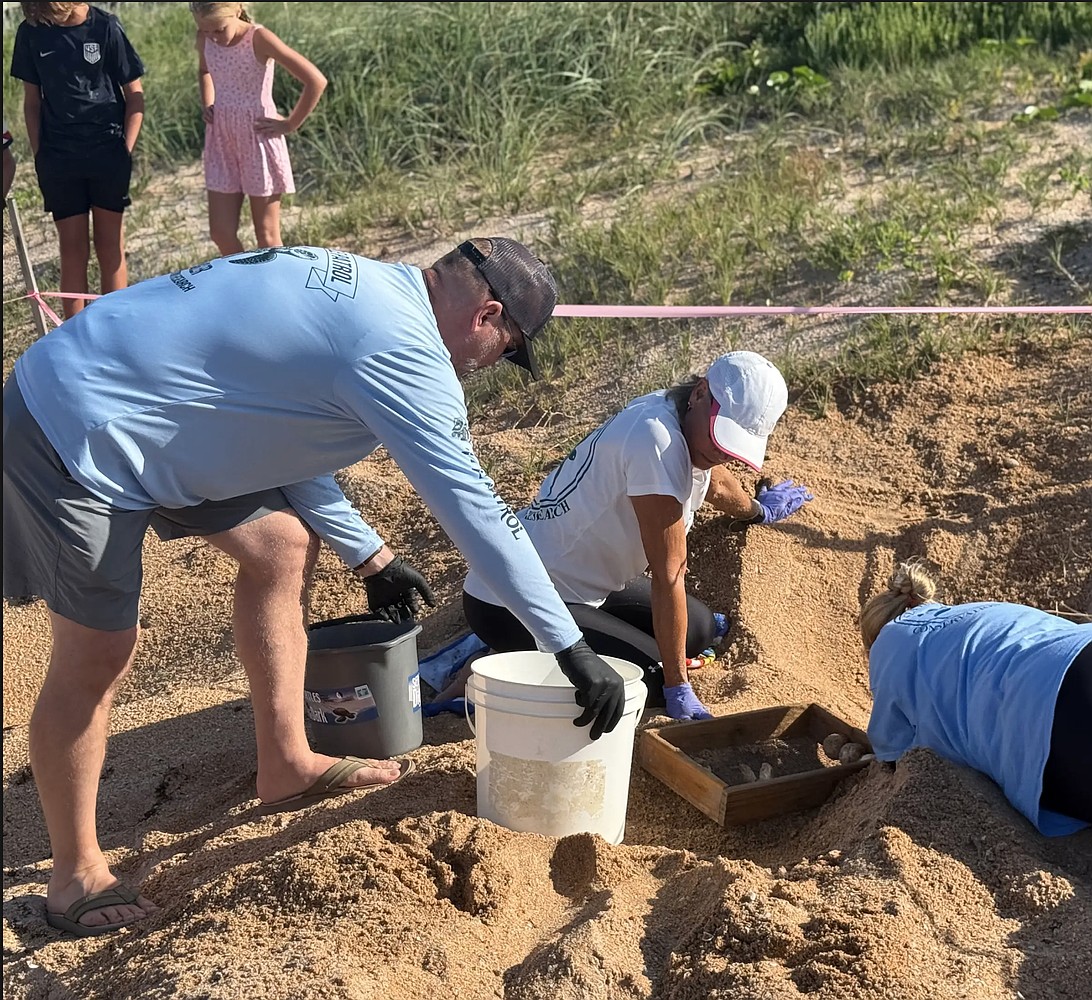
Nicholas Poorte, Maria Allgeier and Lori Ottlein, evaluate a nest emergence. Courtesy photo
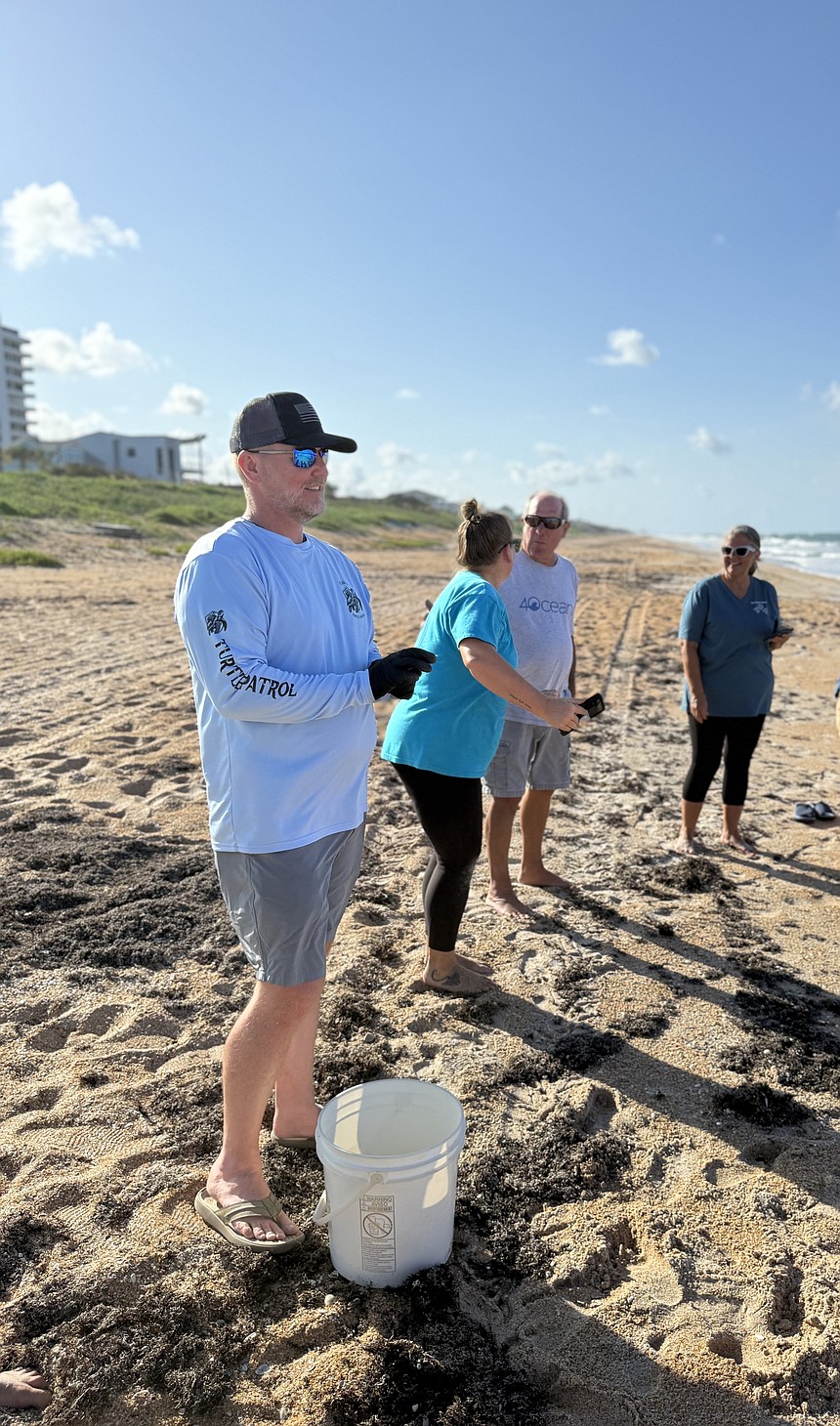
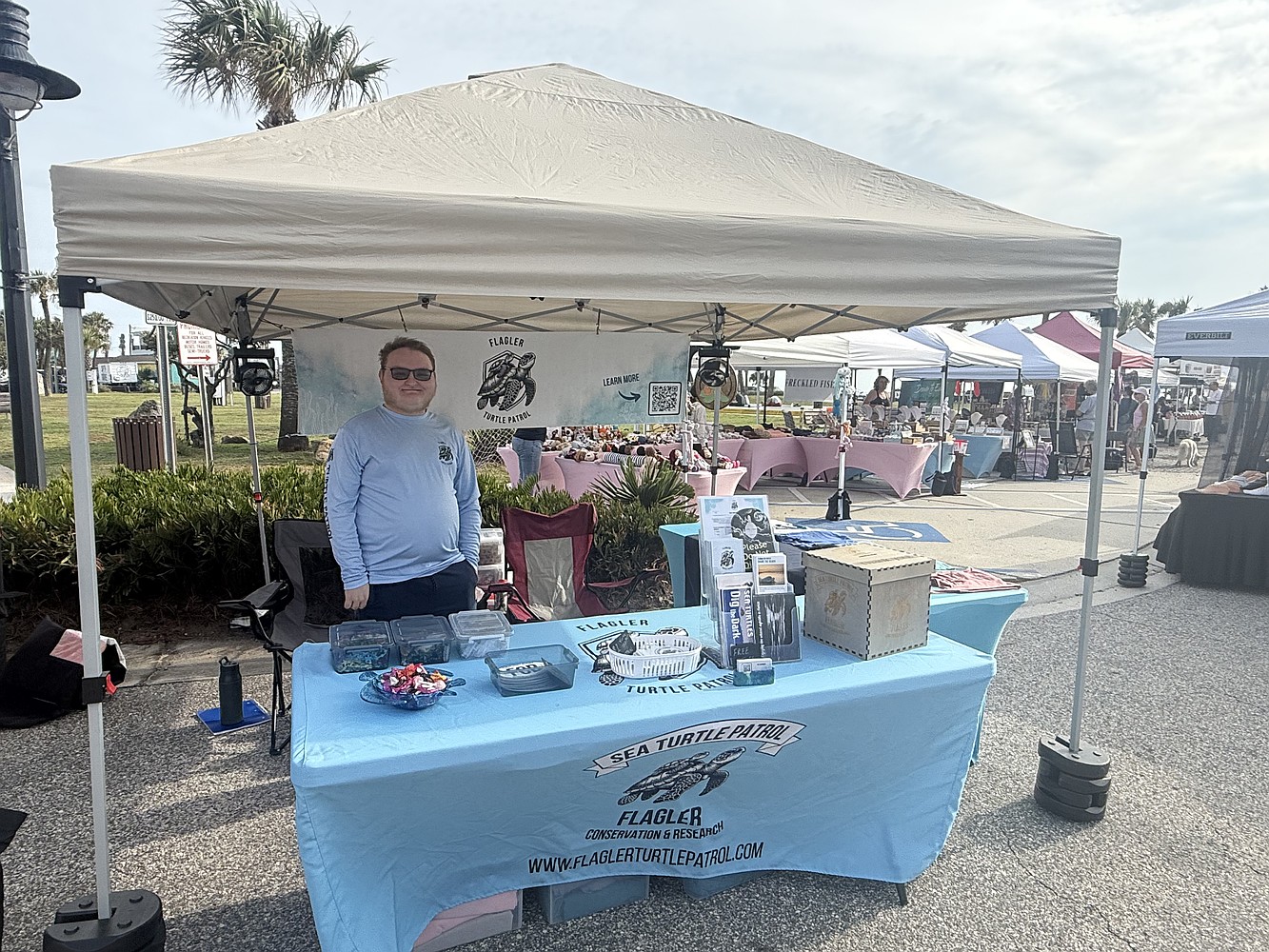
Flagler Turtle Patrol President Nicholas Poorte, volunteers Amber Jones and Jennifer Barnes, and bystanders on the beach. Courtesy photo
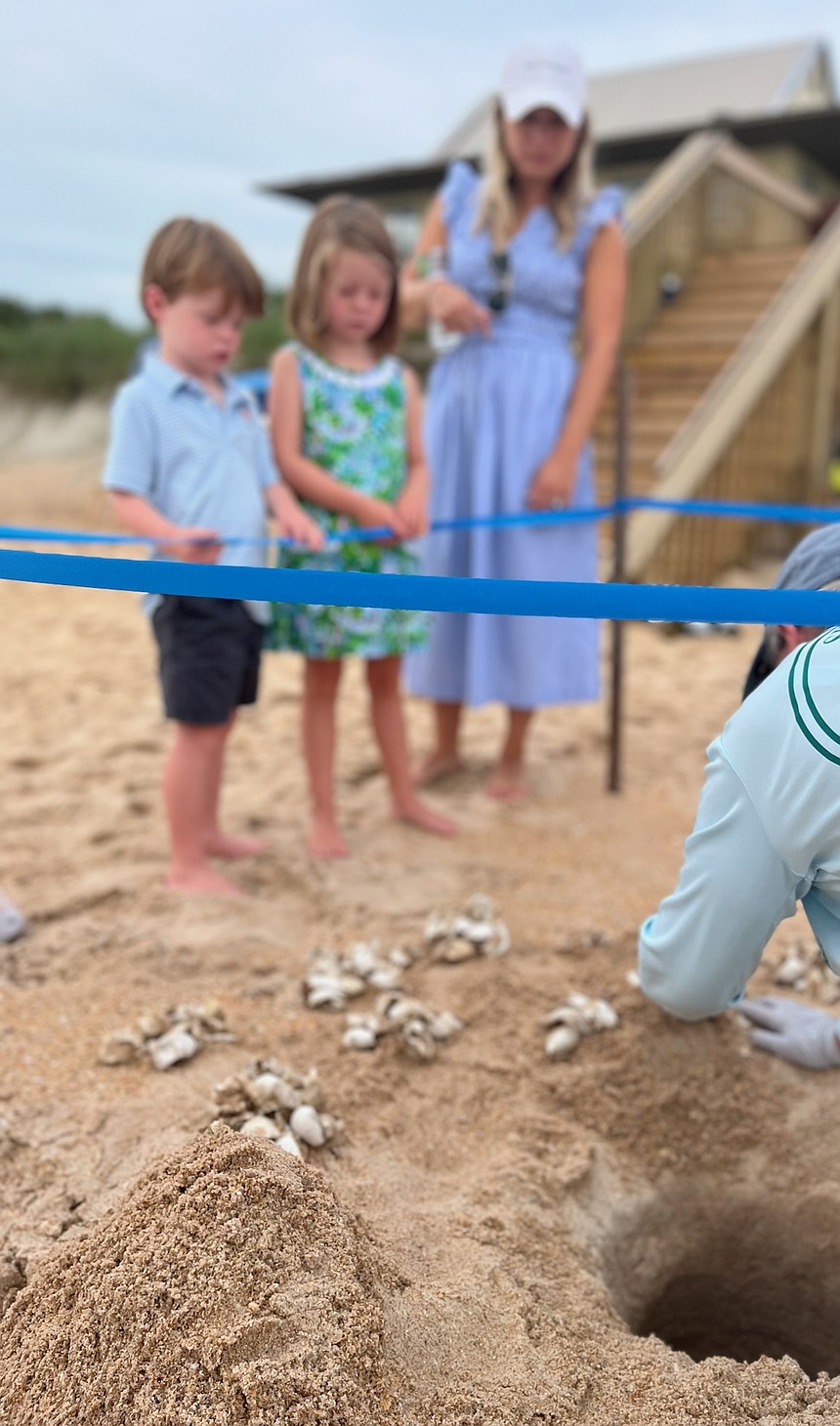
Linda Jaeger performs a nest evaluation. Courtesy photo
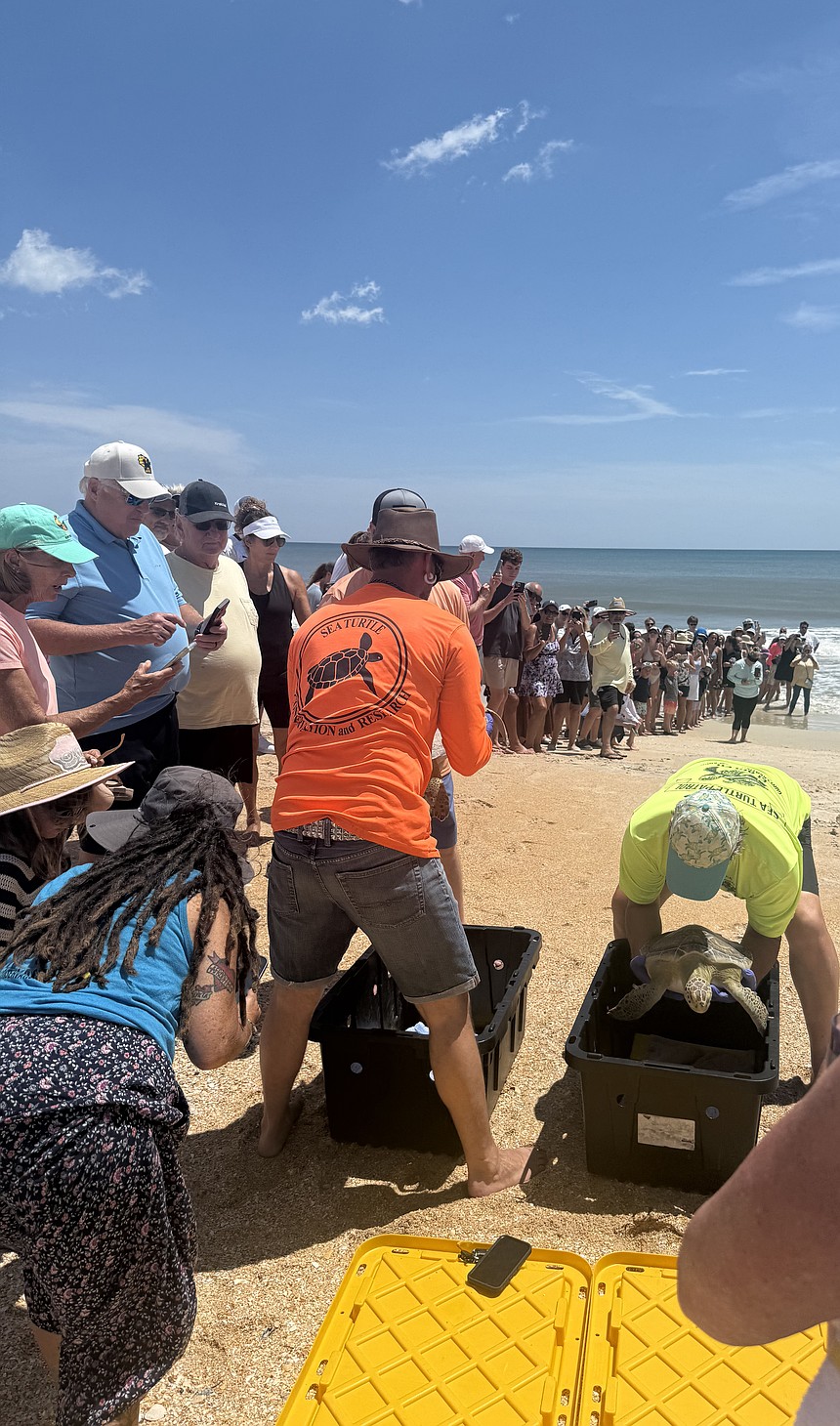
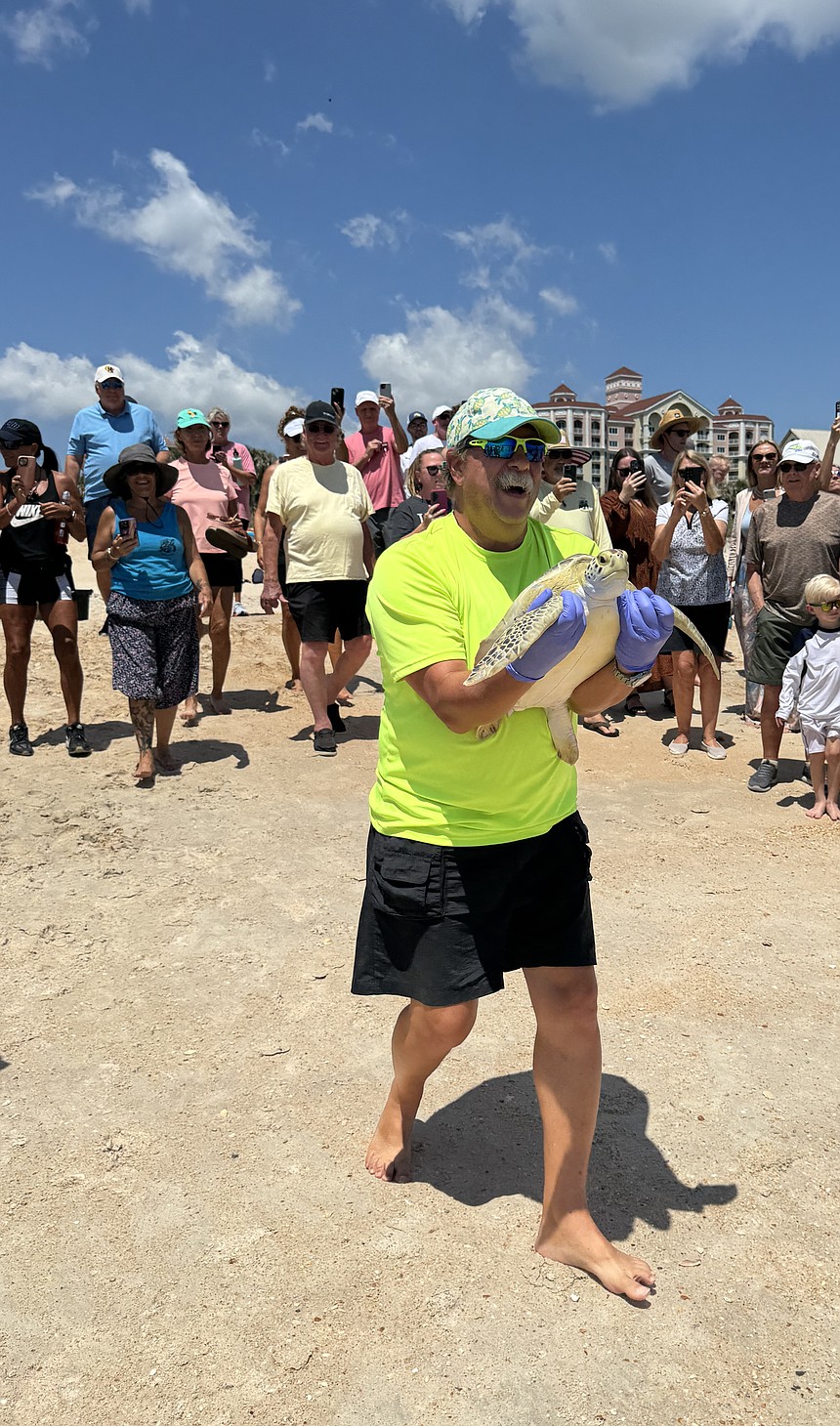
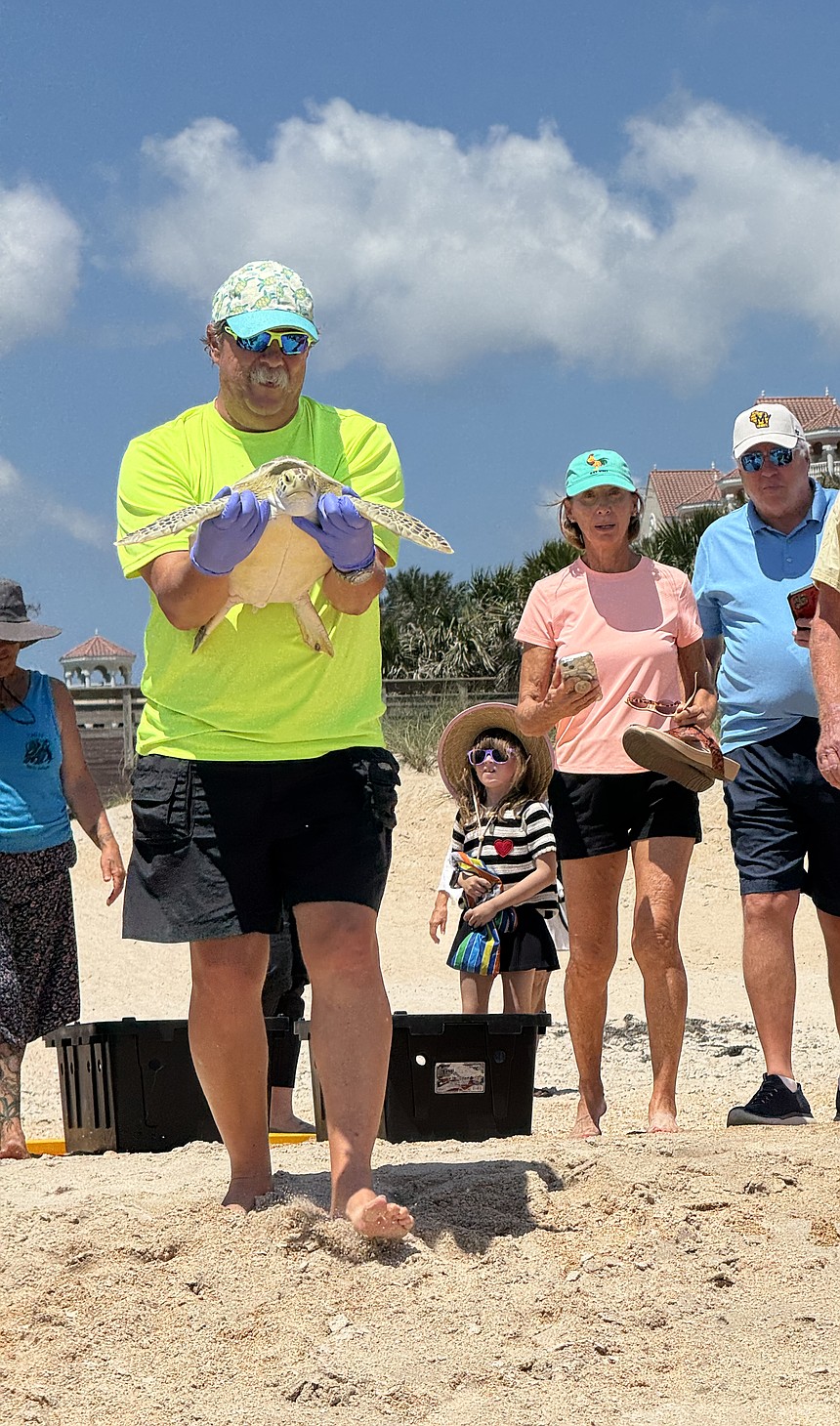
Andrew Koswaski and Ken McKenna release rehabilitated juvenile green sea turtles. Courtesy photo
Jordan "Ty" Poorte. Courtesy photo
Andrew Koswaski releases a rehabilitated juvenile green sea turtle. Courtesy photo
Andrew Koswaski and Ken McKenna release rehabilitated juvenile green sea turtles. Courtesy photo
As of July 2, sea turtles have laid 784 nests on Flagler County's beaches.
According to data from the Flagler Turtle Patrol, this is over double the number of nests laid year to date in 2025. This is in line with what other coastal communities throughout the state have reported this summer: The number of nests are increasing rapidly on the daily.
"This has floored all of us and we've all had to step up in order to just make it work on the beach," said Nicholas Poorte, president of the Flagler Turtle Patrol. "There are days where extra people are going out there to help resupply our ATVs, so the volunteers are making great efforts to work together."
The Flagler Turtle Patrol has about 75 volunteers that monitor the county's beaches, which are split into three sections: The North Beach (from Washington Oaks State Park's south boundary to Jungle Hut Road), the South Beach (from Jungle Hut Road to Beverly Beach's north city limit) and Flagler Beach/Beverly Beach (from Beverly Beach's north city limits to Gamble Rogers State Park's north boundary).
Each section of beach has its own team of volunteers, Poorte said. They use ATVs to monitor and survey sea turtle activity for the day, such as identifying new crawls, false craws and staking off new confirmed nests. The volunteers then document all the information and submit it to the Turtle Patrol leadership, who then upload it to Florida Fish and Wildlife Commission's database.
This summer has kept volunteers busy, particularly the South Beach team, which has documented 311 nests as of July 2 and 236 false crawls.
Flagler Beach/Beverly Beach has 280 nests and seen 257 false crawls, and the north beach section has 193 nests, with 77 false crawls spotted.
"Our greens are starting to come up now," Poorte said. "We're getting about three to four green nests a day per beach, but the majority of our nests right now are still loggerheads."
In neighboring Volusia County, a total of 1,264 nests have been documented. The county is less than 300 nests away from breaking its 2023 nesting season record.
According to a June 16 update by the Florida Fish and Wildlife Commission, the nesting season was off to a strong start across the state.
As of May 31, there were:
Why are we seeing an increase?
Jennifer Winters, protected species manager for Volusia County, recently told the Observer that the consensus in the scientific community is that conservation efforts are working. These measures date to the Endangered Species Act, enacted in 1973, and are showing that sea turtle populations are recovering.
"Sea turtles have a very long lifespan," Winters said. "It actually takes them around 30 years to reach sexual maturity. So if you think about that, we would only be really on the second generation of sea turtles that are recovering from near extinction back in the '70s, particularly the green sea turtle."
Poorte said that, while the hope is that sea turtle populations are recovering, another possibility for the increase in nests is that more sea turtles are simply at that point in their nesting cycle.
"Sea turtles nest in a two-to-three year cycle, so this could just be a combination of that two-to-three year gap, where the sea turtles are actually coming up from two years ago, but also three years ago, this year, instead of staying with a steady three-year pattern," said Poorte, who's been with the Flagler Turtle Patrol for nine years.
How can people make a difference? Poorte said one of the biggest ways is by supporting the Flagler Turtle Patrol through monetary donations or nest adoptions.
"Nest adoptions are a way for the community to actually get engaged, go onto the beach, and see what we do as the nest has reached its full maturity," he said. "We also keep them updated on the species and what we're doing to help protect them."
People can also respect the beach, he added — clean up garbage and leave no trace behind, including holes which baby sea turtles could fall in on their journey to the ocean.
Volunteers are starting to see emergences. On July 4, the Flagler Turtle Patrol celebrated Independence Day by documenting two emergences, including the hatching of a leatherback nest. Three days later, as volunteers conducted an evaluation of the nest, they helped a couple sea turtles complete the journey.
"It's just been a big season," Poorte said. "We are continuing to see support from our community, which is great. A lot of people have shown a big interest this year ... There's no other way to describe it than just an outstanding year for the sea turtles."