- July 5, 2026

As Palm Coast weighs a major westward expansion plan that could reshape the city’s future, concerns over infrastructure, water supply and developer responsibility are taking center stage. The proposal, tied to land west of U.S. 1 and a revised development framework, could significantly increase housing and population in the years ahead.
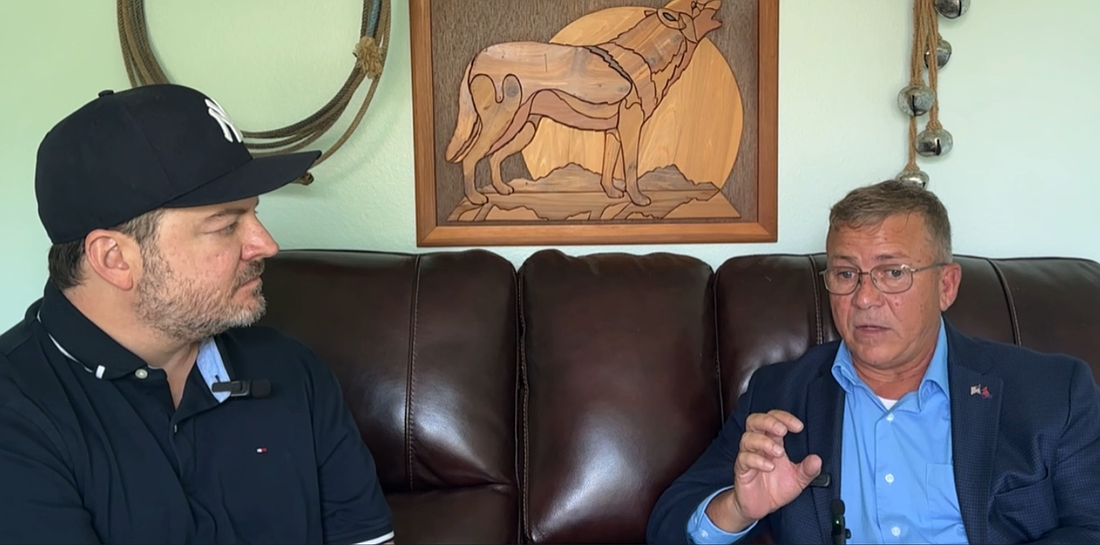
To better understand the issue, I sat down with Palm Coast Mayor Mike Norris at his home for an in-depth, one-on-one interview, where he outlined what he calls the most pressing challenge facing the city and why he believes careful planning and accountability will be critical moving forward. What follows is a transcript of the conversation, edited for clarity and length.
Rich Carroll: A couple of weeks ago, Vice Mayor Theresa Pontieri was talking about westward expansion and a lot of her concerns. And when she was finished with her statement, I noticed that you had said this is the most important issue facing the city right now.
Norris: It's been the most pressing issue for the city for some time now. They started the comprehensive plan review and rewrite back in 2023. And I picked up on it early: When you have a mayor that says he's going to double the size of Palm Coast, you might want to take it a little bit serious. And I did at the time.
So their initial allocation entitlements were out there for those two DRIs were 12,000 units. Now with this, their new MPD and the new comprehensive plan which allows more leniency, they are pushing for 22,000 units. This is a pressing issue for the city and I understand the vice mayor's concern.
I tried to table the comprehensive plan when they first brought it to us because I knew full well —and Vice Mayor Pontieri knew, too — that we could do a lot of things out there with those DRIs.
But the city got state funding for the road and now we're stuck with what's going to happen out there. The state has a specific reason why they gave the money for that road and that's because they're going to open up a corridor, County Road 2209, from Jacksonville to Orlando.
So that's the state's focus. And I would say that I do feel the city lobbied for that money in part because they were trying to expand out west. And I think the old administration was fully behind that and they took the steps to change the comprehensive plan.
Vice Mayor, to her credit, she found in the DRIs where the developer was responsible for the road and the sports facility with a junior sized Olympic swimming pool. We were all taken aback by that, when I was running for the mayorship. And it became concerning to me then.
They want to do what they want to do, build what they want to build. But it's going to fall on the back of our community if we don't hold them to the standards that were set in the DRI. So that's what, $126 million just for the road alone.
The loop road will go west from Matanzas Woods Parkway. They'll do a flyover, which is an overpass, over the railroad tracks, and it will loop back around to Palm Coast Parkway, with another overpass.
Plus, we're running into the issue with Flagler County about passing over the Old Brick Road on the west side of that property, which is a historic site. And I understand the county wants to preserve it, but the developer wants to do at-grade crossings. And if you do at-grade crossings, you're jeopardizing that historic site.
So. And the developers certainly don't want to spend the money to put overpasses — that's why they got the city to get the money from the legislature for the road in the first place. So we got a lot of things to do.
So our biggest concern is water. And I would hope that everyone understands the deal now with water. We just executed that bond for $330 million.
We have 19,000 houses that are at some point in development that, even with that $330 million, we're not going to be able to sustain.
So unless the developers take drastic measures out there to handle that problem — I would say that we need another water treatment facility and wastewater treatment facility for that type of expansion.
Carroll: So and right now, if that's the case, who would be responsible for that?
Norris: It would be us. The developers are trying to get off the hook.
And we know full well that impact fees do not pay what they need to be paying.
They have to come forward with some funds to help our infrastructure.
Carroll: So some of these things that were talked about, the sports complex and the swimming pool, the infrastructure, the roads — all should be paid for by the developer?
Norris: Yes, our residents are taxed enough right now. We're steadily bringing down the millage rate, but the cost to our residents right now is shifted over to their water rates. We had a over 30% increase in water rates. That is a lot of money for a family that's on a fixed income.
I think like ours is like $170 a month just for two people, and it'll also increase with the CPI after that.
So that developer has to take some major steps to fix this problem.
Carroll: And so what are those steps? The vice mayor has made it clear she does not support the westward expansion proposal in its current form. And I think that's what you're saying right now.
Norris: We're going to work it out. But it's a pressing issue and we have to have the funding. We can't just bend over backwards for developers.
These companies have been taking advantage of the city since its inception. And we need people in office that are going to hold them accountable and stop this from happening. Because there's no one in this city that wants the rapid pace of development that we're seeing now.
The one thing that we have done as a City Council — this city council: We have not approved any major new developments in the time I've been in office.
Carroll: Do you see westward expansion as a positive aspect of Palm Coast future?
Norris: I certainly do. I spoke with the staff because they were trying to get a feel of what each City Council member wants to come out of this deal. And my two main things I told them is industrial lands and water.
So we have less than 3% of our land mass, or 97 square miles, currently is zoned for industrial. That is way lopsided. We need to balance out our tax base and get more commercial industrial in here, paying higher rates because we can't keep going like this with our residents.
I hate using the word fair, but it has to be fair for the residents that have put their lives into this community.
I have been trying since I came in office to get more property owners to pony up properties that we can rezone. None of them come forward.
Carroll: So what is the next step in a situation like this? Is there more negotiation with the developer and is there room for compromise?
Norris: Well, it's going to be an ongoing process. I think they want to get this done before the end of the year, before that, probably before the elections. And I would rather push it further back.
But we have. We have three elected officials leaving the city council, two of them are running for another office. So we have to hold them accountable and do what's right for the city. They only need three votes to get this through.
Ty Miller and myself are the only remaining two that'll be there into the next City Council.
So we have to keep pressure on everyone on the council. I'm going to do my part. I would not vote for that.
I will not ask for any more money for that westward expansion from the state Legislature until the developers fulfill their commitments to the city.
Carroll: What is the good that can come out of westward expansion?
Norris: I think more land for industrial and commercial and more variety of housing.
Young families can't afford $370,000 houses. We need more variety, and I think we can get that out there.
But I'm concerned about the resources they're going to suck up, because like the sheriff's budget: Sheriff needs nine new deputies over three years, and it's just going to increase with the population. Well that comes at a price. Impact fees do not pay for that. And we have to do the right thing by our citizens. I don't want to put any more burden on our residents.
Carroll: So, opposite end of the spectrum: Say the deal gets pushed through. What's the worst that can happen here?
Norris: Well, your taxes are going to go up, your resources are going to be strained — fire, rescue, police — all those things — parks and rec — everything is going to be more strained, and it's going to fall on increasing our money towards salaries and benefits because we're going to take on more staff to handle the load, and we're not ready for it.
I've been saying it for years now: We are not ready for what they want to do out there.
Carroll: What would be your final message on this whole situation?
Norris: My final message to the residents of Palm Coast is keep the pressure on your elected officials. It's an election year and they're accountable for their actions. And we have to do the right thing for the city.
I'm going to keep fighting.