- August 10, 2026

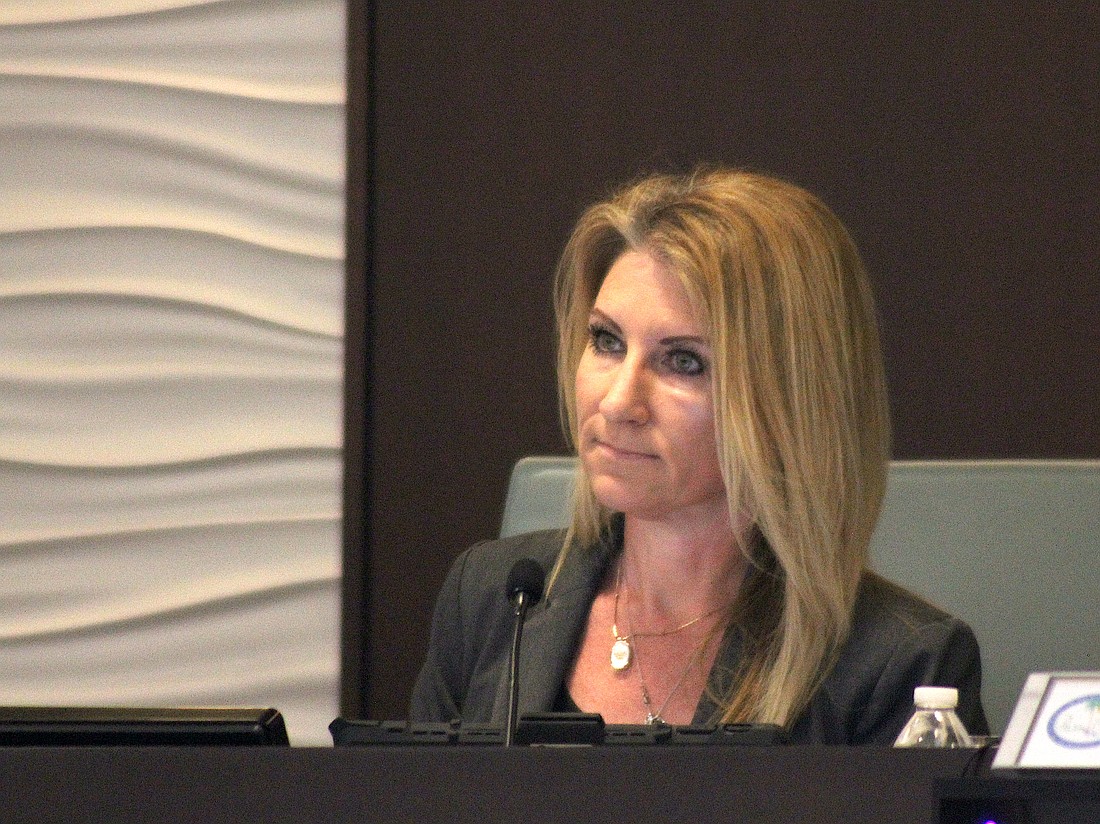
Palm Coast Vice mayor Theresa Pontieri is raising concerns about the city’s proposed westward expansion, questioning both the financial structure of the plan and the level of responsibility placed on the developer.
Speaking during a recent City Council meeting, Pontieri said she was troubled after reviewing updated details tied to the project, particularly the use of public funding for major infrastructure tied to the expansion area.
“I literally got sick to my stomach when I saw one of the slides today, $126 million for the loop road in the form of appropriations, which is just a fancy word for taxpayer dollars,” Pontieri said.
The westward expansion, often referred to as a key component of Palm Coast’s long-term growth strategy, would open thousands of acres for a mix of residential, commercial and recreational development.
Most of the land targeted for the westward expansion is owned by Rayonier, which controls the bulk of the nearly 20,000 acres planned for development.
City officials have emphasized the need to expand west in order to create new opportunities for economic development, attract industry and reduce reliance on residential property taxes.
Pontieri acknowledged that need, noting the city has limited land available for commercial and industrial growth, but said the current proposal does not strike the right balance.
According to Pontieri, earlier development agreements required the landowner to fund major infrastructure, including roadway improvements and community amenities such as a sports complex. She said the updated proposal shifts more of that burden to taxpayers while increasing the number of residential units allowed within the development.
“What they gave to us is 117 pages of absolute garbage,” Pontieri said during the meeting, expressing frustration with the proposal’s scope and structure.
Pontieri also raised concerns about the lack of enforceable requirements ensuring that commercial development and infrastructure are built alongside residential growth. She said previous agreements included benchmarks requiring certain levels of commercial development before additional housing could move forward, but those provisions are either weakened or absent in the current plan.
Without those safeguards, Pontieri warned the city risks creating an imbalance that could strain infrastructure, limit job creation and fail to address long-standing concerns about the local economy.
She also pointed to the broader financial implications, emphasizing that public dollars should not be used to cover costs that were previously assigned to the developer. Pontieri said she has spent the past two years attempting to work with the landowner to reach a plan that benefits both the community and the developer, but said the latest version falls short of that goal.
Despite her criticism, she made clear she is not opposed to the westward expansion itself. Instead, she is calling for revisions that ensure the project delivers meaningful infrastructure, supports economic development and protects taxpayers.
“I will not accept this as it is… please make it right,” Pontieri said.
The proposal remains under review and is expected to return before the City Council for further discussion. Any final decision will determine how Palm Coast approaches one of its most significant growth opportunities and how the costs and benefits of that growth are ultimately shared.