- August 12, 2026

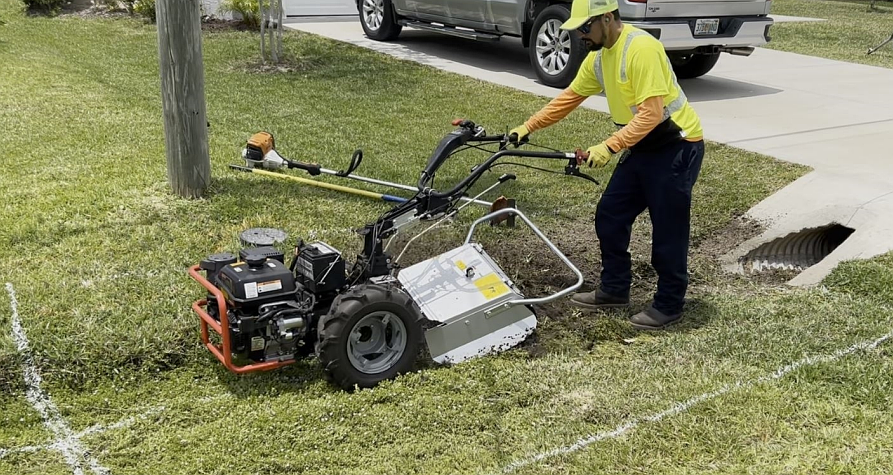
Palm Coast’s swale crews are maintaining more miles this year than they have in the city's history, thanks to a new trenching machine.
In two years, the city’s backlog of swale maintenance orders has reduced from over 1,000 to just 341 cases remaining. The swale maintenance crews have historically only cleaned around 40 miles of swales each year, Stormwater & Engineering Deputy Director Lynn Stevens told the Palm Coast City Council on May 12.
“By the end of [Fiscal Year 2025], staff had completed over 55 miles of swales, more than ever in the history of our city,” Stevens said. “Although the rain will slow us down for the next few months, we will exceed our goal of 60 miles this year.”
The success was from the implementation of new trenching machines for the swales, which Stevens said have been useful in tapering the swale from the culvert and addressing high spots, but not beneficial for full swale clearing.
Because trenching takes fewer crew members, the stormwater department's second ditch crew was broken into two teams at the end of December to increase the amount of trenching work.
According to data Stevens presented to the Palm Coast City Council, the trenching machines were able to more than double the number of linear feet maintained in January, February and March from 2025 and 2026. Around 2,500 linear feet of swale were maintained in January 2025, but over 5,000 linear feet were maintained in January 2026.
“This style of soil maintenance cannot replace the full regrade method, but is used to supplement the program and enable us to cover more ground and open more swales,” she said.
Stevens said the program had a backlog of swale complaints, but the crews have managed to clear out the backlog from prior to 2022, and now only have a few remaining from 2022. As of October 2024, the backlog was 1,058 — some dating back to 2019 — and was brought down to 409 as of April 2026.
As of May 12, Stevens said, there were only 341 remaining open work orders in the backlog. Most of the remaining work orders require a full regrade, she said.
A full regrade is required if there is more than six inches of buildup in the swale.
PRAISE FROM COUNCIL
Councilman Charles Gambaro said the crews have been good about consolidating work orders so all the homes with work orders on the same street.
Vice Mayor Theresa Carli Pontieri said swales were one of the most important issues for the council when she was elected in 2022.
“You all have done amazing work,” Pontieri told Stevens. “I think that you've done it in a very fiscally responsible way as well. So I just want to commend you. I cannot thank you and your team enough.”
Councilman Ty Miller agreed.
“Just looking at the backlog reduction tells us everything we need to know about how much work you guys are doing,” Miller said. “We're gonna get to that point sometime soon in terms of being proactive rather than reactive. And I think that's all due to the hard work of you and your staff.”
Stevens said staff tried out several other options over recent years, including contracting the work out, though the contractor eventually backed out of the contract. Next, the council added a second vac truck crew, and the department integrated spot regrading and trenching.
The department attempted a pilot program with a tractor to dig out the swales, but that method left debris behind and did not work as well in Palm Coast’s wet swales, Stevens said.
HOW THE SYSTEM WORKS
The city’s 1,222 miles of swales collect stormwater in front of homes. Swales then drain into 177 miles of city ditches, which then drain into the 58 miles of canals. A failure in the canals will mean the entire system fails, Stevens said.
“I know everybody thinks the swales are the most important. It's what we see in our front yards,” Stevens said. “Swales are designed to hold water. So a lot of swales in our city will hold water year round.”
Because swales are designed to hold water, she said, the department does not accept new swale maintenance work orders until five days after a rain event, to allow the system time to “perform as designed.”
The city’s roads, Stevens said, are also designed to convey stormwater so homes do not flood.
Right now, she said, the swale maintenance program is reactive to residents' complaints only, not proactive maintenance, until the backlog is cleared.
“Our goal is to get to that proactive state and be able to take care of issues before they become resident complaints,” Stevens said.