- August 1, 2026

You may have seen our recent Mother's Day article honoring moms of the animal world and highlighting the species known to have the most nurturing moms. Well, we need to give equal time to the males, so for Father's Day let's talk about dads. When it comes to parenting which species have the most involved dads?
Male seahorses win the prize for being the most attentive fathers ... during pregnancy that is. Male seahorses basically carry the embryos until birth. They receive the eggs from the female during the mating dance as she deposits her eggs into the males brood pouch. Fertilization happens in the pouch, not in open water. The male's pouch acts like an incubator. It harbors the developing babies and provides a controlled environment and physical protection.
Males also adjust things like salt balance, and oxygen delivery, which helps the embryos develop properly. When the babies are ready, the male has muscular contractions as if giving birth. He then expels hundreds of tiny seahorses.
Before we dole out a father of the year award to the seahorse, here's what happens after they are born. Neither parent provides further care. Yikes! So seahorses have an extremely high mortality rate. It is estimated that as few as one in 1,000 survive to adulthood.
Baby seahorses known as "fry" are defenseless and only about 1 centimeter long at birth, making them easy prey for predators. Seahorses are weak swimmers and often get swept away by currents into open water where they are even more exposed. Camouflage is their only defense. They rely on blending into seagrass and coral.
To compensate, male seahorses give birth to hundreds of fry at once, called R-selection, where producing large numbers of offspring offsets the low survival rate.
Emperor penguins have essentially no maternal care during the first two months after the egg is laid. It's one of the most extreme examples of paternal early care in birds. The female transfers a single egg that she lays to the male and leaves the colony to go feed at sea.
The male incubates the egg on his feet under a brood pouch through the Antarctic winter, often fasting the whole time and protecting the egg/chick from cold. The female returns around hatching stage, bringing food. She regurgitates to feed the chick and then the parents take turns going on foraging trips.
Male ostrich perform most of the incubation of the eggs, especially at night. They also defend the nest and help guard and lead chicks after they hatch.
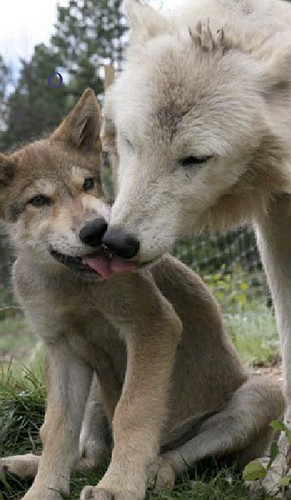
Ever heard the phrase "Raised by wolves"? Well, wolf dads are great! Some of the most hands-on, they are protectors, guarding the den. They play with pups to socialize them and teach hunting behavior. They are long-term parents. Wolf families stay together across multiple years so pups grow up with consistent adult support.
So for Father's Day, let's honor human dads who are our dads by birth, adoption or mentorship. Let's acknowledge that across species, fatherhood has common threads of protection, provision and presence.
Thank you dads for protecting and teaching. Thank you for the watchful eyes, the gentle nods and the brave hearts that help little ones thrive.
Amy Carotenuto is the executive director of the Flagler Humane Society.