- March 25, 2026

Ormond Beach's white flag in the five-year battle over the development of the Tomoka Oaks golf course came in the way of a final split vote to approve 254 homes on the 147-acre property.
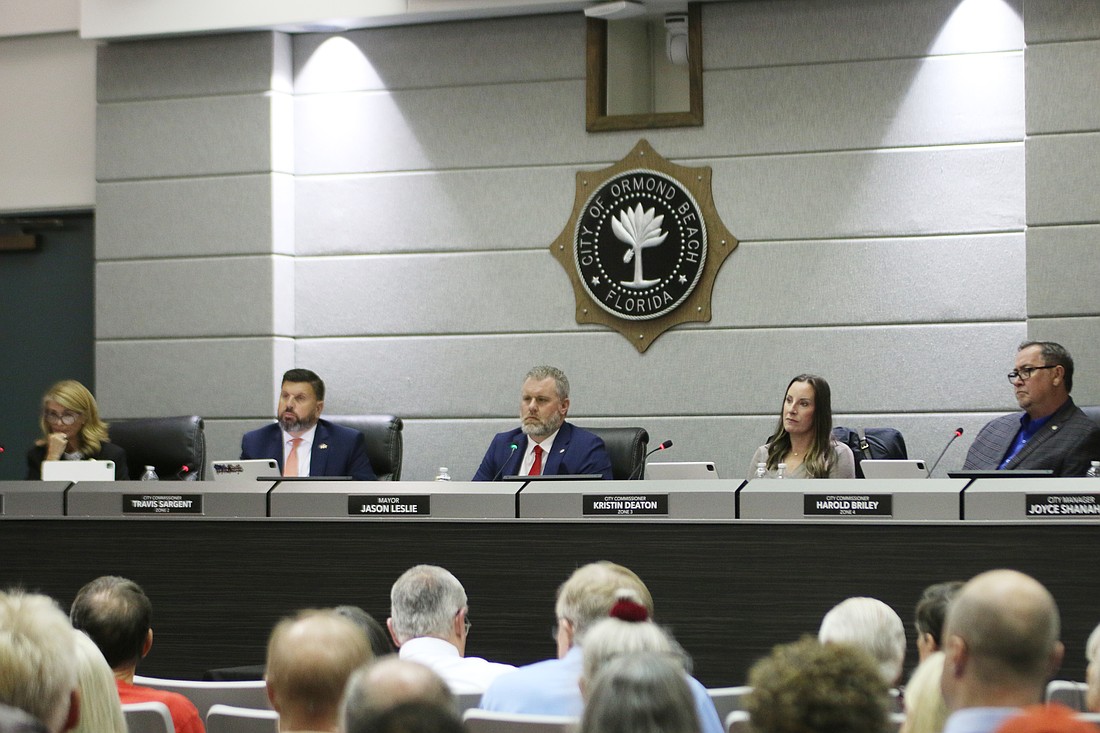
After four hours and over 50 citizens speaking against the development, City Commissioners on Tuesday, March 24, voted 3-2 to issue a new development order to Triumph Oaks of Ormond Beach, LLC. Commissioner Kristin Deaton and Mayor Jason Leslie voted against.
The issuance of the development order comes as the city deals with a multimillion dollar lawsuit with the Tomoka Reserve developers and a looming April 3 deadline to make a decision that Tomoka Oaks residents say will impact them for decades to come.
But officials had to decide: Was it worth the gamble to continue litigation, knowing losing would likely lead to a development with a higher density and a significantly smaller buffer?
Ultimately, the majority of the commission felt the gamble posed too high of a risk.
"We are in a litigation, OK? So there's no threatening anymore," Commissioner Lori Tolland said. "It's a lawsuit that could potentially have a horrendous outcome, not just for the Tomoka Oaks residents, but for all citizens as well."
Much like the first vote on March 13, residents flooded City Commission Chambers on Tuesday. Many wore red to show their opposition to the Tomoka Reserve development, to be located in the middle of the Tomoka Oaks subdivision.
Developers Carl Velie, Ray Barshay and Sheldon and Emily Rubin seek to construct homes in what officials and residents have referred to in the past as the "hole in the doughnut" in the middle of Tomoka Oaks.
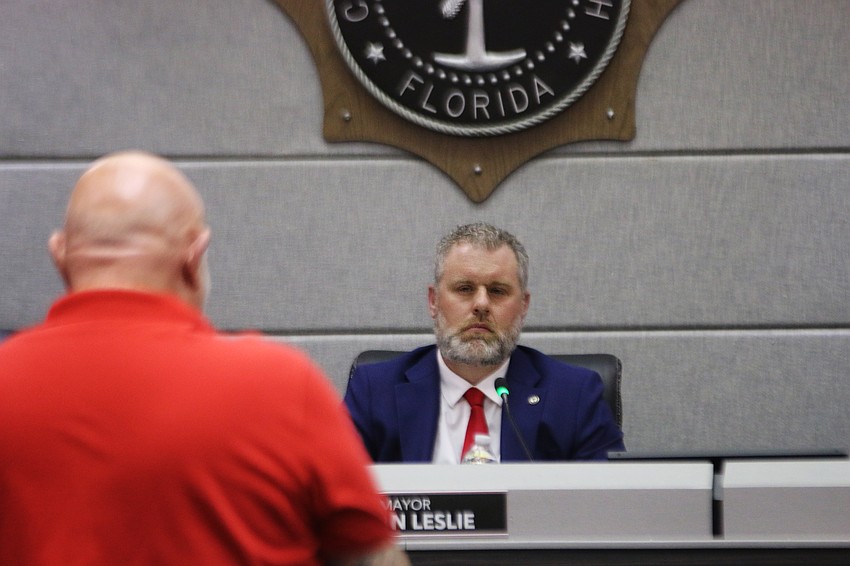
Tomoka Oaks volunteer Homeowners Association's lawyer Dennis Bayer once again asked the commission to send the development back to the Planning Board for further review, since the developers had submitted a new site plan.
"The only reason that this is being done this way is because of federal litigation," Bayer said. "We haven't seen these reports with threats of $16 million. We haven't seen that the staff has done their own economic analysis of the impacts. ... This is not the process that's normally followed."
The developers first approached the city in 2021 after purchasing the golf course, which closed in 2018, for $2.6 million. They held preliminary neighborhood meetings that summer, then two official ones in 2023. Later that year, the developers brought forward a development order for 272 homes, which was heard at three Planning Board meetings. This ultimately resulted in a recommendation to deny the application.
When it went to the City Commission, they remanded it back to the board, asking the developers to decrease density.
Instead of pursuing this, the developers chose to file an application to rezone the property from a Planned Residential Development (a result of a 2006 vote for a townhome and condo project on 30 acres of the golf course) to its original residential zoning of R-2, "Single-Family Low Density."
R-2 may allow for over 300 homes, and a residential project would only need administrative approval, not an OK by the commission.
In April 2024, the City Commission denied the rezoning, and the developers filed an appeal with the Seventh Judicial Circuit in October 2024.
Then, in late December 2024, they filed a federal lawsuit at the U.S. District Court's Orlando Division, alleging that the city had violated the developers' property rights by declaring that the golf course has no allowed zoning uses by right and refusing to issue a new development order.
The current site plan proposes a density of 1.72 units per acre, down from the 1.84 units per acre proposed in 2023. Lot sizes will be a minimum of 80 feet by 120 feet for the homes around the perimeter of the golf course, and 60 feet by 120 feet for interior lots. From the beginning, Tomoka Oaks residents have been asking for 100-foot lots, citing compatibility with their homes.
Bayer asked the commission that, if they didn't deny the application, they consider approving it with conditions — ones regarding density, lot coverage and the traffic light that will need to be installed at Tomoka Oaks Boulevard and North Nova Road.
After some prodding, Cobb Cole Attorney Rob Merrell did rise to speak to the commission, but he said litigation counsel had advised him not to negotiate with the commission that evening.
"In the situation we're in, unfortunately, I can't get into the details with you," Merrell said. "I can tell you that [City Attorney Randy Haye's] suggestion that we'd be willing to talk to you about reasonable things while we're going through the planning process is a productive conversation to have."
From 272 homes to 254.
Tomoka Oaks resident Denise Corley said this was not a significant reduction in density.
"It's a token gesture, not a negotiation," she said.
Some residents felt like the city should take the gamble regarding the litigation. Tomoka Oaks resident Shaune Clark said the tax dollars being used in the lawsuit are theirs.
"I'm asking you guys tonight to bid on black and let it ride so that Ormond Beach, the birthplace of speed, doesn't become the debt of individual homeowner rights and the city's ability to govern them," Clark said.
The meeting also drew prominent city residents from outside of Tomoka Oaks, including former Zone 3 City Commissioner Susan Persis, advocating the commissioners to listen to the concerns.
"This is no longer about approval, but about responsibility — responsibility to the residents," said Persis, who voted against the development when she was a commissioner. "Residents will remember whether they were respected, whether they were included, and whether their voices mattered. Tonight, you have the opportunity to ensure that they do."
Local philanthropist Nancy Lohman asked the commissioners to fight for "a better win" for the residents of Ormond Beach. She addressed one of the developers, Rubin, directly. Many speakers did — unlike Barshay and Velie, Rubin is not a local.
"We are deeply invested, both personally and emotionally, in decisions that directly impact our quality of life," Lohman said. "This project is one of those decisions."
Gambling on a lawsuit would put the decision about the number of homes and the size of the buffer (R-2 only requires a 6-foot buffer) in the hands of one person, a judge, rather than the five commissioners, Commissioner Harold Briley said.
"It's a huge risk," he said.
But Deaton and Leslie, the latter of whom voted in favor of the application on March 13, were willing to take the gamble.
If residents want to gamble, then the city should do that, Deaton said.
"You guys are willing to fight," she said to the residents. "The bar is on this commission. Let's keep fighting."
Leslie said he was struggling to understand why the city was in its current position regarding litigation, saying commissioners weren't present during mediation or involved in those conversations.
"I feel like I'm kind of like a third party in that aspect because I just wasn't involved in all the proceedings on these things and the conversations," Leslie said. "... So I don't know all the facts."
The mayor's statements led to a disagreement on the dais with City Attorney Randy Hayes, who called his statements "disingenuous."
"This commission, including yourself, sir, has been fully informed of everything that has transpired," Hayes said. "You are incorrect in your statement. If you want to vote no, you can vote no, but don't manufacture things that are not true."
Leslie told Hayes he wouldn't respond to that, saying that they could chat "off the record."
Hayes said he'd spoken with each commissioner multiple times regarding the status of the litigation. If the commission voted to deny the application, litigation would continue, but he declined to share further details, saying it was confidential due to the lawsuit.
"We've gone around the globe on this, so everybody knows if you want to approve this on the merits of what you have before you based on the legal criteria — and I'm talking to you, Mr. Mayor — that's fine," Hayes said. "If you don't want to do that, sir, then you need to articulate in the record a legal basis to support why, against the criteria and the staff report."
Now that the development order has been approved, the next step in the process is the review and approval of a preliminary plat, which would need to go before the Planning Board and City Commission. A development order, Planning Director Steven Spraker said, is a zoning document.
"A zoning document, if approved, doesn't give any entitlements for construction," he said. "It gives you the entitlement to go to the next step."