- March 18, 2026

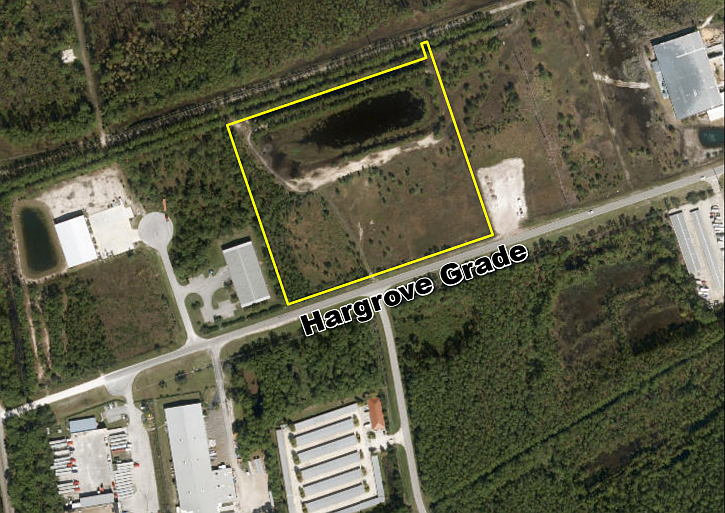
Another batch concrete plant application for Hargrove Grade in Palm Coast has been rejected by the Palm Coast City Council.
In a 4-1 vote against approving the application, with Councilman Dave Sullivan the sole approving vote, the council had real concerns about the compatibility with surrounding businesses and the existing infrastructure. The applicant, Hard Rock Materials, attempted to proactively address concerns by proposing multiple deed restrictions addressing traffic, water consumption and more.
But, Vice Mayor Theresa Carli Pontieri said, this was about compatibility.
“I feel bad for them, I do,” Pontieri said. “But this is not about Hard Rock.”
Hard Rock Materials, purchased the 10-acre property at 56 Hargrove Grade in April 2025 and has applied to have the property rezoned from light industrial to heavy industrial use. Hard Rock Materials operates several concrete batch plants, including one in St. Augustine situated next to a residential neighborhood.
The application is similar to one rejected by the Palm Coast Council last fall at 11 Hargrove Grade. That application, too, was rejected on the basis of compatibility.
This should have been presented as an exception to Light Industrial instead of a rezoning to Industrial 2, Pontieri said. An exception, if approved, would not set precedent for other undeveloped properties and open the door to more Industrial 2 uses.
The area around Hargrove Grade is zoned for Light Industrial uses, which allows for businesses like manufacturing, automotive shops, storage facilities and more. Industrial 2 allows a larger variety of and more intense industrial uses, of which a concrete batch plant is a specified use.
“I want this light industrial coming in," Mayor Mike Norris said, "but I can't support stuff like this because it's just not compatible with the area.”
Applicant Attorney Michael Chiumento said many of the uses approved under the Light Industrial use would have a greater impact to the road and surrounding businesses than Hard Rock Materials. A warehouse and distribution center, he said as an example, is a permitted use that would have more daily traffic trips with heavier loads than the cement trucks at Hard Rock Materials would have.
These uses, he said, would not even need to come before the council for approval, as they are already approved Light Industrial-zoned uses.
“Those are a matter of right,” Chiumento said.
One of the primary concerns from neighboring business owners is how the heavy cement mixer trucks would degrade the road. Hargrove Grade is an unpaved road that several owners say already has flooding problems.
To address those concerns, one of the deed restrictions proposed by Hard Rock would have limited the daily trips to a maximum of 200 trips per day. Chiumento said the included room for the company to grow operations, as it would just start with a few trucks.
Without the covenant, a heavy industrial-zoned property could generate as much as 862 new daily trips, according to city documents.
The covenant also proposed limiting the gross vehicle weight for trucks to 68,000 pounds and total water consumption on the site to a daily average of 25,000 gallons per day for any seven day period.
But the benefits of the covenant restrictions did not outweigh the risks for the majority of the council.
“We have a lot of vacant land around this property,” Pontieri said. “This could very quickly turn into an Industrial 2 park.”
Sullivan was the sole vote to approve the application. Palm Coast can’t continue to live on ad valorem taxes, he said.
“We're at the point where it's time to do something that tells the world that this city is open for business," Sullivan said. “Like it or not, we’re growing and we have to have business if we're going to exist. “
Chiumento said Palm Coast’s economic team courted Hard Rock Materials to come to the city and open a new concrete plant.
The business, which already employs multiple Palm Coast-resident truck drivers, would have started with 15 new jobs and brought in $400,000 in commercial property taxes. Members of the council have multiple times reiterated the need for more commercial business in the city, Chiumento said, even campaigning on those issues.
“We heard you all loud and clear, as did your staff,” Chiumento said. “And they recruited business to our community.”
Councilman Charles Gambaro, who ultimately voted against the application, pointed out that the city does not have many areas where a business like this would fit.
“If not this location, what location?” Gambaro asked.
Councilman Ty Miller agreed. To the property owners of the surrounding undeveloped land, Miller urged those owners to begin using that property. Other companies want to use it, he said, and the existing owners don’t want those companies there.
The unused properties are not beneficial to residents in any way, he said.
“It's just sitting there and if we're narrowly restricting the uses then we need to develop it,” Miller said.
The council invested additional money into developing economic development strategies over the last year, and, Pontieri said, those strategies have been “markedly different” than in the past.
“We have somebody who's willing to come in, spend the money, [who] has already invested,” Pontieri said. “At what point do we stop saying no?”