- March 18, 2026

Daytona Beach’s retail market has benefited from steady population growth and a resilient tourism industry in recent years. But over the past year, demand for retail space has begun to soften, reflecting broader shifts across the commercial real estate sector.
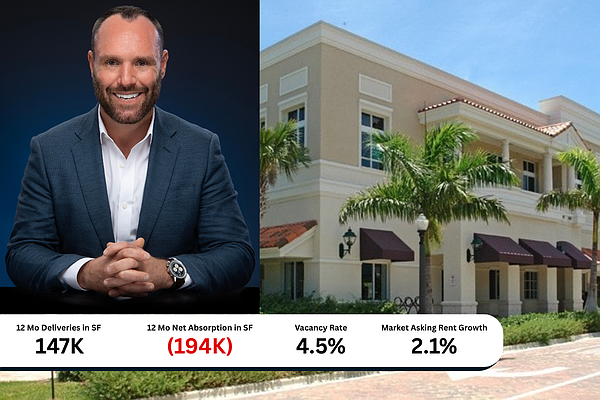
During the first quarter, the market recorded a loss of roughly 190,000 square feet of occupied retail space, reversing the 85,000 square feet of absorption seen during the same period last year.
Most of that decline occurred within neighborhood shopping centers, which accounted for about 170,000 square feet of lost space. In contrast, freestanding retail properties continued to perform well, while power centers and strip centers posted modest gains.
Even with the recent slowdown, overall vacancy remains relatively stable. The market’s vacancy rate now stands at 4.5%, closely tracking the national average of 4.4%.
One of the market’s biggest challenges is the limited supply of larger, high-quality retail spaces. Only a handful of properties in the region can accommodate tenants seeking spaces of 10,000 square feet or more, and options become even more limited at the higher end of the market. Currently, only two shopping centers in North Daytona Beach offer available spaces exceeding 20,000 square feet.
Despite these constraints, leasing activity has improved slightly compared to last year. Over 20 leases for spaces larger than 10,000 square feet were signed during the past year, with the average lease size reaching approximately 4,200 square feet and lease terms averaging 57 months.
New tenants entering the market include Aldi, AutoZone, O’Reilly Auto Parts, ChipShot, Spirit Halloween, and Sprouts Farmers Market, reflecting continued interest from both national retailers and expanding regional brands.
Meanwhile, construction of new retail properties has slowed significantly. Elevated interest rates and rising insurance costs—particularly in coastal markets—have made it more difficult for developers to justify new projects. As a result, only about 58,000 square feet of retail space is currently under construction, down sharply from the 140,000 square feet delivered last year.
Even with these headwinds, rent growth has remained relatively healthy. Asking rents have increased 2.1% over the past year, slightly outpacing the national average of 1.9%.
However, industry forecasts suggest that rent growth may moderate in the near term as the market adjusts to softer demand. Longer term, rents could begin to accelerate again as supply remains limited and new development continues to slow.
What Does This Mean For You?
For property owners, investors, and retailers, Daytona’s retail market appears to be entering a period of adjustment rather than decline. Demand may be moderating, but limited supply—particularly for larger, high-quality spaces—continues to support the market’s fundamentals.
Strategize Your Next Smart Move.
Thinking of buying, selling, or repositioning a retail asset?
Contact me, Jamie Cuzzocreo at Watson Commercial Realty, Inc. for insight-driven guidance backed by real market data. Get the same information today’s top investors are using to make smarter moves.
386.415.3577
All third-party market data referenced in this article is sourced from CoStar Group, a global leader in commercial real estate information, analytics, online marketplaces, and 3D digital twin technology.