
- March 17, 2026

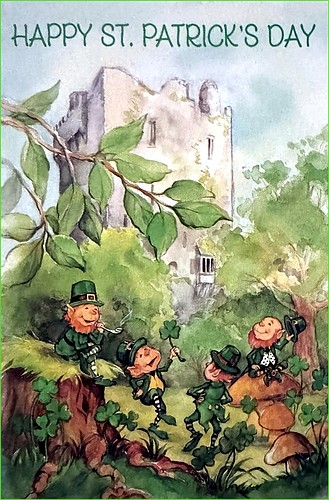
St. Patrick’s Day is celebrated annually on March 17. It is not a legal holiday in the United States; however, it is widely recognized and observed as a celebration of Irish and Irish-American culture.
It commemorates the death of Saint Patrick, the patron saint of Ireland, who is credited for bringing Christianity to the country in the 5th century. St. Patrick’s Day was established in the 17th century (around 1631) by the Catholic Church and was originally celebrated as a religious day of feast. It evolved into a cultural celebration of Irish culture featuring dancing, feasts of corned beef and cabbage, leprechauns (mythical beings of small human stature who possess magical powers), parades, public festivals, religious observances and the of wearing green attire.
The birth name of Saint Patrick (389-461 AD) was reportedly Maewyn Succat (also spelled Maewyn Succetus). He was born to a Christian family in Roman Britain, his grandfather was a priest and his father a deacon. At the age of 16, he was captured by Irish raiders and held as a slave in Ireland for six years.
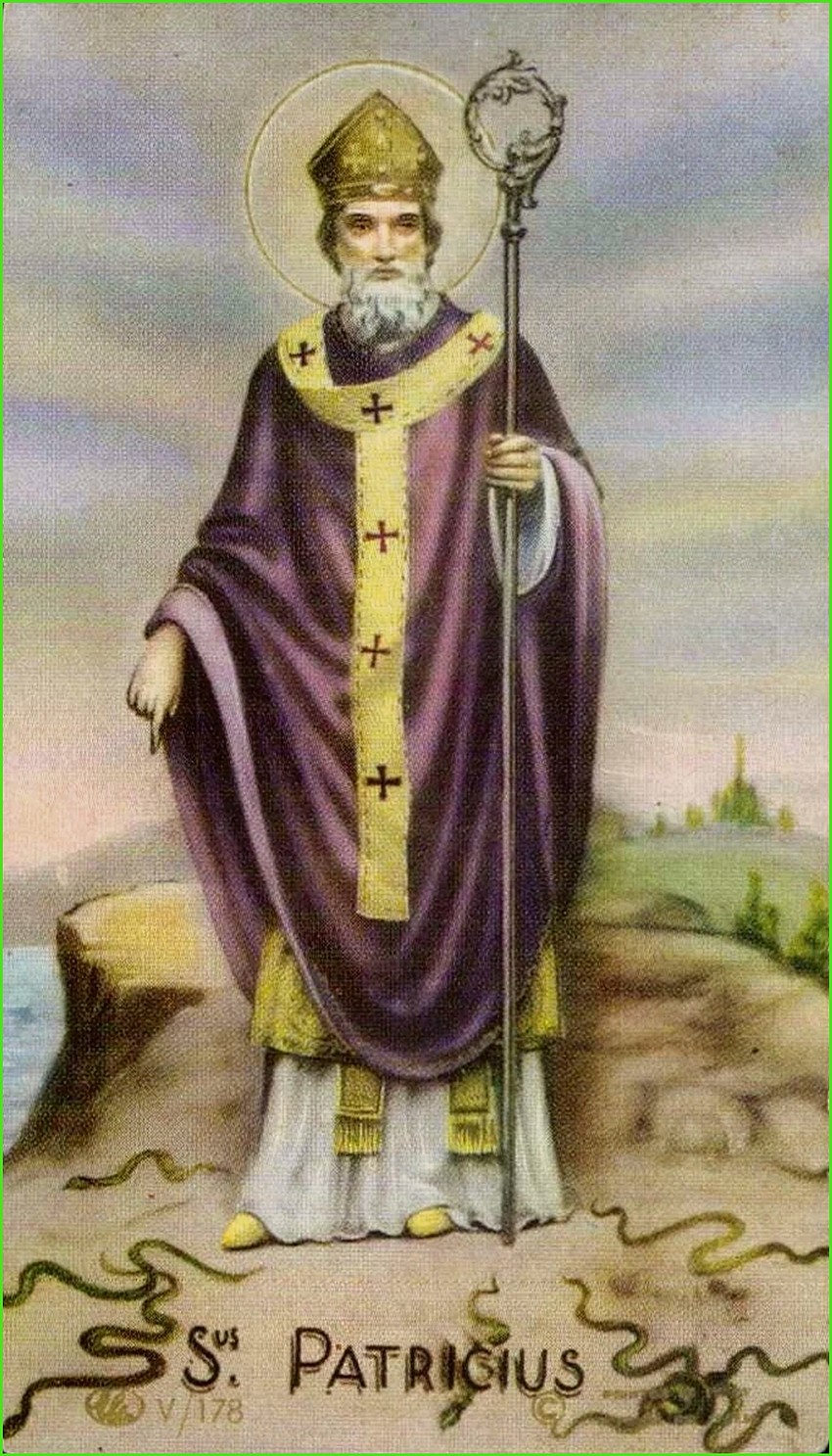
During his time of enslavement his faith in God deepened. He eventually escaped from his captors and soon afterwards received a divine calling to religious education. He was ordained a Catholic priest, and changed his name to Patricius (derived from pater (father) in Latin), the root of the modern name Patrick. He was selected to become a bishop, and ordained by Bishop Germain (St. Germanus) of Auxerre in France. In 432, he returned to Ireland as a missionary and established churches, monasteries and schools to spread Christianity. For the following 29 years he worked to convert members of Irish tribes to Christianity.
The two known surviving authentic writings of Saint Patrick are the Confession (Confessio) and Letter to Coroticus (Epistola). In the Confession, Saint Patrick testified to his faith, defended himself against detractors of his mission and credited God for his success instead of his own virtues. Saint Patrick’s Letter to Coroticus, the British Christian king and warlord, is a denunciation of the monarch’s hard-handed raids into Ireland.
These writings are important 5 th century historical sources that are vital for the understanding of Ireland’s transition to Christianity.
For centuries, St. Patrick’s Day was mainly a solemn religious observance in Ireland, which included church attendance and traditional, modest Irish meals. Several restrictions of Lenten (the 40-day, solemn Christian period of fasting, penance and prayer) were lifted for the observance of St. Patrick’s Day.
In the early 17th century, efforts by Franciscan scholar Luke Wadding convinced the Catholic Church to formally add St. Patrick’s Day to the liturgical calendar (Church year), “a sacred, repeating cycle of seasons and feasts that guides the Church’s worship, daily prayer and scripture readings.” March 17th was officially established as St. Patrick’s Day, a holy day of feast in Ireland.
Starting in the 18th century, St. Patrick’s Day began a transition from a religious feast to a cultural celebration of Irish heritage due to the efforts and influence of Irish immigrants in the United States.
Banishing of snakes out of Ireland: Legend claims that St. Patrick stood on a hill and expelled all snakes into the sea because they attacked him during a 40-day fast. This legend is not based on reality as Ireland’s climate and geography never supported native snakes.
Corned Beef and Cabbage as a traditional Irish meal: This meal is an Irish- American creation as Irish immigrants substituted cheaper corned beef for bacon in the 19th century. Bacon and cabbage is more of a traditional meal in Ireland.
Four-Leaf Clovers (Shamrocks): The primary symbol of St. Patrick’s Day is the three-leaf clover, not the four-leaf clover. The much rarer four-leaf clover is recognized as a symbol of luck, prosperity and protection. Celtic, Druid and Irish pagan traditions believed that four-leaf clovers could bring good fortune and ward off evil spirits.
Green color: Originally, blue was the color associated to St. Patrick. In the 18th century, the Irish independence movement associated the color green with the St. Patrick’s Day holiday.
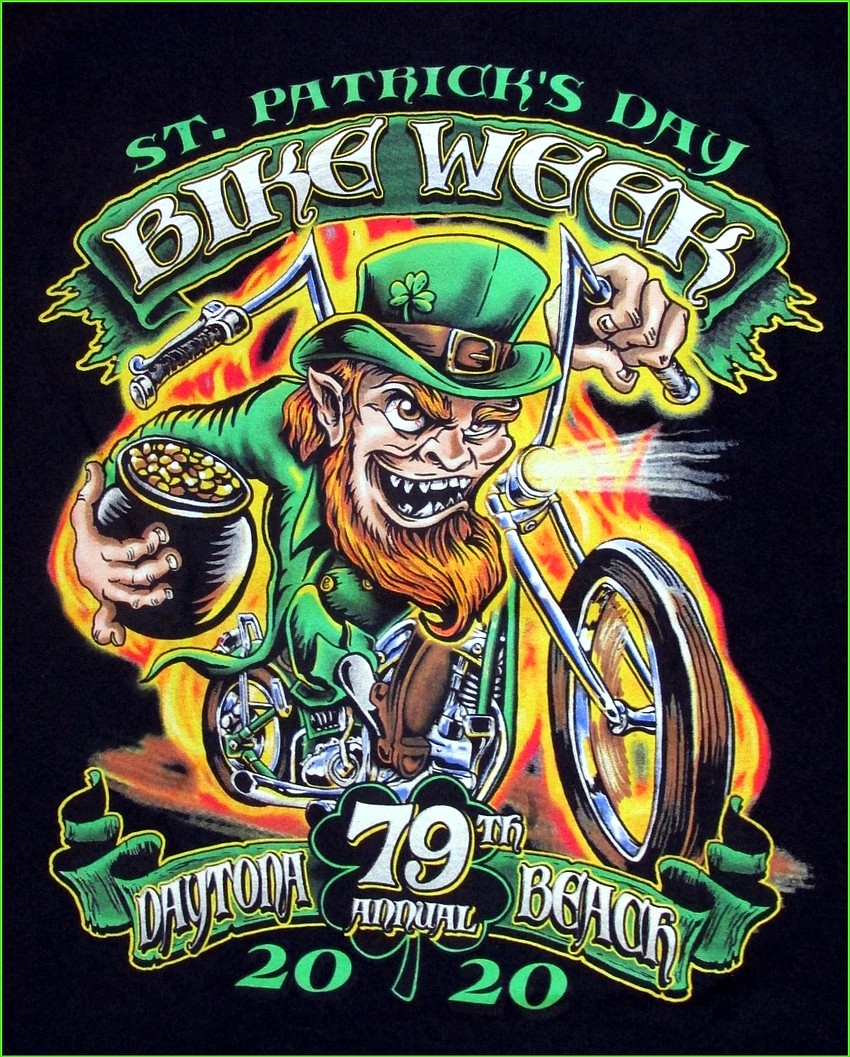
Leprechauns: Originating in Irish folklore in the 8th century, and not originally associated to St. Patrick’s Day, these mythical beings were incorporated into the holiday over the centuries.
Pot of gold at the end of a rainbow: According to ancient Irish legends, Leprechauns hid their pots of gold at the end of a rainbow to safeguard their fortunes. The legend claims that if a human catches a Leprechaun, he must reveal the location of the gold. This legend was not originally part of St. Patrick’s Day traditions; however, it evolved into a popular and commercial symbol of good luck, riches, and Irish tradition and is now associated with the holiday.
On March 17, 1601, the first known St. Patrick’s Day parade took place in St. Augustine, Florida. An Irish vicar (ordained Christian clergy member) living in the Spanish Colony of Florida organized the event.
In modern times, Florida’s St. Patrick’s Day celebrations include various festive events featuring drinks, food, Irish music and parades.
Mighty St. Patrick’s Day Festival in Disney Springs: The Raglan Road Irish Pub hosts a multi-day music, dancing and food event where award-winning Irish bands and the Raglan Road Irish Dancers perform.
St. Augustine Celtic Music & Heritage Festival: This award-winning festival is located at Francis Field and features Celtic food, highland games, lectures, top international and U.S. Celtic bands, traditional St. Patrick’s Day parade, whiskey tasting and workshops.
St. Patrick’s Day Block Party at European Village: This “All Things Irish” event in Palm Coast features a DJ, bagpipers, food (including corned beef and cabbage), green beer and live music.
St. Patrick’s Day Parade and Festival in Downtown Hollywood: The Hibernians of Hollywood and the City of Hollywood host the event. The parade features many festive floats, local marching bands and bagpipe and drum corps including the New York Police Department Emerald Society Pipe and Drum Corps. The festival includes Irish food featuring corned beef and cabbage and Shepherd’s pie. Green-colored drinks are also served.
St. Patrick’s Day Parade in Winter Park: This sizable central Florida St. Patrick’s Day parade proceeds down Park Avenue and features Irish culture and heritage including bagpipers, dancers and festive floats.
St. Patrick is known as the “Apostle of Ireland.” He was never formally canonized (recognized as an official saint) by the Catholic Church because during his time (5th century) the Pope did not officially canonize saints. In the 12th century, Pope Alexander III instituted a unified rule requiring the Vatican’s approval for sainthood. St. Patrick is a saint in name only; however, he is highly honored and substantially respected in various areas around the world.
“For each petal on the shamrock, this brings a wish your way: Good health, good luck, and happiness for today and every day.”
Happy St. Patrick’s Day to one and all.
Randy Jaye has recently researched and nominated five properties that have been successfully added onto the National Register of Historic Places, and is the author of five history books. He also writes articles for historical journals, local newspapers, magazines, online publications, and has appeared on several radio shows and PBS documentaries. He earned both a master’s degree and a bachelor’s degree from California State University.