- March 13, 2026

After a five-year battle, two lawsuits and seven public hearings, the developers of the Tomoka Oaks golf course have heard the word "yes" from Ormond Beach officials for the first time.
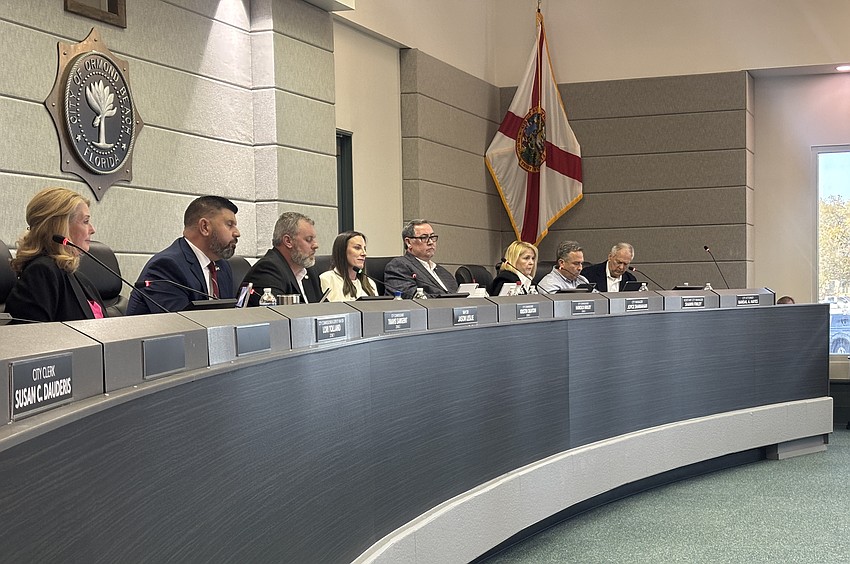
It was a reluctant 4-1 approval for the Tomoka Reserve development during a special meeting on Friday, March 13, with City Commissioner Kristin Deaton casting the lone dissenting vote.
"This really stinks," City Commissioner Lori Tolland said. "I'm just going to say it right now. I look out there and I see a lot of friends, a lot of people that my kids have grown up with, and I respect everybody in this audience right now."
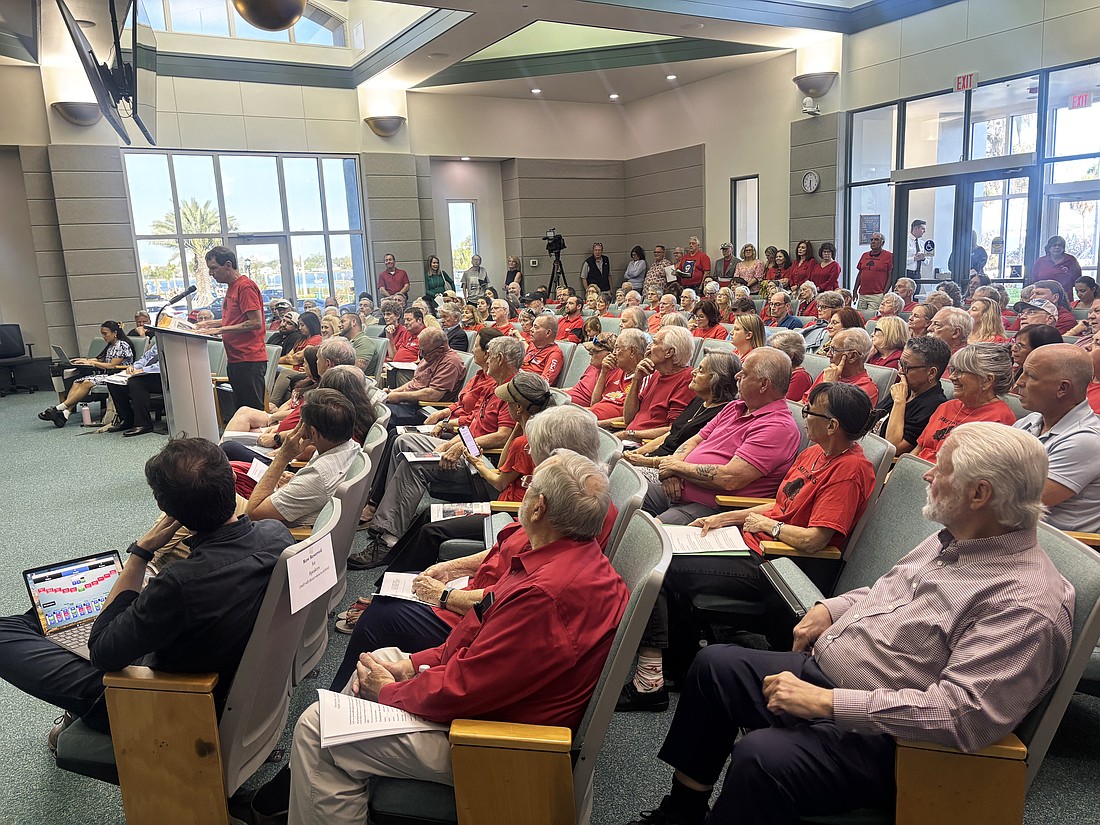
It was standing-room only in the City Commission chambers for the meeting, with residents watching from an overflow area as the city's fire marshal kept count. Many residents wore red T-shirts, some with the slogan "Save Tomoka Oaks," to reflect their opposition to the project, which will add up to 254 single-family homes on the 147-acre shuttered golf course property, located in the center of the Tomoka Oaks neighborhood.
As she spotted someone laughing in the audience during her comments, Tolland said she was sorry to see that. This isn't an easy decision, she said.
"We take an oath and we have certain responsibilities, but one of those responsibilities is to manage land use and growth," Tolland said. "Nobody likes to see growth in our community that impacts people negatively, and you all are here because you feel like it's going to impact you negatively. But it's my responsibility to evaluate my decisions based on our land development code, our comprehensive plan and remain compliant to state statute."
And this time, unlike past hearings, city staff recommended the commission approve the development order for Tomoka Reserve.
From the time Tomoka Oaks was built in 1961, the neighborhood was marketed as a community surrounding an 18-hole golf course. But the property at 20 Tomoka Oaks Blvd. always held a residential zoning of R-2, "Single-Family Low Density."
Then, in 2006, the Ormond Beach City Commission at the time approved a rezoning to Planned Residential Development for the Tomoka Oaks Golf Village project by Tomoka Oaks resident Dr. Richard Ryals, who died in 2024. His proposal would have added 35 townhomes and six condo buildings on about 30 acres of the property, preserving the rest of the golf course.
Due to the recession that occurred soon after his project was approved, the development was never constructed. Ryals purchased the property in 1979 and sold it 31 years later to Putnam State Bank. Amid claims that the golf course property was forever restricted to being a golf course, Ryals told the Observer in 2022 that residents were misinformed. He cited the lack of a restriction on why he held on to the property.
"I was afraid some unscrupulous developer would come in and start building homes back there, which is exactly what's happening," he told the Observer in a 2022 interview.
The golf course officially closed in 2018.
In 2021, it was purchased by Triumph Oaks of Ormond Beach, LLC — developers Carl Velie, Ray Barshay and Sheldon and Emily Rubin — for $2.6 million. Velie and Barshay are locals.
Preliminary neighborhood meetings for the development were held in the summer of 2021 to discuss a 300-home development. Then, two official neighborhood meetings took place in February 2023.
This was followed by three Planning Board hearings later that year, resulting in a recommendation of denial for 272 homes to the City Commission, who remanded it back to the Planning Board; commissioners opposed the project, asking for less homes and less density. (Three remain on the commission today: Tolland, Travis Sargent and Harold Briley.)
It was then that the developers chose to pursue a rezoning for the development, wishing to revert back to the original R-2 designation, which would allow for over 300 homes. If rezoned R-2, the development would only need to meet certain requirements to be approved by city staff, bypassing the commission approval process.
In January 2024, the Planning Board unanimously recommended denial for rezoning, a decision the City Commission upheld in April 2024.
In October 2024, the developers filed an appeal with the Seventh Judicial Circuit for the rezoning denial. Then, in late December 2024, they filed a federal lawsuit at the U.S. District Court's Orlando Division. The lawsuit alleged that the city had violated the developers' property rights by declaring that the golf course has no allowed zoning uses by right and refusing to issue a new development order.
Based on preliminary arguments, the federal judge appeared to agree.
A recent order answering the city's motion to dismiss the lawsuit stated in part that, as argued by the developers' attorney in one of the legal arguments, "it 'logically makes sense' to hold governments accountable for uncodified policies that may be applied arbitrarily and capriciously, and which are by their nature arbitrary and capricious."
About 25 residents spoke against the development at the March 13 hearing. The concerns raised have stayed constant since the beginning: increased traffic, negative impact to the existing quality of life, potential flooding concerns for Tomoka Oaks, lack of compatible lot sizes, the $12 million traffic signal the developer will need to install, and environmental impacts.
Tomoka Oaks volunteer Homeowners Association's lawyer Dennis Bayer questioned the city's legal opinion that the March 13 hearing was a continuation of past hearings. It should've gone before the Planning Board, he said, like it had in the past. He also criticized the lack of the HOA expert's testimony in the agenda documents, when the city used it in the past to support its recommendation to deny the development.
"I think for you all to consider this matter tonight is premature," Bayer said. "It's a violation of our due process rights."
Tomoka Oaks resident Mary Greenlees said she understood the commission was in a tough position: Take a chance and continue pursuing the lawsuit, which could result in more lots and the loss of a 50-foot natural buffer (an R-2 zoning only requires a 6-foot buffer), or approve the development order for 254 homes.
"I understand the commission's position, but we need answers," Greenlees said. "Why is this moving so fast? What I don't understand is how we were left out of any of the negotiations."
Resident Barbara Doliner has lived in Tomoka Oaks for 37 years. She asked the City Commission if they were really listening to the residents.
"We do not want this project in Tomoka Oaks," Doliner said. "It does not fit, no matter how they're going to package this. No matter how many different ways they're going to come to you. It doesn't fit, and which one of you sold us out?"
In response to Bayer's claim, City Attorney Randy Hayes said no one's due process has been violated.
"We are within the legal, procedural parameters for this commission to hear this," Hayes said. "Anybody can sue anybody at anytime for anything. They can say whatever they want, but we have made sure that this item before this commission this evening has followed the proper procedural processes."
Karl Sanders, the attorney representing Triumph Oaks, kept his statements brief during the meeting. The developers weren't going to make further concessions that evening, he said to the commission.
The current site plan proposes a density of 1.72 units per acre, down from the 1.84 units per acre proposed in 2023. Lot sizes will be a minimum of 80 feet by 120 feet for the homes around the perimeter of the golf course, and 60 feet by 120 feet for interior lots. From the beginning, Tomoka Oaks residents have been asking for 100-foot lots, citing compatibility with their homes.
In response to concerns that the development's traffic study is outdated, city staff said that traffic studies have no expiration date, something Commissioner Travis Sargent said the city should look into addressing within its regulations in the future.
We do not want this project in Tomoka Oaks. It does not fit, no matter how they're going to package this. No matter how many different ways they're going to come to you. It doesn't fit, and which one of you sold us out?" — BARBARA DOLINER, Tomoka Oaks resident
Mayor Jason Leslie asked: If the city had chosen to deny the application, and therefore further pursue litigation, what would a "win" for the city in court look like?
A win, Hayes said, would be that the judge decides the property can remain a PRD, granting them "the opportunity to do this again, and again, and again, with or without potential litigation."
"So the question then becomes, in the best case scenario ... if we repeat this process — we go through the development application again and again and again — how much better do you think you're going to get than the proposal that you have?" Hayes said. "What you have, I believe, is a good faith effort by the parties."
Hayes' statement was met by laughs and shouts of dissent from the residents, many of whom later called the commission "sellouts" and yelled at them on their way out of the commission chambers after the vote.
Commissioner Harold Briley referred back to the 2006 rezoning. If it hadn't been rezoned to PRD, the property would still have an R-2 zoning designation today.
"Look at it either way, forcibly or luckily, it was PRD because if it was still zoned R-2 today, or when the current applicant bought the property, he could build 300-plus homes in there with a stroke of a pen in the planning department office," Briley said.
Risking continuing the legal fight, Briley added, may place the ultimate decision in the hands of someone who doesn't live in the community, and 254 homes is better than over 300.
Mayor Jason Leslie said one of the roles of the commission is to manage "risk and liabilities," saying the legal fight could cost the city millions of dollars.
"I just don't think that the risk to what I'm hearing and learning on this thing is really the path in the right direction," Leslie said.
In simple terms, Tolland said, the project doesn't meet the legal criteria for denial.
"The project checks the boxes and cannot be legally denied because it meets the criteria above the land development code and comprehensive plan," she said. "This is not how I saw this project ending when we first chose to deny the developer."
A second hearing for Tomoka Reserve will be held at 7 p.m. on Tuesday, March 24, at City Hall.