- March 13, 2026

Ormond Beach business owners are asking for legislative help to protect themselves from "drive-by" ADA lawsuits.
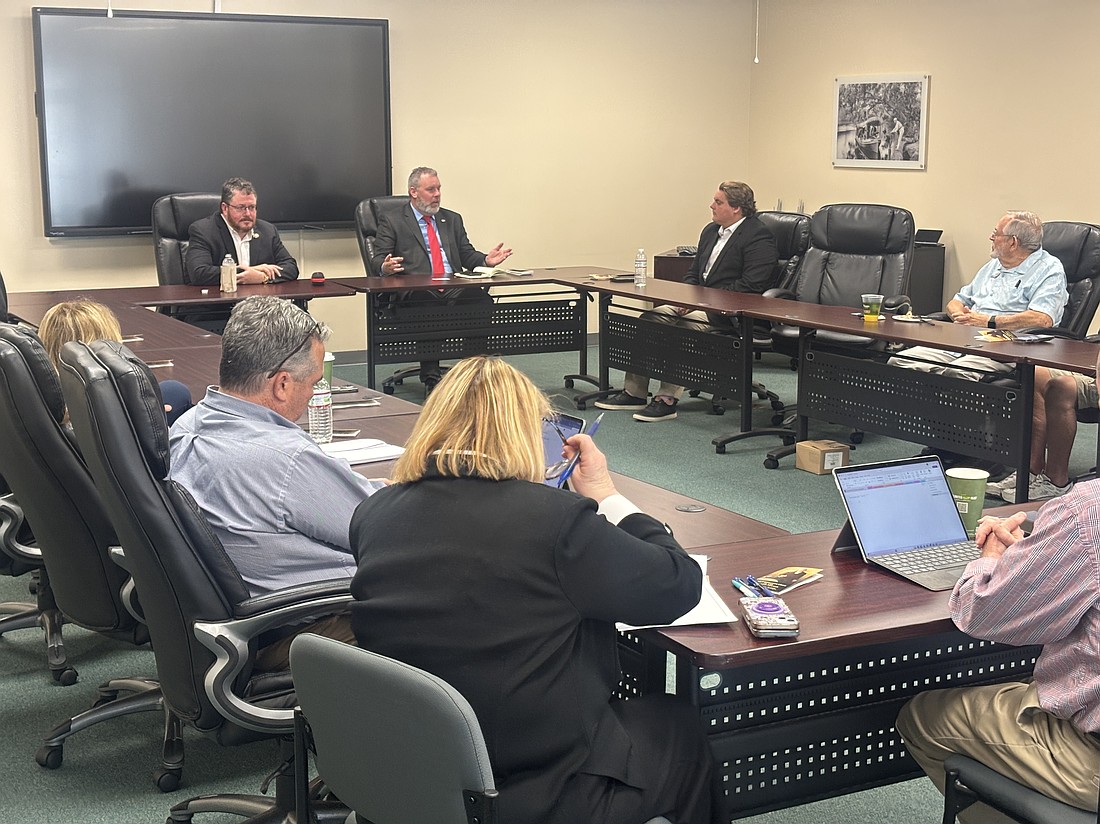
On Thursday, March 12, a small group representing the local business community attended a roundtable meeting at City Hall with U.S. Rep. Randy Fine. The meeting comes after dozens of Volusia businesses have been hit with a wave of lawsuits alleging violations of the Americans with Disabilities Act. These violations, business owners argue, are "frivolous" — often minor and easily corrected — but without a process in place to address them, lead to settlements costing them thousands of dollars.
"Nobody here would ever argue that we are not trying to do the right thing and want to do the right thing," said Wes Dunn, owner of Dunn's Attic, during the roundtable. "But they'll come in one of our sites and ... they'll take pictures. Then it goes back to their investigator, they put it in a form and before you even get a copy of it, the lawsuit is filed in federal court."
Dunn's Attic was sued in 2020 for violations including failing to provide an ADA-compliant number of accessible parking spaces, number of exterior table seating, restroom signage and toilet paper location, according to the complaint filed in in the U.S. District Court Middle District of Florida.
Dunn paid $15,000 to settle the suit; his landlord, Highlander Corp., paid $10,000.
More recently, local businesses throughout Volusia County have been sued by one person, prompting business owners in recent months to warn others on social media. Tavia Wagner has filed 351 ADA lawsuits with the Florida Middle District Court in the last 10 years.
The Observer contacted her attorney, Anthony T. Litsch III, but did not receive a response in time for publication.
A bulk of the discussion with the senator during the roundtable, organized by Ormond Beach Mayor Jason Leslie, revolved around recent lawsuits by Wagner, who has spina bifida.
In May 2025, Wager sued Ormond Beach restaurateur Kevin Wakefield for ADA violations in his New Smyrna Beach restaurant, Avanu on Flagler. The complaint cited failure to provide ADA-compliant slope grading in entrances, doormats, bar counter heights and floor space, and bathroom infractions such as an ADA-compliant toilet paper dispenser location.
The lawsuit was settled in late June 2025. Wakefield said he paid over $10,000.
The issue, he said, is that it's hard to defend yourself as a business owner because it would end up costing more to litigate the alleged violations.
"It takes so many experts to defend on all the different things that they're suing you for," Wakefield said.
The solution to these kinds of lawsuits, he said, would be to give business owners a set time to address the issues before the matter goes to court.
It should be noted that under the ADA, plaintiffs in these lawsuits do not collect monetary damages. However, the Florida Civil Rights Act allows for "compensatory and punitive damages" in conjunction with ADA lawsuits and many businesses often settle to avoid litigation costs. Plaintiffs can also recover attorney's fees and court costs.
In a November interview with the Observer, local attorney Brooks Casey said the ADA, which was crafted with two enforcement mechanisms: one through the Department of Justice and one through private enforcement. Wagner is exercising the second option.
Another challenge is that the ADA was written in vague terms, making it easier for lawyers to have more wiggle room for complaints.
Casey said he's been an advocate for the federal government to include a notice provision under the ADA. In most areas of the law, that's a standard process.
"But in ADA cases, there's no incentive to do that because then the attorney sending the letter doesn't get attorney's fees, and so it has taken away the incentive to notice people," he said. "But my assumption is if you send people a 60- or 90-day notice, they would fix the issues if they can figure out how."
But a notice period would require a law change.
And Fine said at the roundtable that he wasn't sure that was the solution. A cure period, he said, would only help with people who file violations in good faith.
"If you're just looking to sue to get the quick settlement, you're just going to say, 'Well, they didn't cure it,'" Fine said.
He also worried about adding new layers of bureaucracy to the process, such as requiring federal inspections.
This isn't a new problem, the congressman said. It's a national problem.
"There will be some legislative solutions out there that have already been developed by some trade association or something to deal with this," he said. "We just need to track down what those are and where they are in the process."
In recent years, bills have been introduced at both the state and federal level to provide cure periods to allow for remedying ADA violations. H.R. 6453 was introduced in Congress in December and calls for a 30-day cure period to allow business owners to correct the violations or provide a written outline on how they plan to fix them. The legislation also seeks more details on the alleged violation and how an individual was denied access.
Similar filed resolutions have not advanced in Congress.
How can business owners protect themselves in the meantime against "drive-by" ADA lawsuits? Casey said they can hire ADA experts and surveyors to assess their businesses, a proactive approach that would allow them to work through any issues.
Local governments, if they don't include this already, should also require a review for ADA compliance when a new business opens. That would both raise awareness and compliance, Casey said.
In the City Of Ormond Beach, new construction of buildings requires an ADA inspection before receiving a Certificate of Occupancy. However, changes of use within existing buildings, with no alterations, only require a Business Tax Receipt; these do not require ADA inspections.