- March 11, 2026

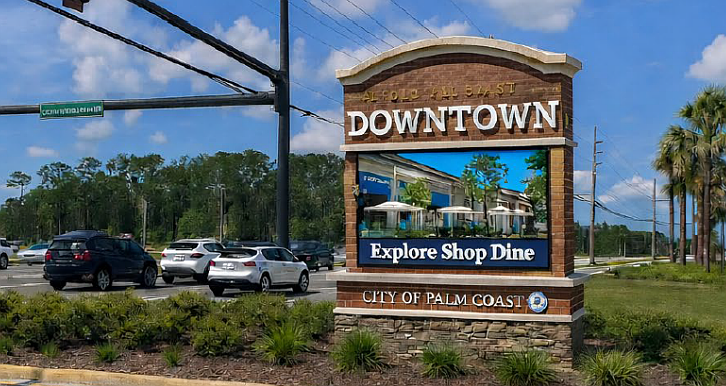
For the first time since the city’s inception, the Palm Coast City Council is considering allowing digital signage for commercial business.
The update to the city's land development code provides regulations for factors like how bright a sign may be and how fast one message can switch between another message. Economic vitality seems to be the driving force behind the code change.
City planner Estelle Lens told the council on March 10 that studies have shown digital signs increase sales for a business. If approved, she said, the city would like to place two digital signs, one at the Bulldog Drive entrance and one at the Center Avenue entrance to Town center.
“I think the main driver for this whole thing is Town Center,” Palm Coast Mayor Mike Norris said. “I don’t have any problem with it.”
The proposed change is part of the update to the city’s land development code, where the council is reviewing proposed changed to the LDC. Other changes to Chapter 12 of the LDC, which covers signage, would include increasing the maximum sign height from 7 feet to 10 feet in nonresidential areas, adding language to address commercial banners at sports fields and events and extending the temporary commercial signs from 30 to 60 days.
The brightness of the digital screens, measured by the standard of “foot-candles,” can be no more than 0.3 foot candles for ambient light, Lens said. Foot-candles can be easily measured through specific devices or even apps on the phone, she said.
Messages can transition for no more or less than eight seconds, and must either instantly change or fade in and out.
Flashing, strobing and blinking signs would still be prohibited.
“I just don’t want Palm Coast to lookin’ like Las Vegas,” Councilman Charles Gambaro said, though he liked the idea as an economic driver.
Overall, the idea of digital signage was positive for the Palm Coast City Council. Vice Mayor Theresa Carli Pontieri was leery of the signs being allowed either too close to residential houses, or allowed to saturate an area, where every small business has a digital sign.
“I would just look for limitations,” Pontieri advised Lens.
The digital signs would also be prohibited on some roads and restricted to smaller sizes on other roads. The proposal requires the signs to be 150 feet away from a residentially zoned property but Pontieri asked that be increased to closer to 300 feet.
The largest digital displays can only be up to 75% of the sign. These larger signs would be allowed on major arterial roads such as Highway U.S. 1, Matanzas Woods Parkway, Palm Coast Parkway and State Road 100, Lens said.
The small displays, up to 50% of a sign’s face, would be allowed on minor arterial roads. That would include Belle Terre Parkway, Seminole Woods Boulevard, south of State Road 100, Florida Park Drive, Cypress Point Parkway, and more.
Digital signs would be prohibited on major collector roads that include Royal Palms Parkway, White View Parkway, Rymfire Drive and East Hampton Drive.
The Palm Coast Planning Board will review any proposed changes to this chapter of the LDC on April 15, and the council is tentatively scheduled to vote on it on May 12.