- March 3, 2026

Out of Volusia County’s beaches, Daytona Beach has the greatest risk, according to a beach management study.
Volusia County Coastal Division Director Jessica Fentress is making the circuit through Volusia County’s beach towns, presenting each city with how its beaches rank on the risk assessment scale and the best ways to tackle those issues.
“So that we know which community along our 47 miles of coastline is at the most, highest risk, to help us identify who gets first priority on that funding,” Fentress said.
Nine beach areas in Volusia County — North Peninsula, Ormond-by-the-Sea, Ormond Beach, Daytona Beach and Daytona Beach Shores, Wilbur-by-the-Sea, Ponce Inlet, New Smyrna Beach South and North and Silver Sands — were assessed for risks to shoreline encroachment, infrastructure exposure, armoring exposure, historical shoreline change and storm response. Each area was rated low, medium or high risk for each municipality, and then those scores were added together for a total risk.
Some areas of Volusia are losing eight feet of shoreline every year, Fentress said.
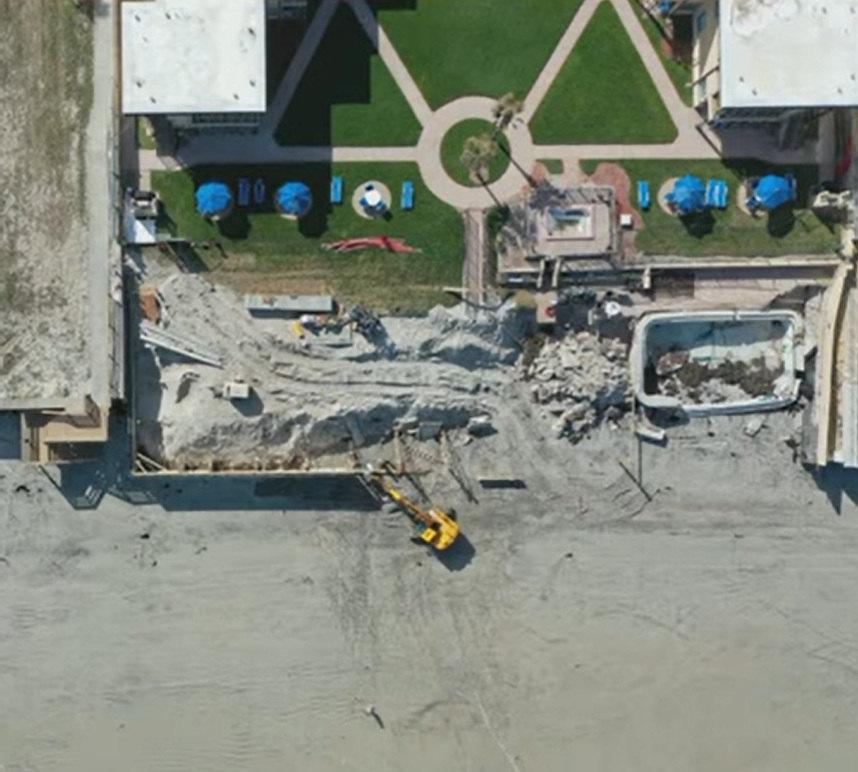
Daytona Beach received a “one” ranking on the risk assessment, with three of the five risk areas rated as high risk and the others medium risk. Daytona Beach Shores and Wilbur-by-the-Sea also ranked a one.
“That's not good,” Fentress said. “That means you're the highest city, along with Daytona Beach Shores and Wilbur-by-the-Sea. So you are at the highest risk county wide.”
Ormond Beach rated a low score of six on the risk assessment — shore line encroachment having a “low” risk assessment and the others all medium risk. Ormond-by-the-Sea is at the bottom of the risk assessment scores with a seven.
Fentress said Daytona Beach’s high risk means it will have the first grab at sand funding for repair and damage to the shorelines, if it decides to go that route.
And beach nourishment is what Fentress recommended for Daytona Beach.
There are several options available to the county for beach management. Beyond the “no action” approach, preventative and repair alternatives include: nearshore sand placement, relocating buildings away from the shore, beach nourishment, seawalls, revetments, artificial reefs, breakwaters, groins and structural elevation.
Of the options best for Daytona Beach, Fentress suggested beach nourishment as the best way to go.
Beach nourishment is adding sand to the beach to expand the recreational width of your dry sand. While beach nourishment is expensive, it is also eligible for grant funding as a sand placement initiative, Fentress said.
Volusia County has 47 miles of coastline, Fentress said, and in the 2022 hurricane season lost over six million cubic yards of sand on the beach.
From that loss and impact, the county received an $82 million grant, a requirement of which is for the county to adopt a beach management plan. The county’s new beach feasibility study delves into the best methods of shoreline protection for each area.
And the county needs to protect its beaches, she said, because it is a huge economic driver, especially in Daytona Beach.
Some 95-98% of Volusia County’s tourists visit Daytona Beach, she said, and the beach tourism industry across the county generates $4.3 billion annually.
Residents and tourists alike make 161 million day trips to the county’s beaches, and over 31,400 jobs are generated by the beach tourism economy.
“Volusia County's employment is dominated by beach tourism," Fentress said.
Daytona Beach Mayor Derrick said the data proves what Daytona Beach residents and officials know: that the beach is the city’s greatest resource.
“It's our greatest natural resource in terms of its aesthetic beauty, but it's also our greatest financial resource,” Henry said.
Fentress will be presenting the study to the Volusia County Council in June.