- July 20, 2026

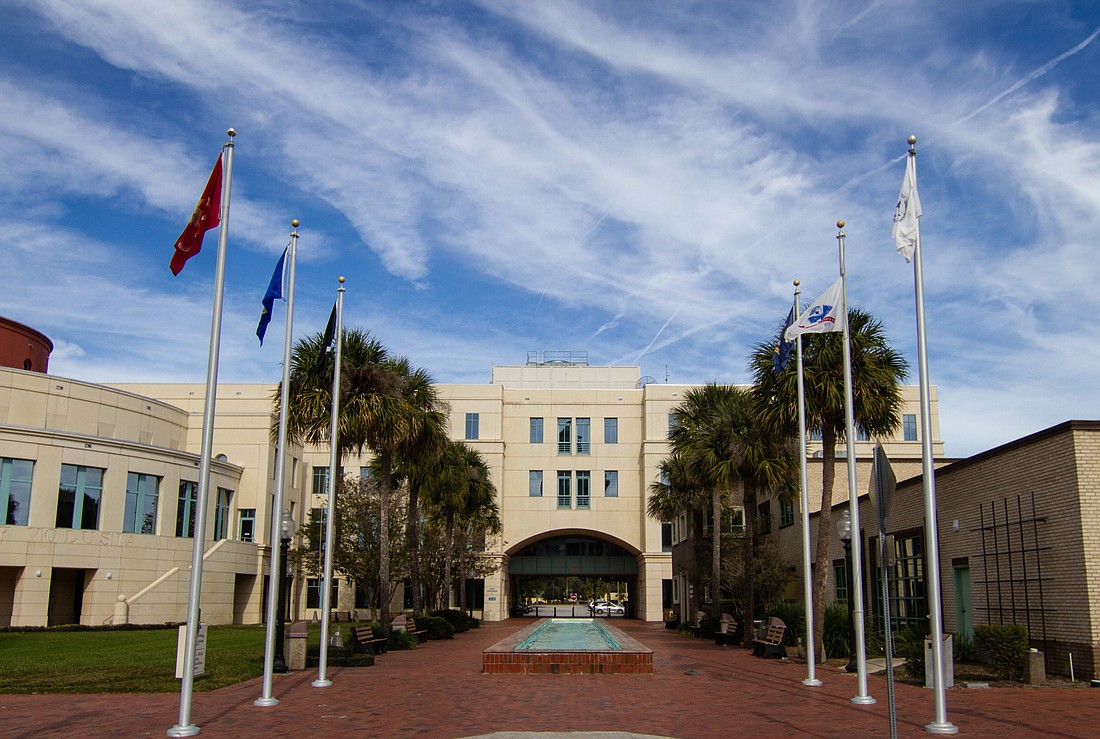
Under Florida Gov. Ron DeSantis’ plan for property tax reform, Volusia County would face a $92.8 million shortfall.
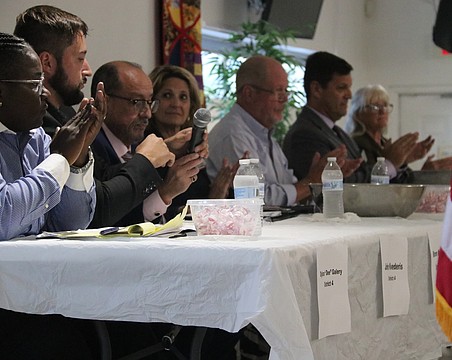
As Florida lawmakers were meeting in Tallahassee on Tuesday, June 2, to review — and ultimately pass — a constitutional amendment proposing raising the homesteaded property tax exemption to $250,000 by 2028, Volusia County was examining how the measure would impact its operating budget. During the County Council meeting, Volusia County Chief Financial Officer Ryan Ossowski said state mandates would tie up $250.8 million of the county’s property tax revenue to fund constitutional officers, the courts and the jail, leaving $75.1 million in operating funds. With a $92.8 million loss in property tax revenues, the county would face a $17.7 million deficit just for required services, Ossowski said.
The general fund, law enforcement fund and municipal service districts, including fire service, would see the biggest funding hit.
“You’d have a conflict on the fire fund because you might have a mandate to only be able to increase taxes with a unanimous vote, but not harm fire,” Ossowski said.
The amendment would increase the homestead exemption to $150,000 in 2027, and then $250,000 in 2028, for non-school property taxes. It would drop the annual increase cap on non-homesteaded property from 10% to 5% in 2027.
New residents moving into the state after Dec. 31, 2026, would begin with a $50,000 exemption, and would need to have five years of residency before reaching the $250,000 exemption.
If the amendment passes, local governments would only be able to go to rollback (the millage rate that would generate the same amount of property tax revenues as the previous fiscal year) with a simple majority vote. An increase of up to 10% of the rollback rate would need a two-thirds vote. An increase higher than 10% would need a unanimous vote.
But the state would also do away with an existing provision that allows local governments to factor in an adjustment for inflation into the rollback rate.
“If this amendment were to be approved, essentially one member of the dais could block any funding above 10% for the services that the majority, even the super majority — six out of seven — would prefer to keep funding,” Ossowski said.
What costs typically push county budgets above rollback? Wages, third-party contracts, consumer price index adjustments and health insurance growth.
“A question that I was asked recently was: ‘$92.8 million, but you have a $1.8 billion budget. Why can’t you just find it in there? That’s less than 5%,’” Ossowki said.
But the $1.8 billion budget is the total county budget across all fund types, he explained. It accounts for capital projects, taxes revenues restricted to specific purposes and internal service funds.
Councilmen asked about assessments to offset the budget shortfall. It is an option, county staff explained, but assessments are limited to services that would be considered as benefitting properties.
“There’s a lot of services that we provide that would be not benefiting properties,” Ossowski said. “In general, law enforcement does not benefit the properties.”
Councilman David Santiago said that it’s still early in the process.
“There may be opportunities for local governments to do things to fill the gaps in certain permissible areas to reduce this impact,” he said.
It will come down to whatever the state will allow local governments to fund, said Senior Assistant County Attorney Paolo Soria.
“Property taxes are one of the things that are constitutionally provided to local governments,” Soria said. “So anything else that looks like a tax, smells like a tax, you need to derive that source of power from the state. Your revenue options become very restricted and become very limited once you are out of that property tax bucket.”
Local governments, however, could look at other types of taxes — gas taxes, community service taxes and business tax receipts, for example.
Volusia County has eliminated the latter two in recent years.
As for sales tax, Ossowski said there are limitations to what those funds can be spent on too. In general, he said, they’re limited to infrastructure costs, not operating expenses.
County Councilman Troy Kent said the governor’s plan was skewed in the state’s favor because it didn’t impact school taxes.
“The state is going to put the boot on our neck financially, but the piece they have to fund, they relieve themselves of that burden,” Kent said. “... I’m for real tax reform — real tax reform. Don’t play games with me, make it fair for everybody.”
If the end goal is tax reform, County Councilman Danny Robins said there can’t be an increase in other taxes or user fees.
“This is a sign,” he said. “This is a shot over the bow for local governments to get it together because every day we ask the public to tighten their belts, but year after year government isn’t tightening their belt.”
No actual legislation has been voted on, he added.
“Before this even gets approved, I don’t want to talk,” Robins said. “I don’t want one more word. There’s not gonna be a word from District 3 about any more fees and any more taxes until we see where this lands.”
County Manager George Recktenwald presented a letter to the council for their approval before it was sent to the Volusia delegation. The letter included an outline of potential issues the county could face under the governor’s property tax reform plan. It asked that before a measure is sent to the ballot, a statewide analysis of service level impacts be conducted.
Under the council’s unanimous direction, Recktenwald added to the letter that the council supports tax reform, inquire about school taxes, and is seeking collaboration on allowable options for revenue within the measure’s constraints.
The governor’s tax reform will be a “government service reform,” Recktenwald said. It may mean consolidating services. Maybe not every city can have a fire department, for example, Recktenwald said.
“We will no longer be able to deliver those services in the manner which we do them today,” he said. “You’ll be talking about major service deliveries, and what [Ossowki’s] trying to show you is the math, and it’s going to be in areas like public safety, because mathematically it has to be. There’s nothing left. That’s what we’re trying to show you.”