- July 24, 2026

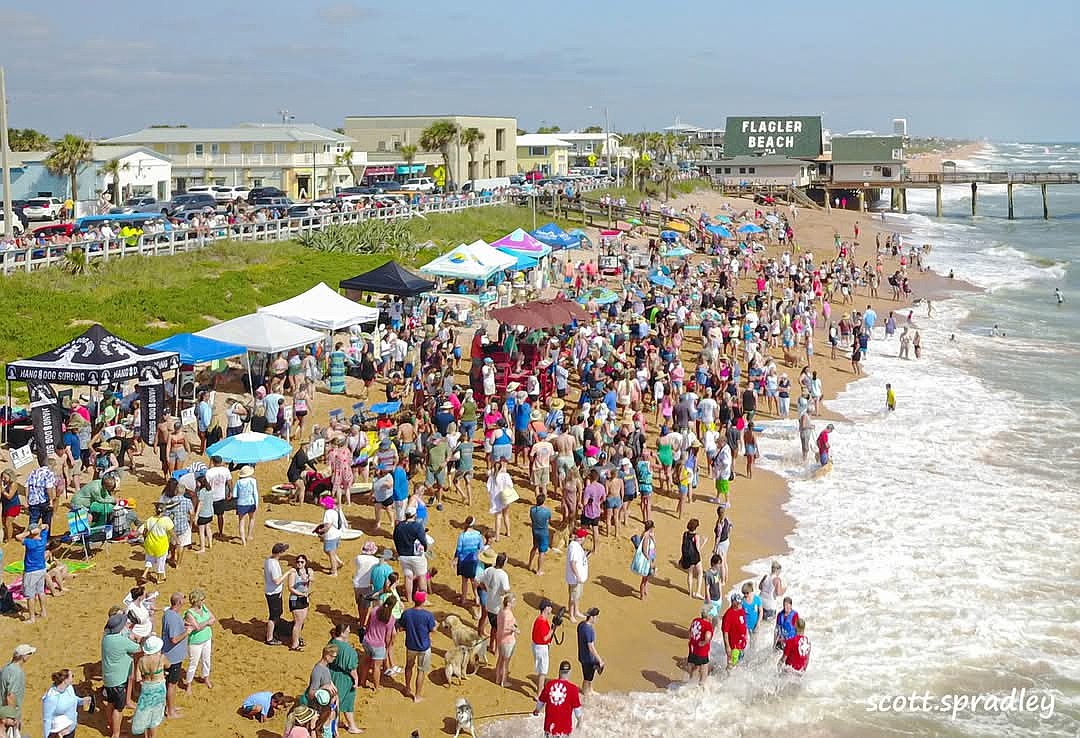
Flagler County and Flagler Beach officials are weighing whether to pursue legal options to place sand on private beachfront properties whose owners have not granted easements, as they work to keep the county's long-awaited Reach 2 beach renourishment project on schedule.
During a joint workshop Wednesday, county commissioners and Flagler Beach commissioners received an update on the project, which will extend beach renourishment from North 7th Street in Flagler Beach north to Varn Park. County officials said they expect to bring the construction contract to the County Commission for approval on Aug. 3, with work anticipated to begin in November.
County Engineer Hamid Tabassian said approximately 95% of the project's required easements have been secured, leaving 15 outstanding properties. Four bids were received, with the lowest totaling about $39 million, exceeding the county's $34 million construction budget. As a result, engineers plan to reduce the amount of sand placed while remaining within available funding.
"We're glad to be at this point," Tabassian said, noting the project remains largely funded through federal and state grants, with approximately $4.5 million in local funding. Even with the reduced scope, about 1.5 million cubic yards of sand would be placed over the five-and-a-half-mile project, which is expected to take three to four months to complete.
A significant portion of the discussion centered on the remaining easement holdouts and whether the county should move forward with placing sand in those areas under the state's ongoing emergency declaration.
Commissioner Greg Hansen suggested notifying unresponsive property owners that the county intends to place sand unless objections are received.
"I wonder if we can't legally say ... 'Here's what we're going to do. It's an emergency situation. We're going to put sand on the beach in front of your house,'" Hansen said. "And then if they sue us ... I'd like to hear from the lawyer on that."
County Attorney Michael Rodriguez cautioned that moving forward without easements would expose the county to potential trespass lawsuits.
"We're going to have to assume that risk," Rodriguez said. "Even if the case is frivolous or not, we're going to have to incur litigation defense costs."
Officials noted that two of the remaining property owners have indicated they intend to sign easements, while two have declined. The remaining 11 have not responded despite repeated outreach, with some properties tied up in probate or owned by absentee landowners.
Tabassian said the county can legally place sand up to the state's erosion control line without an easement, but the portion of beach landward of that line would remain untreated.
That creates a gap in the dune system.
"If you get a storm and you get a hurricane, that becomes the weak link for breaches and creating issues," Tabassian said.
Commissioners also questioned whether placing sand without easements could jeopardize state reimbursements or violate permit conditions. County Administrator Adam Mengel said staff would need to consult permitting agencies before determining whether such an approach would be allowed.
Flagler County Commissioner Scott Spradley urged both governments to fully understand the legal risks before proceeding.
"I'd like to hear the city attorney weigh in to let us know exactly what we're buying into," Spradley said. "There's a lot to be looked at."
Officials also discussed the project's financing.
Tabassian said the county recently negotiated a change with the Florida Department of Environmental Protection allowing reimbursement requests to be submitted monthly instead of quarterly, improving cash flow.
The county currently has about $10 million in available cash and expects approximately $20 million in near-term reimbursements from state and transportation funding programs, generally within two to four weeks after invoices are submitted. FEMA reimbursements, however, are expected to take at least six months after the project is completed.
Flagler Beach officials also questioned whether the reduced volume of sand would diminish the project's effectiveness compared to the larger U.S. Army Corps of Engineers renourishment completed in Reach 1.
Tabassian said the design team determined the project remains viable, explaining that while the dune will not be as tall in some areas, engineers are focusing on building a wider, stable dune system that still meets minimum engineering standards.
Newly hired Coastal Program Manager Damon Douglas, who previously spent 22 years in St. Johns County's coastal management program, said the project's design engineers remain confident in the plan.
"I did have a meeting with the design engineer team yesterday," Douglas said. "I put it specifically to them. Would you say that this project is worth doing with the easement holdouts that we have? And they said absolutely, the beach needs sand. Any sand is better than no sand."
Douglas added that while holdouts could have some impact during larger storms, the engineers do not believe they will "drastically affect the durability of the project."
The meeting concluded with consensus from both boards to have legal staff further evaluate whether emergency authority could be used to place sand on holdout properties, whether doing so would affect funding or permits, and what interlocal agreements might be required if the approach moves forward.
No decisions were made, but county commissioners are expected to consider awarding the Reach 2 construction contract at their Aug. 3 meeting.