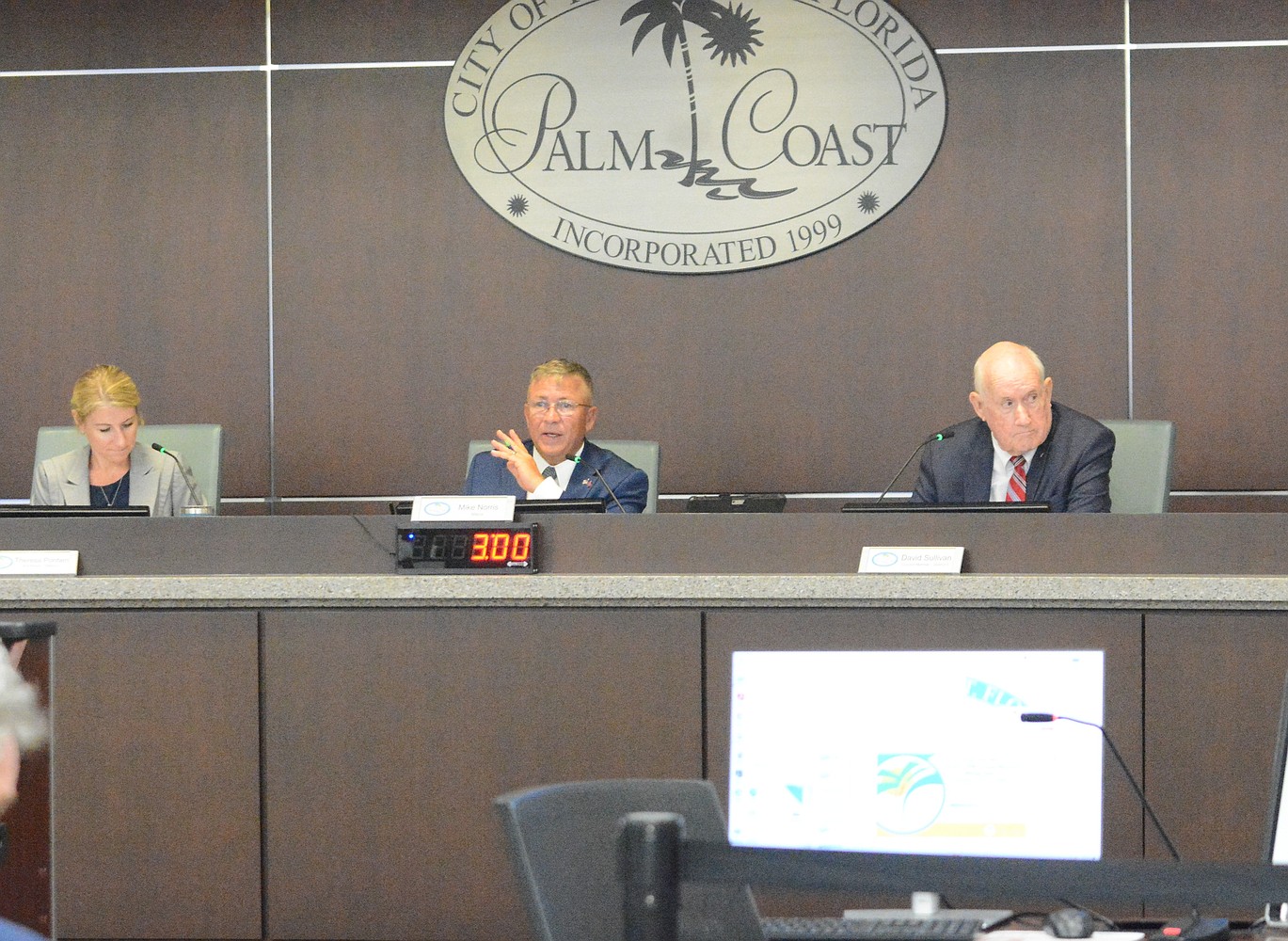
Palm Coast Vice Mayor Theresa Pontieri, Mayor Mike Norris and Council Member Dave Sullivan participate in the Palm Coast City Council's budget discussion during the July 21 meeting. Photo by Rich Carroll.
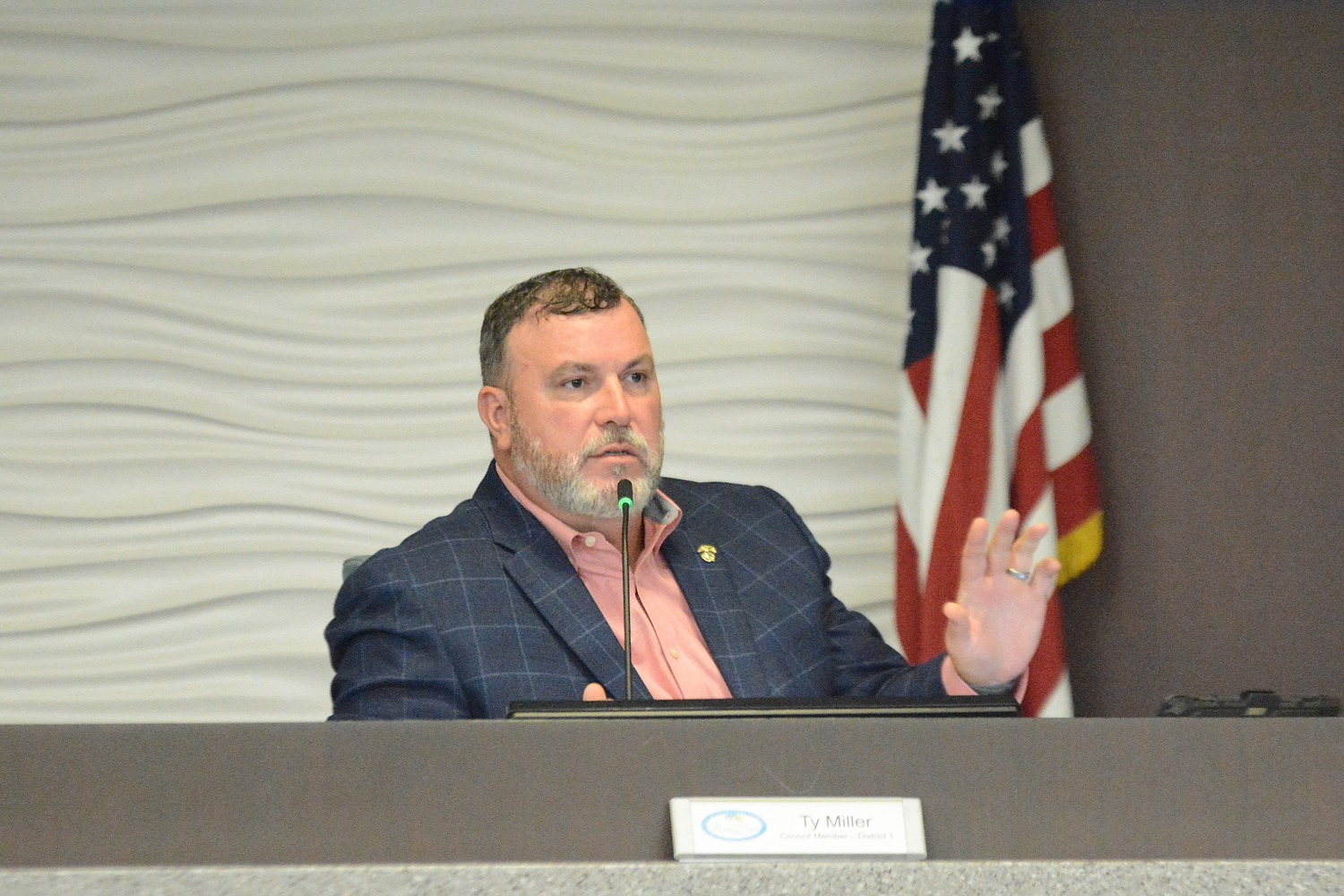
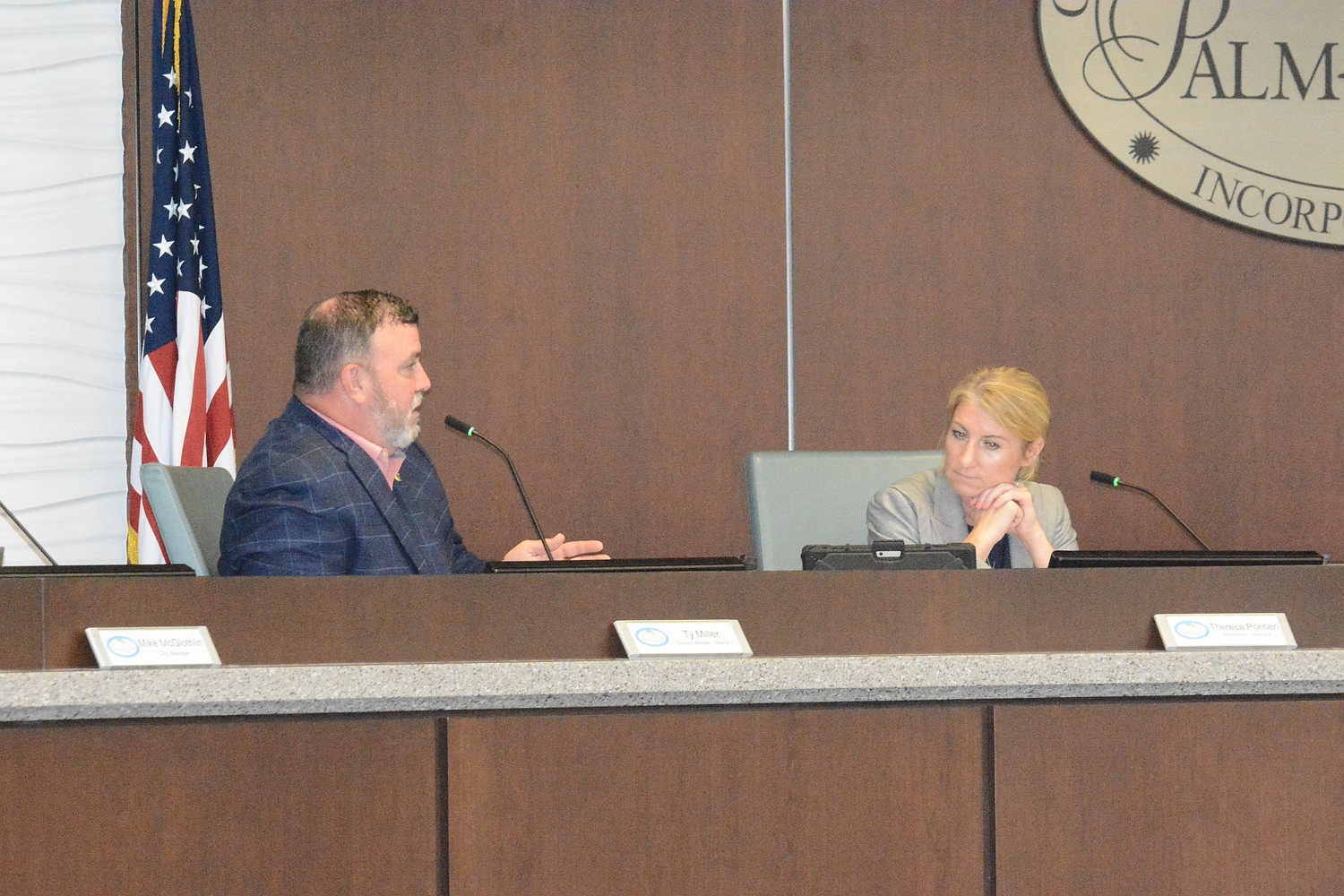
Palm Coast Council Member Ty Miller speaks during discussion of the proposed fiscal year 2027 budget at the Palm Coast City Council meeting on July 21. Photo by Rich Carroll.
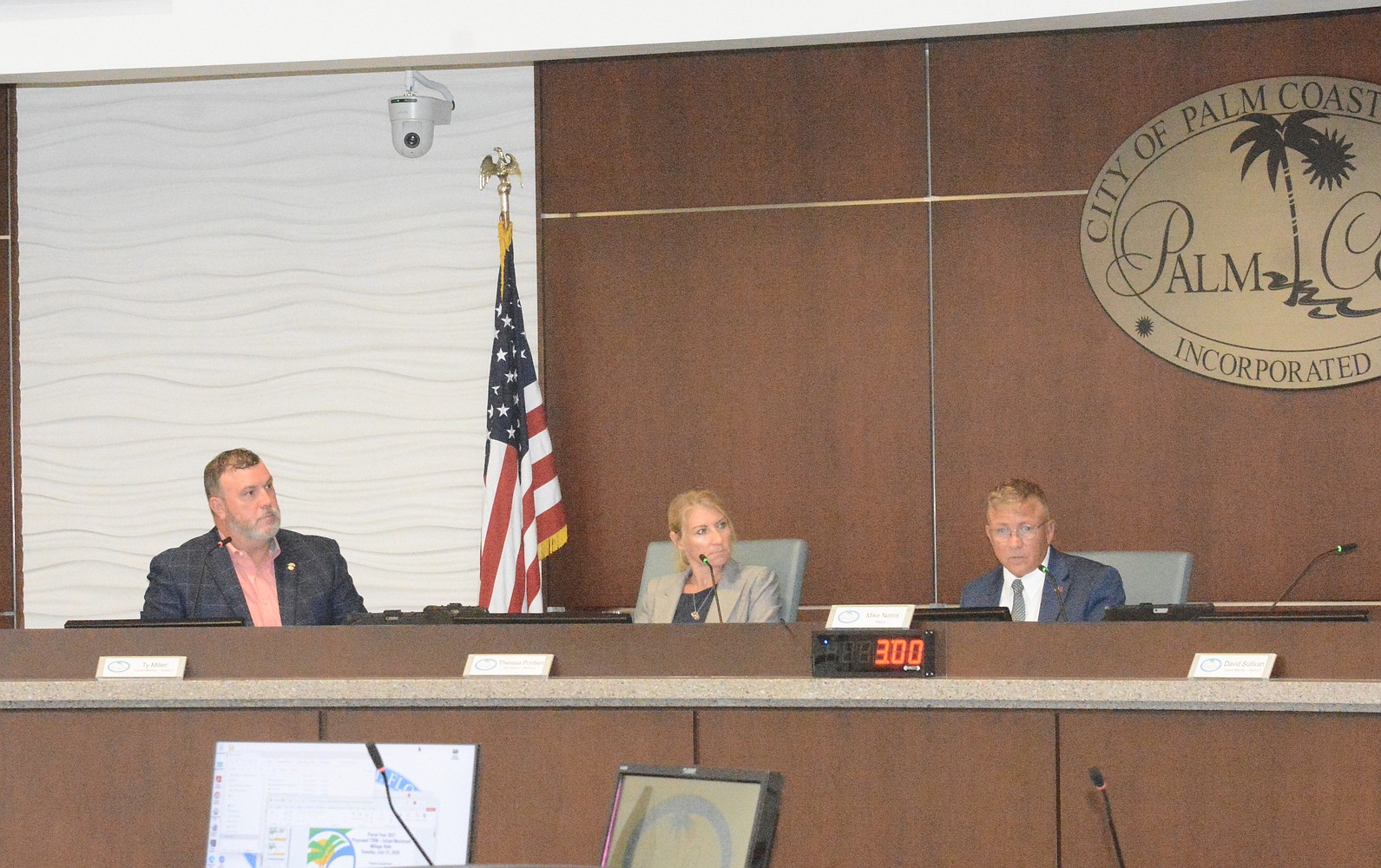
Palm Coast Council Member Ty Miller, Vice Mayor Theresa Pontieri and Mayor Mike Norris discuss the proposed fiscal year 2027 budget during the Palm Coast City Council meeting on July 21. Photo by Rich Carroll.
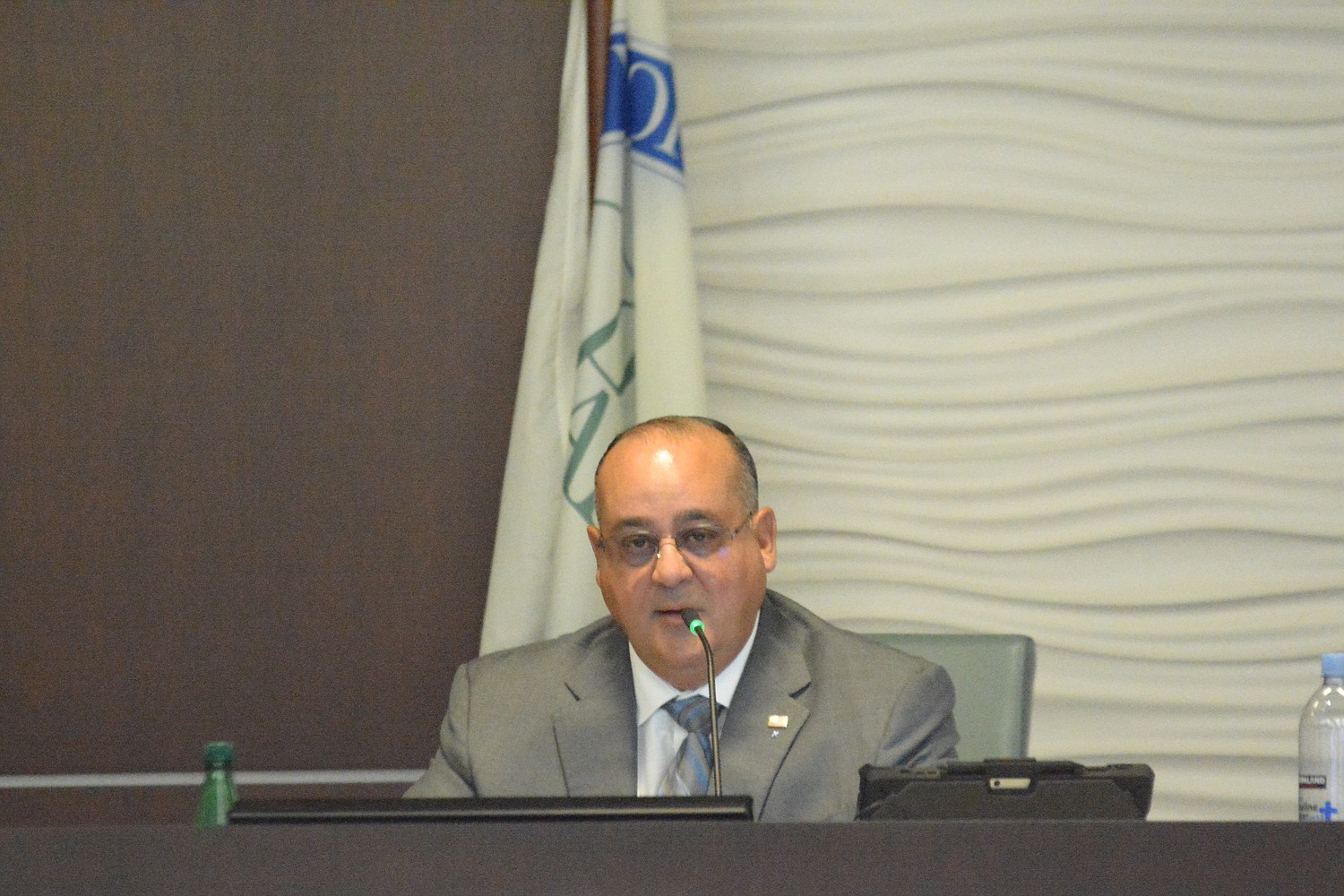
Palm Coast Council Member Charles Gambaro speaks during discussion of the proposed fiscal year 2027 budget at the Palm Coast City Council meeting on July 21. Photo by Rich Carroll.
Palm Coast Council Member Ty Miller speaks during a budget discussion as Vice Mayor Theresa Pontieri listens during the Palm Coast City Council meeting on July 21. Photo by Rich Carroll.
The Palm Coast City Council voted 4-1 on July 21 to adopt a maximum proposed property tax rate of 4.2296 mills for fiscal year 2027, preserving flexibility as officials continue refining next year's budget before final public hearings in September. Vice Mayor Theresa Pontieri cast the lone dissenting vote after expressing concerns that the proposed maximum rate was higher than necessary.
The maximum rate is not the city's final property tax rate. Under Florida's Truth in Millage (TRIM) process, advertising the higher rate allows the council to reduce it later but prevents it from adopting a higher rate during the September budget hearings.
The city's finance team said the proposed fiscal year 2027 budget totals approximately $72 million, a 6.8% increase over the current year. The spending plan prioritizes public safety, fire services, utilities and public works.
The proposed 4.2296 millage rate would generate about $46.5 million in ad valorem tax revenue. Staff estimated the city would need to cut approximately $1 million to adopt the rollback rate of 4.1387 mills or about $1.6 million to maintain the current 4.0893 millage rate.
One of the largest unresolved budget issues remains the Flagler County Sheriff's Office request for nine additional deputies, estimated to cost about $1.087 million annually.
Vice Mayor Theresa Pontieri said public safety should remain the council's highest priority but suggested a compromise by funding five deputies this year while continuing to identify savings elsewhere in the budget. She said leadership requires prioritizing essential services during difficult financial times.
Council members also explored ways to offset public safety costs.
Council Member Charles Gambaro questioned why Palm Coast continues paying for one School Resource Deputy assigned to local schools, asking whether the Flagler County School District should assume that expense instead.
"I would like to know why," Gambaro said. "Could the school district pick up that tab for their school? I don't understand why we're paying for that position."
Pontieri said she does not support ending the city's funding for the School Resource Deputy under the current budget. However, she said the issue should be revisited if Florida voters approve proposed Amendment 3 in November, noting the amendment would reduce municipal property tax revenue while leaving school district funding largely unaffected.
"If Amendment 3 passes, that should certainly be a discussion," Pontieri said. "Certainly I would advocate that they should pick up that last deputy." However, she added that under the current budget the School District is also facing financial challenges and cautioned against portraying it as having excess funding.
"I don't want it to seem like the School Board is cruising in cash because that's not the case either," Pontieri said. "They're struggling over there."
Council Member Ty Miller agreed the arrangement should be revisited, saying he does not believe funding a school resource deputy is necessarily the city's responsibility and recalled raising the issue during a previous joint city-county meeting.
Staff also presented several other cost-saving ideas, including increasing revenue at the Southern Recreation Center, reducing the city's allocation to the Flagler Humane Society and evaluating a complaint-based code enforcement model. Together, those changes could save or generate roughly $200,000 toward closing the budget gap.
Despite the discussions, council members repeatedly emphasized that approving the maximum millage rate does not mean the city intends to levy it.
Council Member Charles Gambaro said advertising the higher rate simply preserves flexibility as budget discussions continue.
Mayor Mike Norris said the city should continue searching for reductions before adopting a final tax rate.
"The only thing we're doing ... is setting the max millage," Norris said. "It can't go any higher than that."
Council Member Ty Miller echoed that sentiment, calling the advertised millage "the starting point" for negotiations rather than the council's final decision.
The City Council is scheduled to hold its first public hearing on the proposed fiscal year 2027 budget and tentative millage rate in September, with final adoption of the budget and tax rate expected later that month.