- March 15, 2026

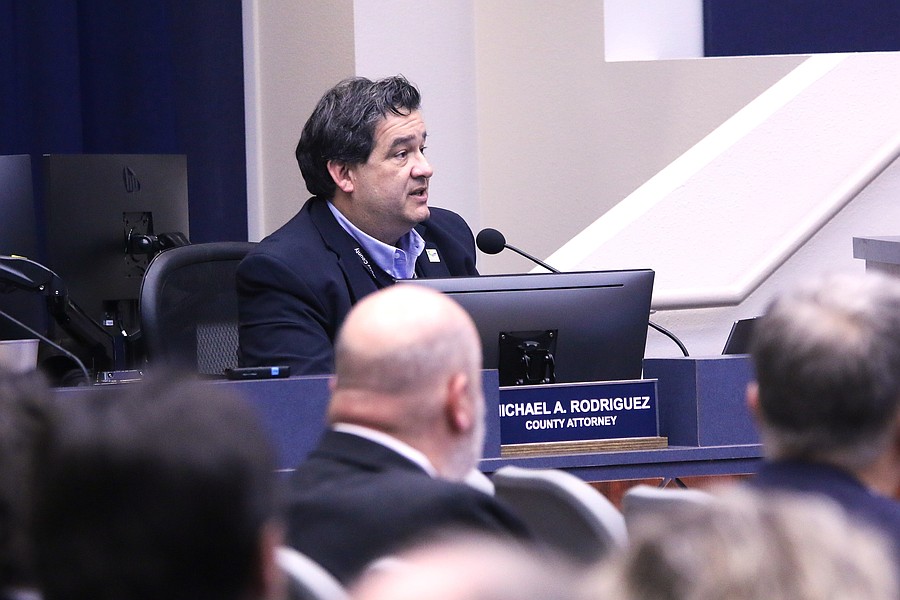
Flagler County Attorney Michael Rodriguez. Photo by Sierra Williams
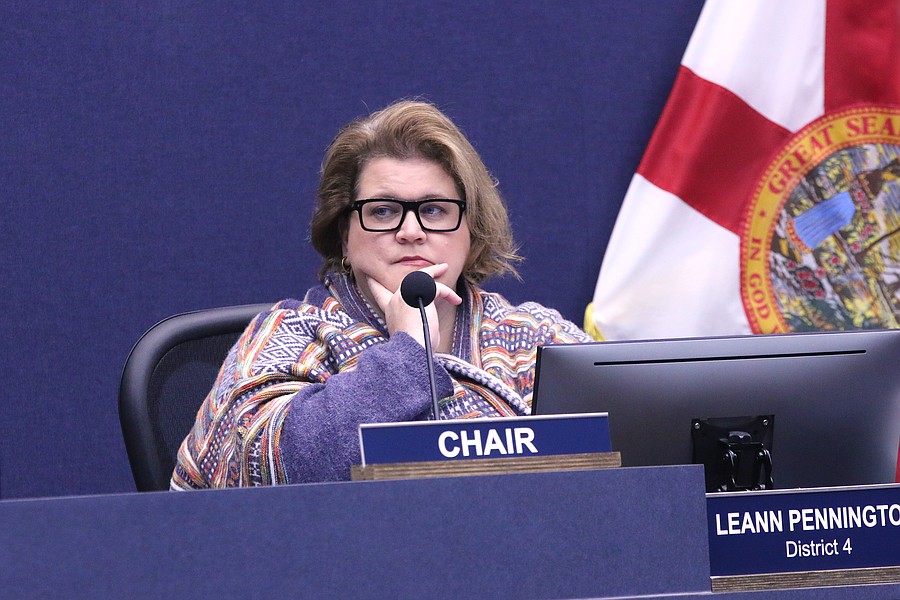
Flagler County Commission Chair Leann Pennington. Photo by Sierra Williams
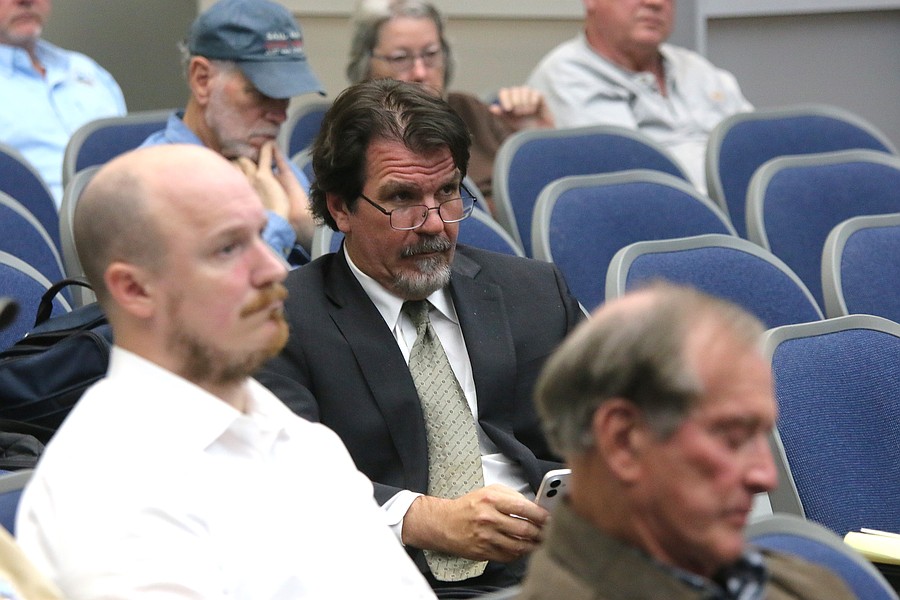
Attorney Michael Chiumento (center) represents the Summertown and Veranda Bay developments. Photo by Sierra Williams
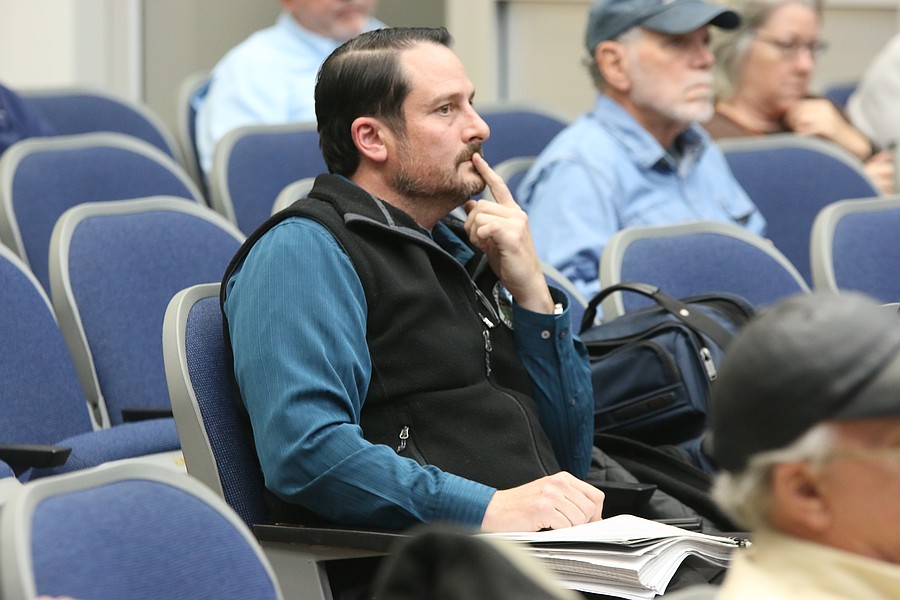
Flagler Beach Commissioner Eric Cooley. Photo by Sierra Williams
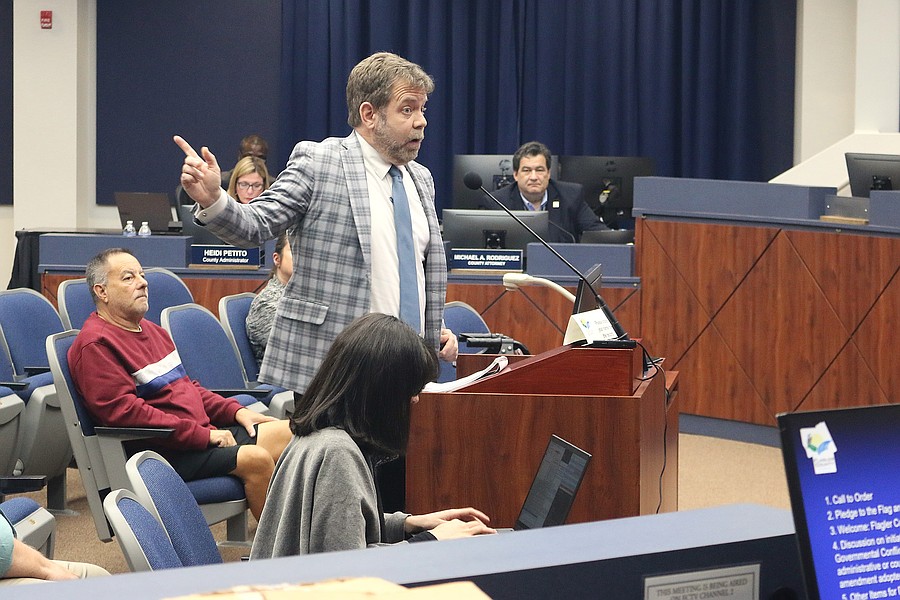
Flagler Beach Attorney Drew Smith talks to the Flagler County Commission about the Summertown development. Photo by Sierra Williams
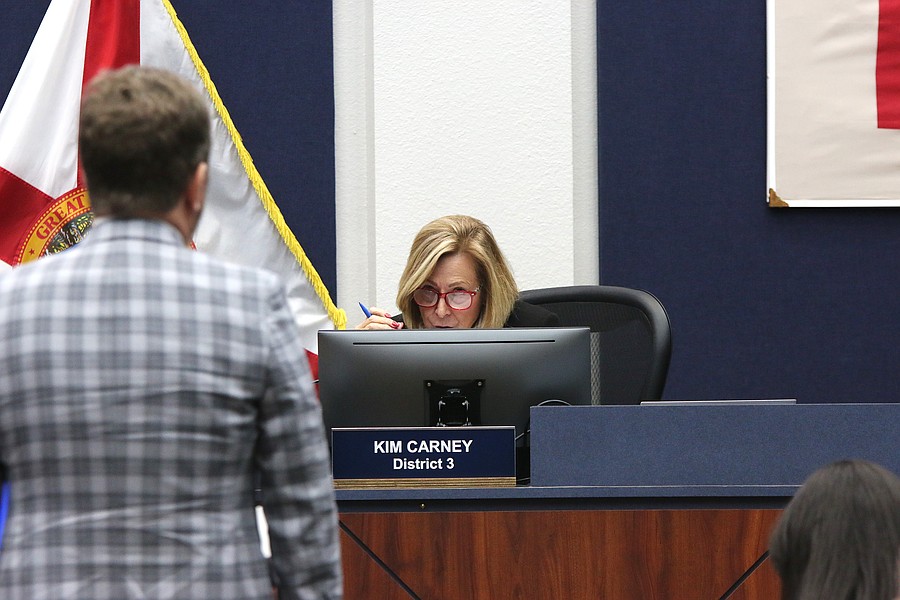
Flagler County Commissioner Kim Carney questions Flagler Beach Attorney Drew Smith. Photo by Sierra Williams
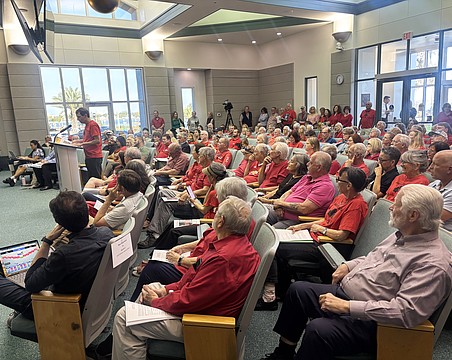
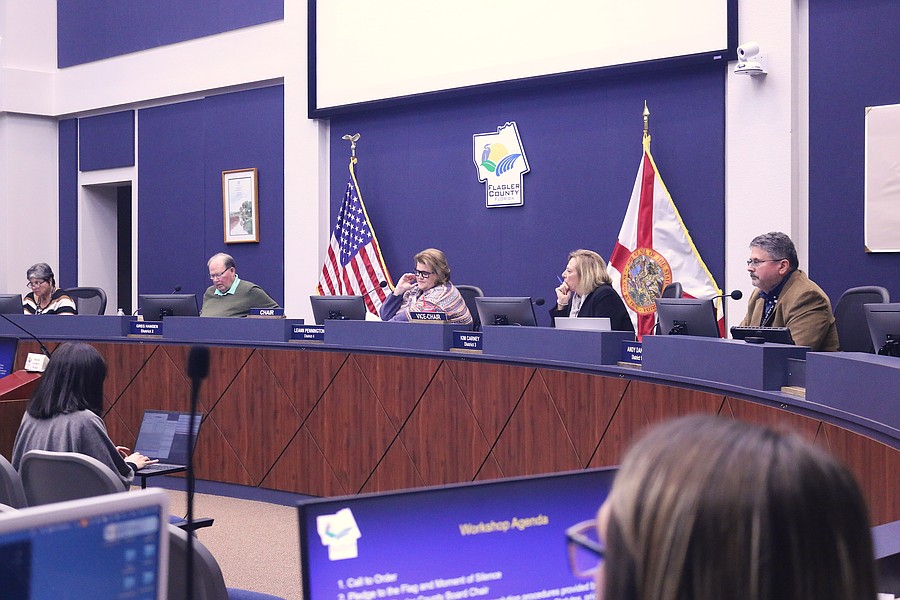
The Flagler County Commission. Photo by Sierra Williams
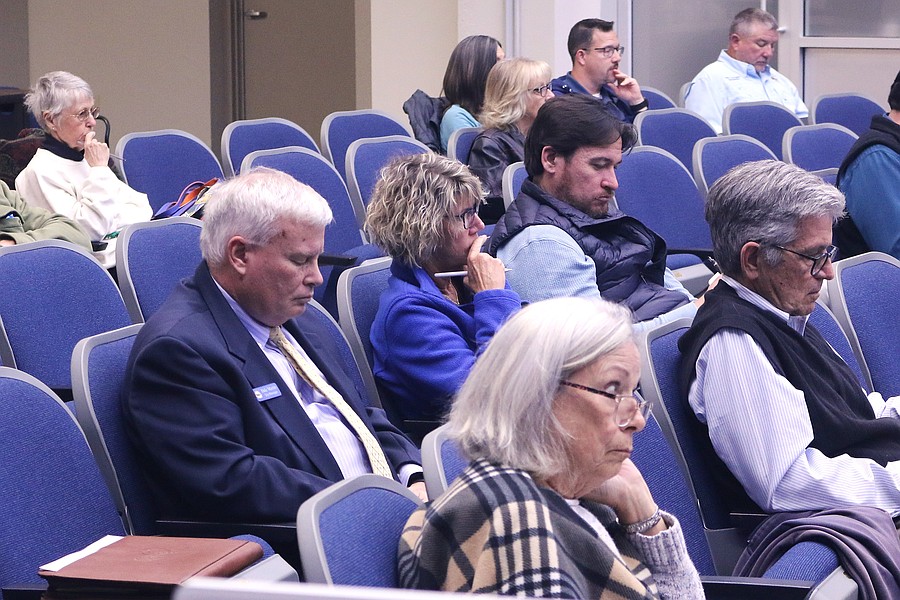
Flagler Beach City Manager Dale Martin (top left) with Flagler Beach Mayor Patti King (center left), Commissioner James Sherman (top right) and Commissioner Scott Spradley (front right). Photo by Sierra Williams
The Flagler County Commission has started the clock on conflict resolution procedures with Flagler Beach, but several commissioners said they felt the issues will be resolved outside of a lawsuit.
“I think this is much ado about nothing,” Commissioner Greg Hansen said. “I don’t think there’s a problem here.”
Summertown is one of two major developments that has been undergoing the annexation process into Flagler Beach from unincorporated Flagler County. The 500-acre development lies along the west side of John Anderson Highway and would add 1,600 residential units, a hotel and a commercial area. After two years being reviewed by Flagler Beach, the city approved it on Jan. 8.
Flagler County has cited five items in the development that may conflict with Flagler Beach and Flagler County’s comprehensive plans. The county has 30 days from when the Summertown development was approved in Flagler Beach — making Feb. 9 the deadline — to file a dispute.
State law requires that before one local government can file a lawsuit against another local government, it is required to enter a conflict resolution process to hopefully avoid a lawsuit. The moment City Attorney Michael Rodriguez would file the dispute against Flagler Beach, it would trigger that process, “freezing” the dispute lawsuit while the two parties mediated, he said.
In hopes of avoiding a lawsuit, the county has agreed instead to enter into what is called a tolling agreement with Flagler Beach. This would, Rodriguez said, retain the county’s right to file a lawsuit challenging the Summertown comprehensive plan amendment while the parties attempt to resolve the problems at hand. If they were to come to an impasse, the county could still file its legal challenge.
“I don’t think that will happen,” Rodriguez said.
The Flagler Beach City Commission will need to hold a special meeting of their own to vote on entering the tolling agreement on its end. Flagler County approved the process in a 4-1 vote, with Hansen dissenting.
At present, the areas of conflict are only with the Summertown development, not its sister development Veranda Bay, which is still under review by Flagler Beach. Should the city approve the Veranda Bay development, the county would then have to file a separate dispute.
The county’s problems will not deter the development from coming online or reverse the annexation. Rodriguez specifically said the annexation met the threshold requirements and the city’s problems lie specifically with items in the land use and zoning approvals that may contradict with the city’s comprehensive plan.
There are five specific items of conflict outlined by the county in regards to Summertown: a reclaimed water facility, floodplains, and three areas of potential impact to John Anderson Highway.
Item A is a callback to the Water Wars settlement from 2007 that involved the county, Flagler Beach and Palm Coast.
In the context of Summertown, the county is questioning how the development is fitting in with that settlement agreement. Assistant Attorney Sarah Spector said the settlement agreement states the city is responsible for providing the reclaimed water but the developer is required to build the facility.
The developer has already started laying the pipework for the reclaimed water, but the city, — which updating its water and wastewater facilities — wants to build the reclaim facility itself.
The answer could be as simple as receiving a letter from the city that it plans to take responsibility for the facility, Flagler County Growth Management Director Adam Mengel said. Flagler Beach City Attorney Drew Smith said the city has the home-rule authority to decide this issue.
Commissioner Andy Dance said in the meeting that Item A seems to be a debate between the attorneys. Ultimately, he said, no one wants to be challenged on home rule.
“I just know if we were on the opposite side,” Dance said, “we would not want to be challenged on something that we agreed to, and it was defensed by our attorney.”
Item B questions Summertown’s impact on sensitive lands, but this item could already be on its way to being resolved with the county’s purchase of 150 acres of sensitive floodplains near Bulow Creek.
The developer is willing to sell, though the parties have not agreed on a price yet, and the county is still in the process of securing the grants to purchase the land. Dance said the county’s initiative satisfies the comprehensive plan requirements.
“I feel that we did the work for the city,” Dance said. “I don't know what else we need to do on that.”
Mengel said that though Flagler Beach has sent a letter of support in regard to the purchase of the land, the policy calls for more. But, Dance argued, the comprehensive plan doesn’t say the city needs to be the driving force.
“This one seems to me an easy resolution today,” Dance said. “We're looking for something to firm it up a little bit, [but] the hard work's been done.”
There are three concerns outlined in the resolution based on John Anderson Highway: maintenance of the roadway from development growth, evacuation impact and whether an adequate traffic study was conducted.
The traffic study may be one of the easiest issues for the commission to resolve: Developer Ken Belshe brought a physical copy of the traffic impact study with him to the meeting.
“It’s always been part of the record,” Belshe said. “I’m not sure where the breakdown was.”
The traffic study, he said, began more than two years ago, when the Veranda Bay team was contemplating annexing into Palm Coast instead. With the presentation of the traffic study, the commissioners and county staff will need to review the study.
Item E is the maintenance of John Anderson Highway and who is responsible for it. Currently, Flagler County is responsible for the maintenance, but won’t receive impact fees for the maintenance of the roadway from Summertown because the transportation impact fees would go to the cities instead.
Commission Chair Leann Pennington said it's a similar issue that they are seeing in Bunnell, too.
“Roads that were not meant to hold a lot of cars, not meant to hold six- or 7,000 commuters, are left within the county for us to deal with,” she said, “while impact fees and others are collected by the cities and not passed along to help us.”
Flagler Beach Commissioner Eric Cooley said during the public comment portion that most of the traffic concerns relate more to Veranda Bay than Summertown.
“This is about Summertown only, which changes your content significantly,” Cooley said. “When you're looking at Summertown only, on the west side of the road, the impacts to John Anderson become negligible.”
Item C deals with the potential impact Summertown may have on evacuations along John Anderson Highway. The highway serves as a major evacuation route to State Road 100, and the concern is the influx of residents — Summertown is approved for a maximum of 1,640 residential units — will slow the evacuation timing.
But, when 150 residential units are built, Chiumento said, Summertown will be required to complete a planned spine road that will connect to S.R. 100 before it can build more residential units. Whether the commercial section of the development is built before the residential units will depend on market conditions, he said.
The spine road will take some of the pressure of John Anderson.
Pennington said most of the problems could be resolved outside of entering a lawsuit, but that the county needs to protect its rights.
“We have to have this formal resolution out there so that we can solve it,” she said.
The county, she said, is working on putting together joint committees so that in the future these problems can be addressed without having to implement conflic resolution procedures.
Dance said he felt all the issues could potentially be resolved outside of a lawsuit, with several items not needed much if any further work. He thanked the Flagler Beach Commissioners for attending the meeting, too, and committed to working cooperatively to help solve the issues at hand.
“We have a lot of important work that we have to do together,” Dance said.