- March 6, 2026

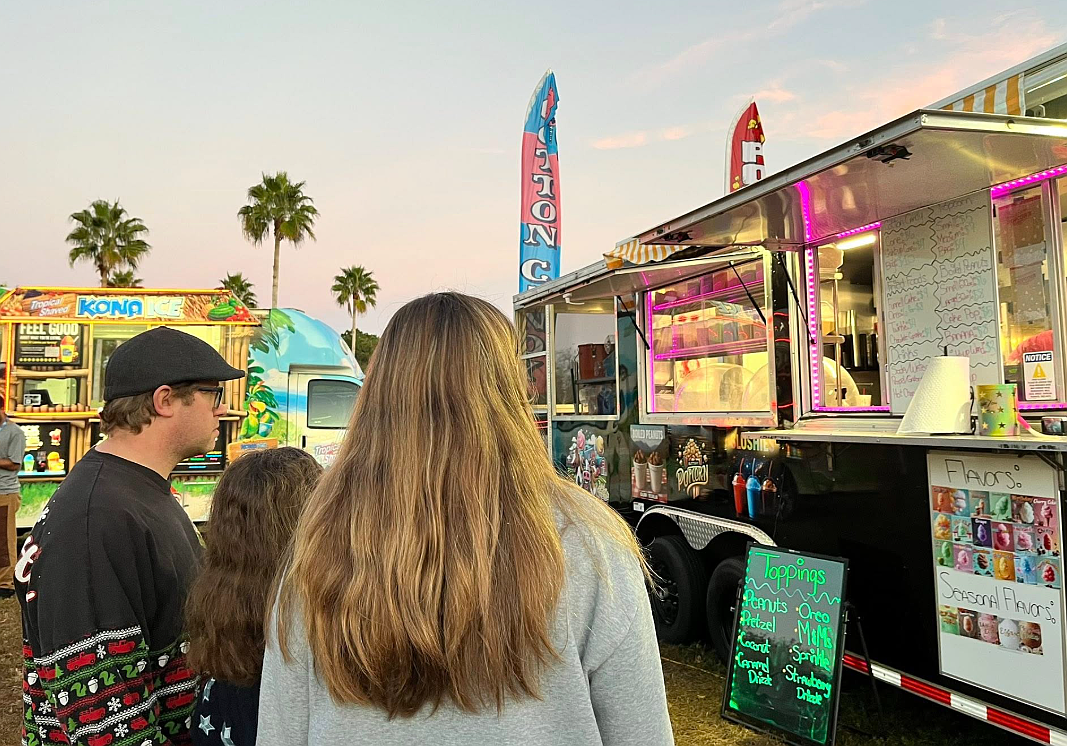
Palm Coast’s food truck operations will no longer be limited to special events, thanks to a new city ordinance.
Current city regulations prohibit the operation of food trucks within Palm Coast except by a special event permit. The new ordinance would allow the city’s food trucks, and subsequently small business owners, to work in commercial plazas and other private property.
The council approved the ordinance in a 5-0 vote at its Jan. 20 business meeting. A second and final vote will be held at the Feb. 3 meeting.
“I feel like these ordinances are fair and not overreaching,” said Sheila Hines, owner of Sweet Sheila’s Funnel Cakes. “As this stands, I believe it will serve all of us.”
The city’s first draft of the ordinance, presented in October, was geared more towards allowing developers to create a “food truck park,” where multiple food trucks could park or rent space to sell food, than allowing food trucks to operate in existing commercial spaces.
Critics said the first draft “missed the mark” and did not take into consideration the daily operational needs. The revised version addresses both, after city staff reached out to local food truck vendors.
“We've definitely made significant effort to address the request that the engaged stakeholders with the food truck industry have requested,” Palm Coast senior planner Michael Hanson said.
The “principal” use portion of the ordinance is directed at those who wish to take land and build a slab specifically for the use of food trucks. This use requires site plan approval and must include permanent restrooms, parking and shared seating.
Lots for the principal usage also could not be operational between 2 a.m. and 6 a.m., though the food trucks could stay overnight.
The “accessory” use of the ordinance would allow food trucks to operate on previously developed commercial sites — like the Walmart or Home Depot parking lots — with the property owner's permission. Essentially it would form a kind of lease with the commercial property owner and the food truck, and the food truck would need to be removed each night.
Hours of operation for accessory uses was originally planned to be tied to the primary business’ hours. Meaning if the food truck is parked outside Walmart, then when Walmart closes, so must the food truck.
But Vice Mayor Theresa Carli Pontieri pointed out that might be overstepping on the government’s behalf, especially if the primary business did not care.
“That’s a private issue between private businesses,” she said.
Ultimately, the rest of the council agreed, and decided to remove the operating hours requirement for the accessory.
“When this lease is signed, the landowner will dictate the hours of operation,” Councilman Ty Miller said. “I don’t think it’s our business, really.”
For both uses, the lot size will need to be a minimum of 20,000 square feet. The city’s existing sound ordinances would also apply, as will fire safety, noise, lighting and discharge regulations.
Food truck vendors still need to have a state license to receive a city business tax receipt, which gives them the ability to operate within city limits.