- April 10, 2026

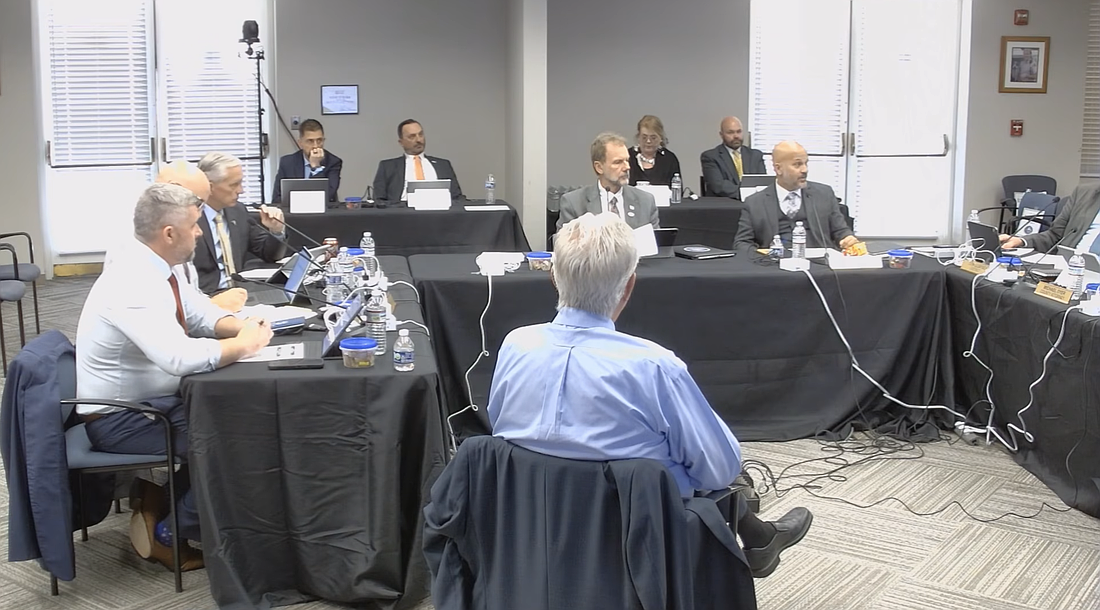
Property tax reform was at the forefront of discussion during the Volusia County Council workshop on its goals for 2026, held on Thursday, Jan. 8.
Volusia County is bracing itself for a possible elimination or reduction of homestead property taxes, as well as continuing to eye increasing state regulation that local elected officials say encroaches upon home rule. With these challenges in mind, councilmen discussed the need to reduce the county's tax rate while pursuing efforts for expanded recreation, tourism, resiliency and economic growth.
House Joint Resolution 201 was filed in October 2025 and proposes an exemption of property taxes for homesteads, save for school district levies. It also prohibits counties and municipalities from reducing total funding for law enforcement. If passed, it would go into effect in January 2027.
Because impacts would be a few years out, Councilman David Santiago said the council should make budget, policy and priority changes based on whether they believe they're good or not.
"Then, let the chips fall where they may based on the referendum and what the Legislature says," Santiago said.
The councilmen agreed, with Matt Reinhart saying that, if no reform happens on property taxes, the county will have benefited from becoming more fiscally responsible by tightening its budget.
"A lot can change in Tallahassee in one day, and then a lot can stall in Tallahassee," Reinhart said.
In Volusia County, 37.5% of county property tax revenue comes from homesteaded properties. County Finance Director Ryan Ossowski said that would result in a loss of $110 million of revenue.
The mandated budgets for constitutional officers, public safety and core administrative government functions like emergency medical services, corrections, and existing Sunrail obligations account for 83% of the county's budget.
The remaining services — parks, veterans services, beach safety, Votran, and others — account for 17%, or $58 million. If the county cut all those programs, it would still need to find about $51 million to fund the mandated budgets.
"Here's the mathematical reality of this: If you're not going to look at public safety, you're not going to look at mandated payments, and you have to have a core administration, you've got $51 million to fund and no way to fund it on the expense side of the equation," Ossowski said. "So you're looking at an additional revenue source."
Santiago said the governor and others in state leadership have pointed to alternative sources of revenue for local governments, such as sales tax increases.
"I don't think we should go down this rabbit hole with the assumption of responding to the Legislature and what may happen, because we don't know," he said.
One option the council could consider as an alternate revenue source is implementing a fire assessment fee for unincorporated areas of Volusia and cities within the county's fire district. It takes about two-and-a-half years to implement such a fee, said County Manager George Recktenwald, who asked the council for direction to allow staff to start the process.
Recktenwald said Volusia's millage rate has consistently gone down over the last five years, including during the budget restructuring triggered by Amendment 10, which gave constitutional officers like the tax collector and the sheriff control over their budgets.
"Every budget season, there's a lot of tears, and a lot of cutting and a lot of things happen," Recktenwald said. "So we've always been fiscally conservative and will continue."