
- April 10, 2026

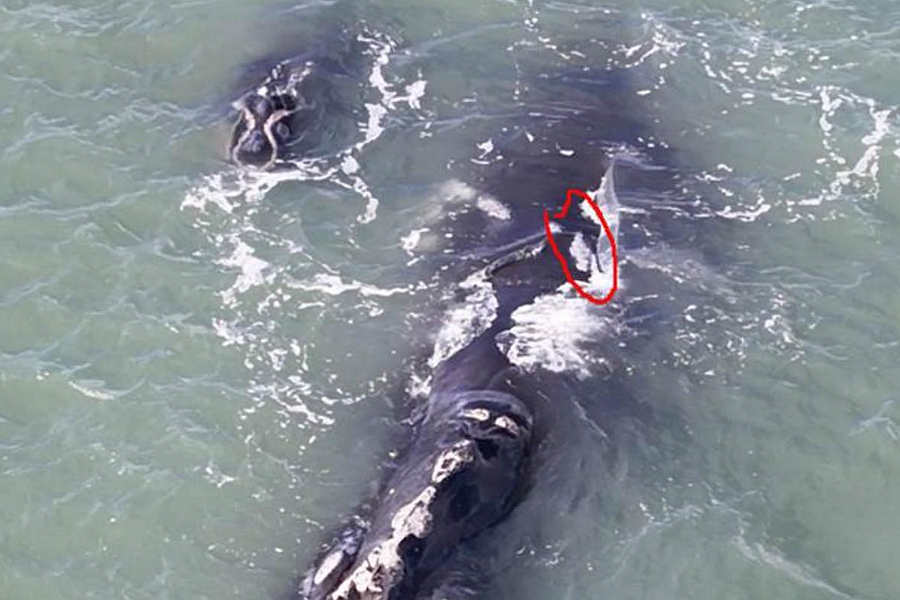
A Northern Right Whale and calf spotted in The Hammock. The red circle indicates a parch of callosities that identify this as the female "Callosity Black." Courtesy of the Marineland Right Whale Project
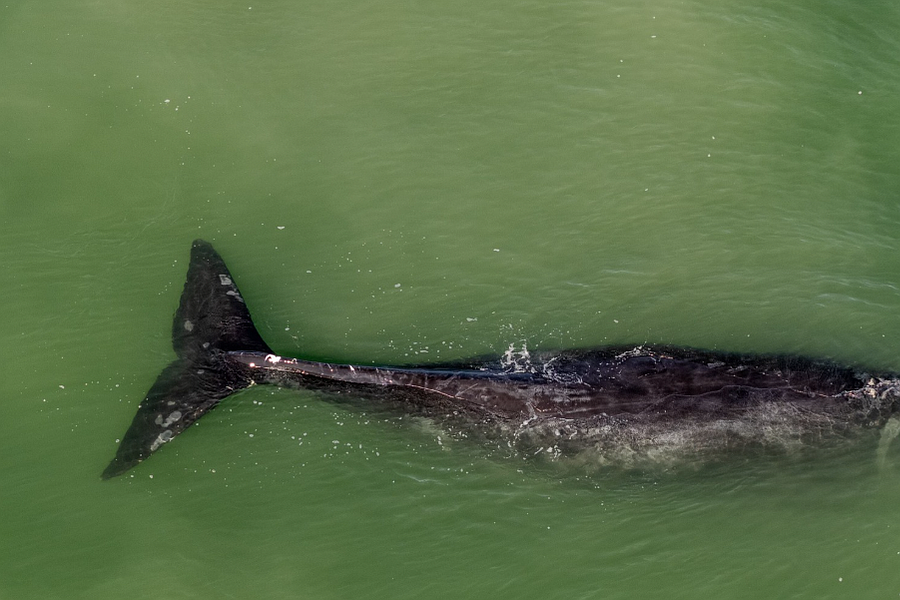
A Northern Right Whale yearling spotted in Ormond Beach. Courtesy of the Marineland Right Whale Project
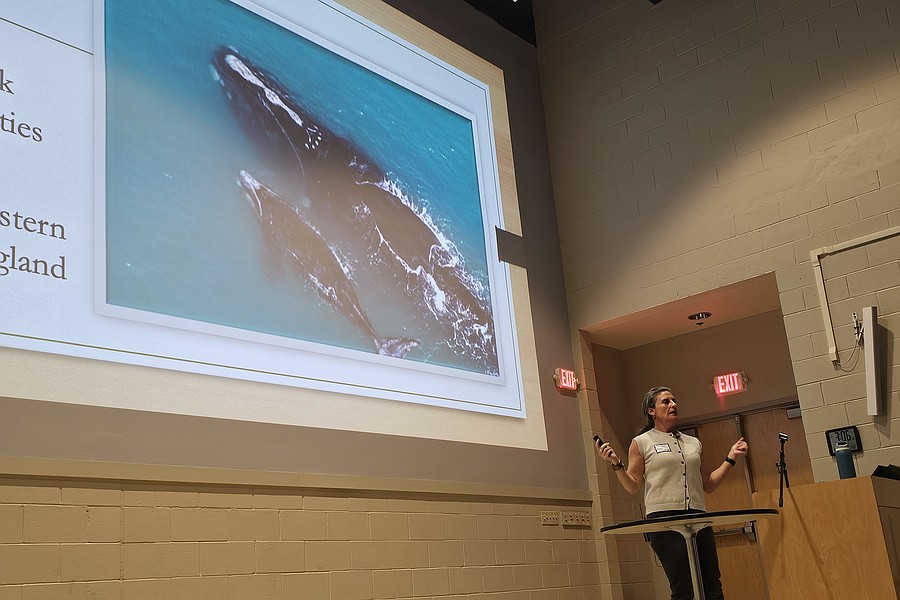
Marineland Right While Project Coordinator Terran McGinnis gives a presentation at a volunteer organizational event on Monday, Jan. 5 at the University of Florida Whitney Lab in Marineland. Photo by Sierra Williams
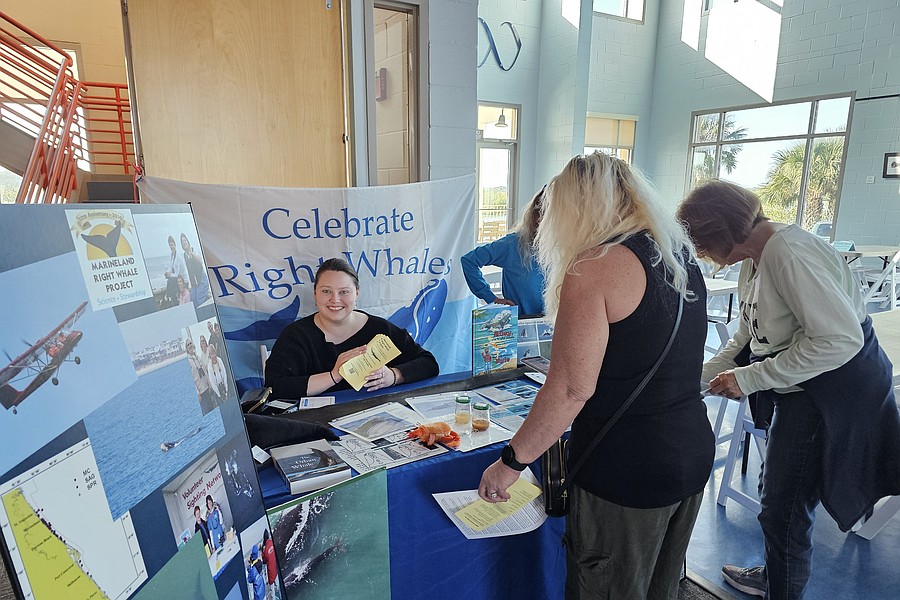
Marineland Right Whale Project volunteer Zoe Rauscher has volunteered to help whales since 2018. The Project held a volunteer organizational event on Monday, Jan. 5 at the University of Florida Whitney Lab in Marineland. Photo by Sierra Williams
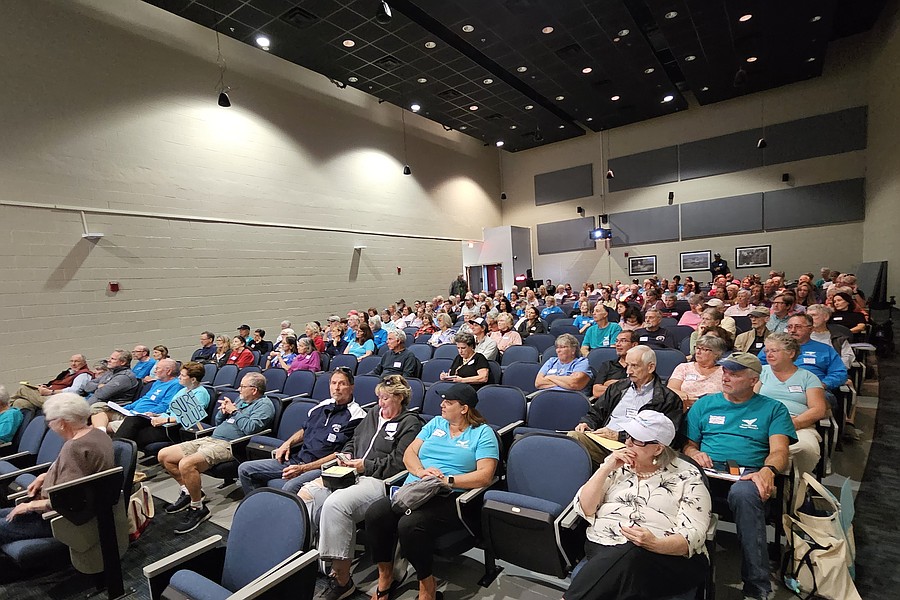
The Project held a volunteer organizational event on Monday, Jan. 5 at the University of Florida Whitney Lab in Marineland. Photo by Sierra Williams
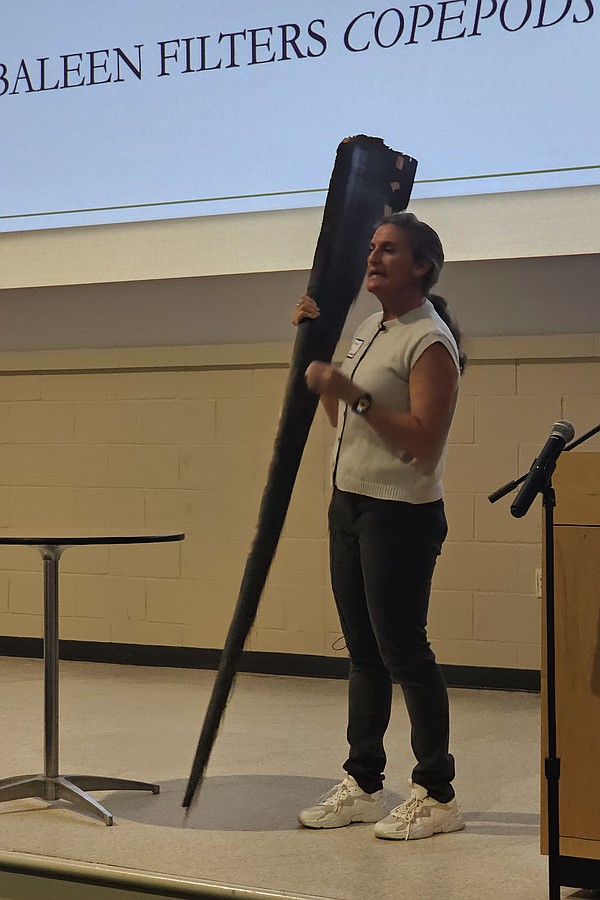
Terran McGinnis holds a Right Whale's baleen. The Project held a volunteer organizational event on Monday, Jan. 5 at the University of Florida Whitney Lab in Marineland. Photo by Sierra Williams
The critically endangered right whale is righting the ship: In just one month since calving season began, 15 right whale calves and mothers have been spotted.
“That is unheard of,” said Terran McGinnis, project coordinator of the Marineland Right Whale Project. “This is a very early start.”
Typically, she said, the whales begin having calves in the area from January to April. According to the National Oceanic and Atmospheric Administration, the first Northern Right Whale calf and mother pair was spotted on Nov. 28 in South Carolina.
Since then, mother-and-baby pairs have been spotted up and down Florida’s coastline, including one in Ormond Beach on Dec. 26 and in The Hammock near Jungle Hut Road on Dec. 19. The Marineland project collects volunteers who live in St. Johns, Flagler and Volusia Counties to formalize their whale watching into this citizen science effort.
“There's so few of these whales left,” McGinnis said. “There's fewer than 400, which means that every individual matters.”
The Marineland Right Whale Project covers 70 miles of coastline, from Ponte Vedra Beach to Ponce Inlet. McGinnis said they expect they’ll have hundreds of volunteers, and anyone can join at any time during the season. The Project held a volunteer organizational event on Monday, Jan. 5 at the University of Florida Whitney Lab in Marineland.
Volunteers, or even casual observers, can find an elevated location to whale watch from. That could be a dune walkover or a pier — like the Sunglow or Main Street piers in Daytona Beach — to look out from. If a Right Whale is spotted, the volunteer can call it in at the hotline number, 1-888-97-WHALE.
Northern Right Whales can grow to 55 feet long and weigh around 70 tons as adults. They are identified by the white patches across their heads and backs.
In 2025, just 11 babies were sighted, according to NOAA Fisheries.
The biggest causes of death for sea animals are entanglement in the ropes and nets used in fishing and boat strikes. Volunteers who take part and whale watch are actively saving the lives of these whales by reporting their whereabouts, McGinnis said.
“There's an immediate response when a whale is seen,” she said. “That information goes out to all the mariners on the water so they can back off. So when a volunteer goes out there, it's not just great for the volunteer when they see a whale, but it can literally be saving that whale's life.”
Volunteer administrative coordinator Zoe Rauscher and her mother Laura Rauscher have been volunteering with the Marineland program since 2018. Now, the two are responsible for the educational brochures and updating the website and Facebook page.
“I like this project specifically because it's easy to see exactly how it's making an impact,” Zoe Rauscher said. “We can help it while it migrates. We can keep it safe, at least for a day.”
To join as a volunteer, those interested only need to fill out the application on the nonprofit’s website, at marinelandrightwhale.org. Volunteers are divided into areas based on where they live. Those who can’t commit to volunteering, can save the hotline to their phone to call in a sighting of a right whale.
Rauscher said that it is easy to think that conservation efforts are a lost cause nowadays. It’s not, she said.
“We are doing something to directly help the population of this species, of this endangered species,” Rauscher said.