- February 24, 2026

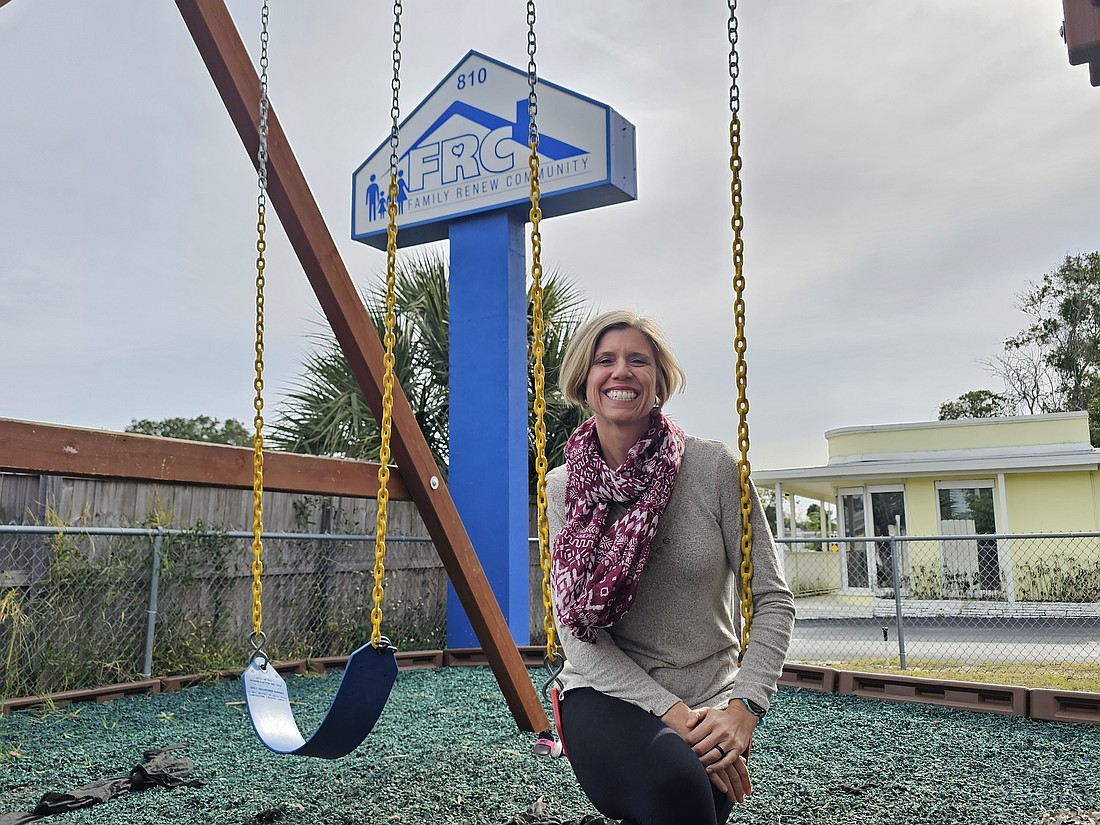
The faith-based nonprofit Family Renew Community has been around in northern Volusia County for 36 years but it has recently undergone a revitalization of leadership.
FRC is a nonprofit organization that provides housing for homeless families with children. Executive Director Lindsay Elliott took over the position in 2024 after the nonprofit had several years of rapid turnover in leadership: she was the fifth executive director in two years.
Elliott said her heart has always been working with housing stability and nonprofits. But even after working 15 years with Habitat for Humanity in Florida, including in Flagler County — a nonprofit that provides a pathway to homeownership for low-income families — Elliott said FRC has taught her a lot about what homelessness looks like.
"One thing that I have learned in my last 15 months is the face of homelessness is not what I thought it is, or it's not only what I thought it was,” she said. “I didn't think of families. I didn't think of working families, and I most certainly didn't think about children.”
Volusia County alone, she said, over 3,000 students are identified as homeless by the school system. And FRC is helping get some of those students, and their families, back into homes.
But FRC is not an emergency shelter, she said. It’s a place to help families get back up on their feet and learn important life skills to keep them on an upward trajectory. Every family member must pass a background check and everyone over 13 is drug tested.
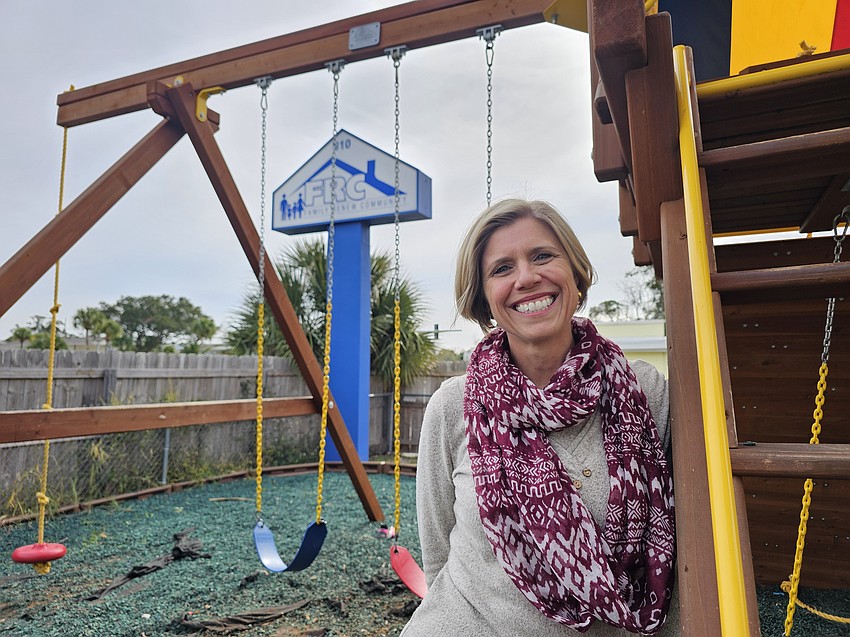
FRC has facilities across Daytona Beach, Holly Hill, DeLand and, as of 2025, Edgewater, with a total of 40 units combined. But, Elliott said, there is a waitlist of around 100 families. And those families who make it in have to be willing to put in the work.
“They don't pay rent, they don't pay utilities, but it's not free to live here because they have to put in a lot of hard work,” she said.
Both parents must be applying for jobs if they are not employed already, and become employed within 30 days. They also have to turn a budget every week and commit 50% of their income to savings. The FRC provides daycare for kids as well, so parents do not have to worry about that cost.
The savings is not just to build up their funding to be able to afford to rent their next home, but it helps to build the habit of setting aside money for rent. That way, Elliott said, once the families do move on, the parents are already used to setting aside the money for rent in the budget. They also help their families apply for affordable housing programs, too.
Their housing program can take six to 12 months to complete. The program is supposed to be hard, she said, because changing behaviors is hard. But the program works: On average, they help over 60 families transition out of homelessness every year, and they have a 94% success rate, Elliott said.
“The purpose is self-sufficiency at the end, and we take a really holistic approach to that,” she said. “We are instilling and ensuring that by the time they leave, they are the best version of themselves.”
FRC volunteer Joan Grennan has been with the nonprofit for 15 years, on and off. She said over the last several years while there was a “hiatus” of leadership, many volunteers were not called on. But when Elliott took over, she came and made an appeal to the church.
“Everybody jumped on the bandwagon,” Grennan said.
Since her return to volunteering, Grennan has been helping refurbish the apartments for newcomers. The apartments are typically one-bedroom apartments, with multiple bunk beds to be able to serve the families, a living room and a bathroom and a kitchenette.
The purpose is self-sufficiency at the end, and we take a really holistic approach to that."
— LINDSAY ELLIOTT, FRC executive director
The families who stay there are able to take everything with them when they lead, aside from the beds and appliances, Elliott said. This is to help the parents with the costs of furnishing their new home.
Grennan said she knows from personal experience it can be difficult to jump into director positions, but Elliott jumped right in, pulling the board, volunteers and synagogue back in.
“To go in between staff and community can be a balancing act, shall we say, but she did it flawlessly,” Grennan said.
It’s not just the executive director leadership that has undergone recent turnover, but the board leadership, too. Rich Haas is the new president of the Family Renew’s board, but has been on the board for four years.
Until recently, he said, being on the board did not actually require the involvement of members, who would often just nod their heads at the monthly meetings.
“Now that's all changing,” Haas said. “Everybody is involved and will stay involved.”
Haas said the FRC is not just about housing but about healing families, giving children a means to go to school rested and clean and help parents improve their employment possibilities and parenting and money management skills.
“They pay down their debt, repair credit and build savings, so when they move out on their own, they're better equipped to handle all the challenges life sends their way,” he said.
What most people don’t realize, Grennan said, is that sometimes people need to be taught how to maintain a home and budget for food, rent and utilities. FRC takes a holistic approach to helping people get back on their feet, she said, keeping the families together.
“They're the whole family. They're not just, let's put somebody in a house. And I really appreciate that,” Grennan said.
The worst part of the job is seeing the reality of what homelessness means for children especially, Elliott said. What FRC does differently is that they keep families together. Often, adult males and even older male teens are separated in emergency shelters from the rest of the family. Not at FRC.
“We're so pleased to be able to keep the family together and not break them apart,” she said. “So they're doing this as a family, achieving this independence.”