- April 11, 2026

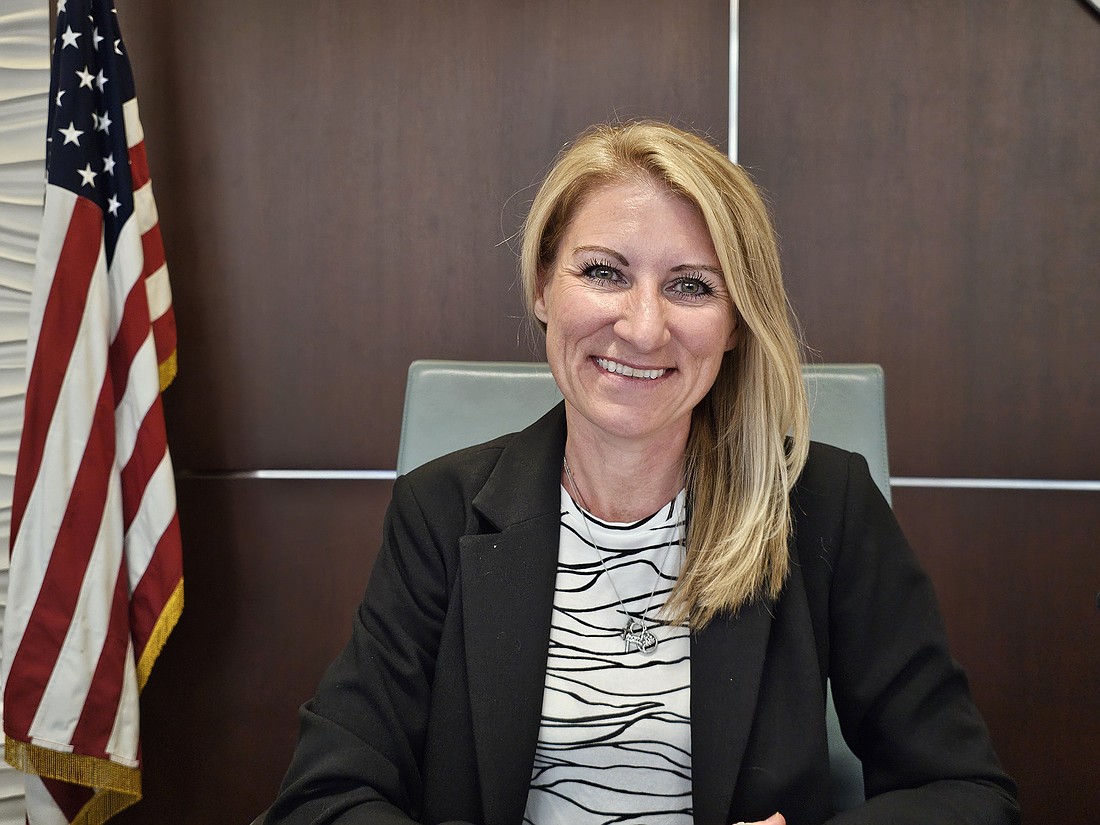
At the Feb. 17 Palm Coast City Council meeting, Vice Mayor Theresa Carli Pontieri announced she would be returning campaign donations from five developers and that she would be co-authoring a bill on smoke shops and vapes. Read what she has to say about the recent approval of the ICI Homes' Easthampton development and her ideas for a bill meant to protect the community's youth from having access to vapes.
Why did you decide to return the donations given to you by developers?
There's a narrative being created by a select group of residents claiming that my vote in favor of the development that is being donated by ICI Homes to our first responders, teachers, nurses, through a nonprofit, that my vote in favor of that is due to $5,000 in campaign contributions from entities associated with ICI Homes.
That is wholly false, and I want to take away the ability for people to create that narrative for two reasons.
The first being that I don't want a negative shadow to be cast over what I think is a really great project for our community. So I'm going to sacrifice my own campaign contributions in order to avoid such a negative light being cast over what I think is a really positive thing for our community.
And two, people need to know that I genuinely believe in this. I genuinely believe that we should take opportunities to have affordable housing for first responders, teachers, nurses, some of our city workers that are laborers and that do a really good job for our community, but are not paid what it takes to afford owning a home in this community. I want them to know that I believe in projects like this, not because there's a campaign contribution on the other end of it, but because it's the right thing to do.
How do you balance making a decision that increases density in a development like this that is offering affordable housing that isn’t contingent on taxpayers?
First, the size of the lot [in the Easthampton development] is completely compliant with our land development code. That was one thing I told the developer to fix for the second read. If you'll recall, the first proposal [had lots that] were lower than the size required pursuant to our land development code, and I was very explicit that I would not approve it on second read unless they became compliant.
They did so, therefore I did not have as much of an issue with the lot sizes. The second thing to keep in mind is that this property is zoned so that one to three units per acre could be constructed on the lots. The current density, as approved by city council, equates to less than two dwelling units per acre.
So pursuant to the zoning that was already in place — we did not touch the zoning. We didn't touch the land use designation — pursuant to that zoning, this developer with this new proposal is still below the dwelling units per acre that is permitted pursuant to what they're allowed to do on their own property.
So, yes, I have made a lot of comments that I don't want our lot sizes to get any smaller, and these lot sizes don't get any smaller pursuant to our land development code.
I think it's really important what you pointed out about the fact that we are getting some affordable housing for our frontline workers, without the burden falling on the taxpayers. And that's exactly what good policymaking in the affordable housing realm should look like. It should look like public private partnerships just like this, where we have stakeholders in the community that care about the future of our community without putting the price of affordable housing on the back of taxpayers through local subsidizing of homes.
When it comes to local candidates accepting campaign donations, where do you think the ethical burden is on a candidate, especially somebody who's already in office, to look at what they're doing and their contributions and drawing lines?
Any public official should be making decisions based on what they feel is genuinely best for the community, rather than anything else. The primary concern for any person in office should be, is this the best decision for my community, yes or no. I have always done that. Some of the decisions have been really tough, and I have remained very consistent, I feel, in my policymaking.
As far as accepting campaign contributions, this is the one and only developer or builder contribution I have ever accepted. I did so willingly, because I feel that ICI is a contributor to our community. ICI has done a lot of really wonderful things for this community that people don't realize, and they continue to work with the city and the county to try to do really good things for the community.
They're donating this land and getting not a single penny from it. And I think it's really important to point out that this approval was explicitly conditional on them donating the land. If they don't end up donating the land, then they don't get the approval that we just approved, they'll go back to the 58 homes. They'll go back to the larger lot sizes that they had previously. So they have to donate the land if they want to get these additional 13 homes and if they want to get the smaller lot sizes, and they did that without getting anything in return.
For somebody like this, who I feel is really a positive contributor to our community, I had no problem accepting the donations from them. Like I said, it's the first time that I've done that, but I feel that when people take something that is ultimately good and they turn it into something bad — I'm willing to sacrifice that $5,000 to make sure that the community realizes this is a good thing and it was done for the right reasons.
When asked when the money will be returned, Pontieri said that as she is going through the recent passing of her mother, it is not an immediate priority, but the funds will be returned by the next reporting period.
At the Feb. 17 City Council meeting, you announced you would be working on a bill with Rep. Sam Greco on regulating the locations of smoke shops. How did you decide that this is something you wanted to tackle?
There haven’t been any specifics that we have decided will be in or out of the bill at this time. But basically my goals, and I'll say my goals, because I haven't been able to get in touch with our legislators to start the process, but my goals for the bill are to limit the amount of smoke shops permitted within a certain mile radius, — and the community expand the distance between where smoke shops can be located — and their proximity to schools, churches, day cares, youth centers, anything you know, really that has the potential to have a lot of kids, and to more heavily regulate what can be in vapes.
Right now it's kind of hard to make sure that substances that are in vapes, while legal, based on their chemical compounds, don't still have harmful effects on people. And we're not just talking about young people, we're talking about adults as well. I mean, the problem is, you know, we have a lot of synthetics that people [inhale]. When there's certain chemical compounds of certain synthetics that you then add heat to, they can become very dangerous for consumption and more addictive than other tobacco and nicotine products.
Really there's a lot that I want to try to accomplish, but it's a matter of, what can we get across the finish line. As I start speaking with more legislators, as we're dealing with lobbyists and people in favor of these products, unfortunately, I have to figure out what can we get across the finish line, little by little.
I think the first goal is going to try to expand the proximity that these shops can be within schools, churches, etc, and then also limit the amount of them in a community or within a certain mile radius. After that, I plan on trying to tackle what actually goes inside vapes, which I think is probably going to be a little more difficult.
The other thing that I really want to tackle in this first round is trying to make it so that dates can only be sold out of liquor stores or smoke shops specifically, rather than people being able to buy them at convenience stores, gas stations, things of that nature.
Is a bill like this that would potentially limit how many smoke shops in a municipality, is that crossing over the line into business rights?
I don't believe so. I think whenever you're engaging in the legislative process and in policymaking, you always have to balance certain interests.
If I have to look at the interests of my community as a whole, specifically our young people who control the future of our community, versus the rights of a business owner who wants to sell what is ultimately a bad product for the mental and physical health of our community, I'm going to side with the mental and physical health of our community every day the week.
I am a very stark proponent for business owners and business rights, but to me, the interest of ensuring health and safety for our community members trumps that in this scenario.
What spurred an interest specifically in the issue of vapes and young people having access to vapes?
I'm really active with the sports communities and leagues in our city. I work with them very closely to ensure they have access to fields, that they have programming. You know we're working on trying to improve the current fields, get them additional field space. So I engage with our sports leagues quite a lot.
I started to be told by some members of those leagues and parents that, hey, you know, we really love the sports leagues. We'd really like more things for our kids to do because they're getting into trouble. They're getting their hands on things they shouldn't be, including vapes.
That started my inquisition into well, how many kids are getting their hands on these vapes and what is inside them. That's when I contacted our Flagler County Sheriff's Office and started engaging with them and asking them questions. I figured out very quickly that not only are these getting into the hands of young people that are below the legal age to even purchase them, but it's very hard for our Sheriff's Office to test what is actually inside of them, because they have to send them off to the FDLE [the Florida Department of Law Enforcement], and the FDLE has to actually do the testing, and that can take a really long time, because FDLE is also in charge of testing things like sexual assault kits and things of that nature, so things that are kind of higher up on the priority list.
Sometimes we don't get test results for these things back for weeks or even months at a time. By that time, the goal post has kind of moved, and now the compounds that are inside the vape have changed. It's a moving target. It's a really hard thing to grapple with on the enforcement side.
That's when I decided, okay, well, the way to probably tackle this is more on the legislative side, and kind of cut it off at the knees, rather than relying on enforcement, because they have such a difficult time once it gets to that enforcement level.