- February 17, 2026

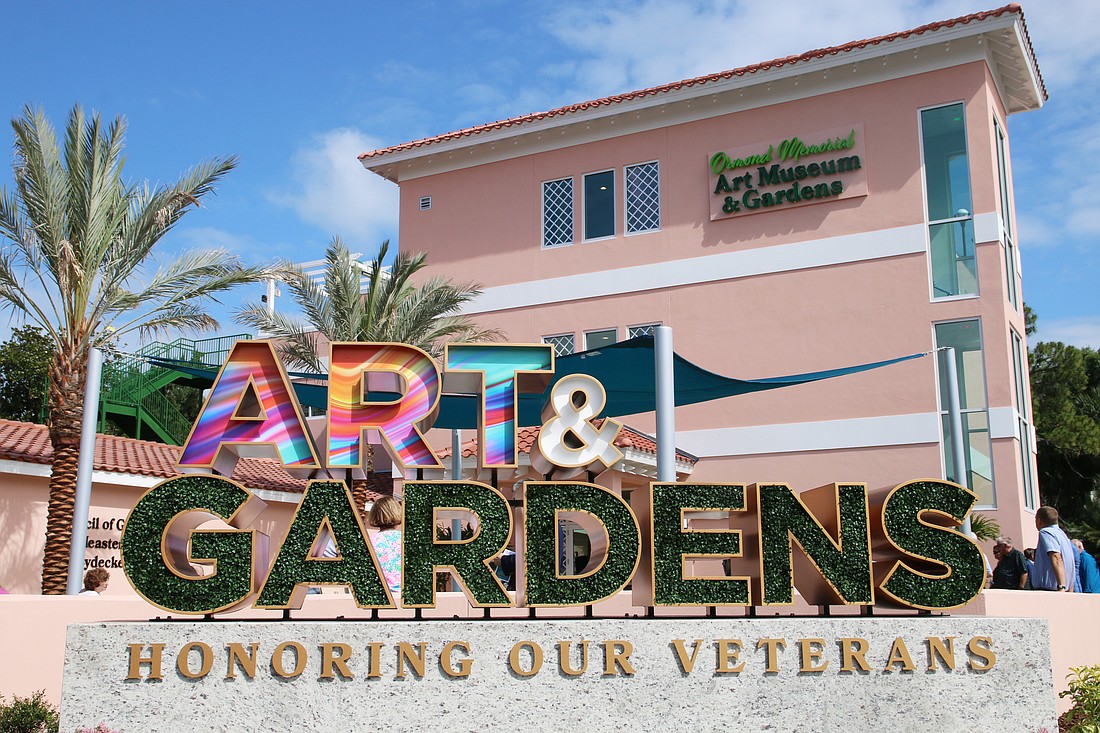
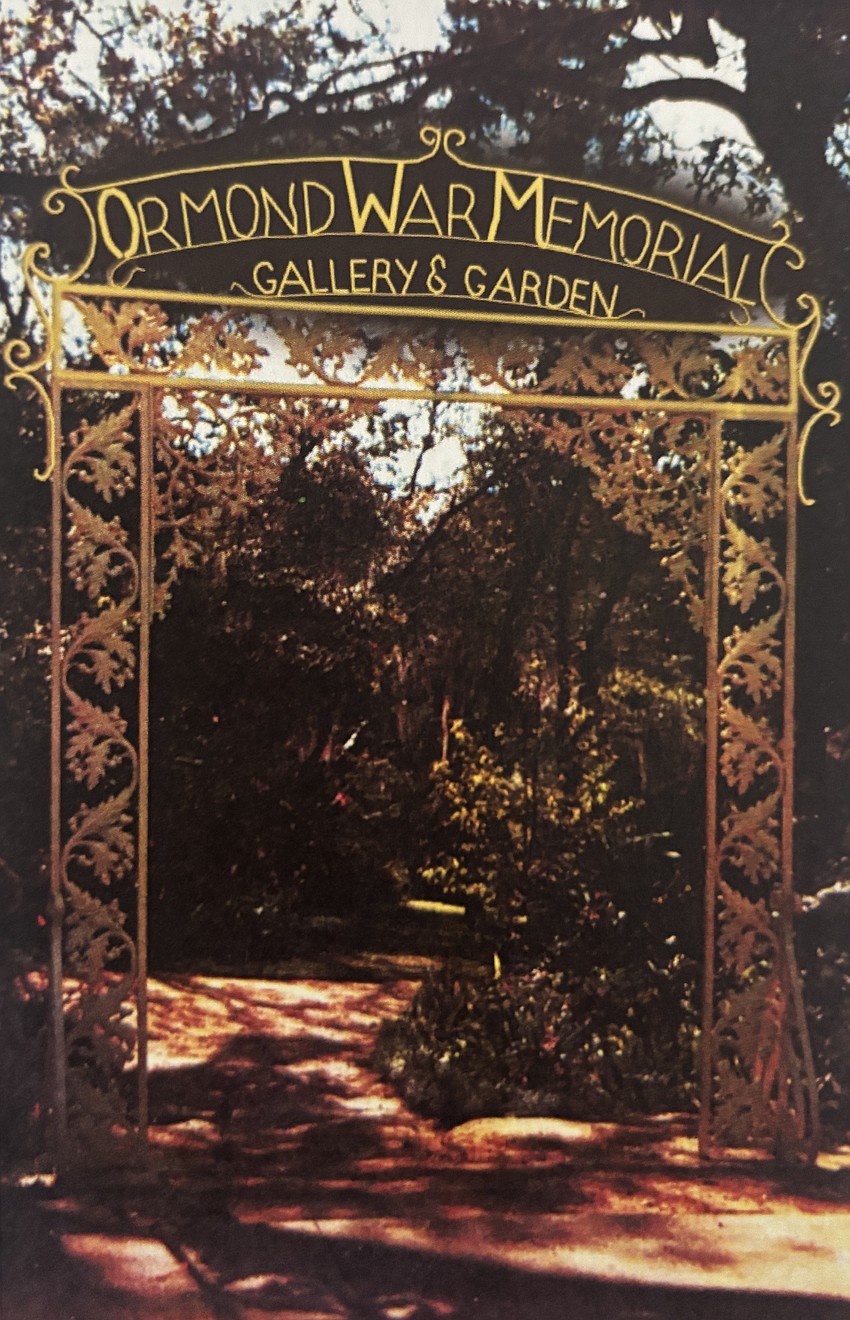
On Dec. 29, 1946, Ormond Beach celebrated the grand opening of its first art museum.
It wasn't quite the Ormond Memorial Art Museum and Gardens that stands today at the southeast corner of East Granada Boulevard and Halifax Drive — with its main three-story building painted in a light coral at 78 E. Granada Blvd. Though people only need to take a few steps east past the intersection to see where it all began: An 800-square-foot office building, originally owned by George Rigby, a prominent lawyer in and former mayor of Ormond Beach. He constructed the building in 1915.
Thirty-one years later, that building would become a hub of art, built on a mission to always remember and honor veterans. The museum was established by state charter sometime in the spring of 1946.
This year, OMAM is celebrating its 80th anniversary and the mission remains steadfast.
"The mission that began in 1946 is still just as important today," OMAM Executive Director Stephanie Mason-Teague said. "And just as meaningful for the community in that we're inspiring our community through art and nature, while honoring those who fought for freedom."
And it all began with a man who was part of both worlds: an artist and a war veteran, who wished to find a home for his life's work.
Malcolm Fraser found one in Ormond Beach.
Fraser volunteered to serve in World War I in 1917. According to "Ormond Memorial Art Museum & Gardens," a book on the museum's history written by Ronald and Alice Howell, Fraser was part of the "Blue Devils" regiment and was injured five times at the French front from explosions, trench knife, shrapnel and gas.
After WWI ended in 1919, he returned to his work as a painter and art teacher in New York. He later spent his winters in Orlando and often visited Ormond, as he and his wife Mary liked the east coast of Florida, even though, the Howells noted in their book, they found it to be "lacking in cultural achievement" at the time.
Fraser sought to change that. In 1946, he put out an offer to donate his life's work of 56 paintings to a city on the east coast that would be willing to use his art to honor veterans.
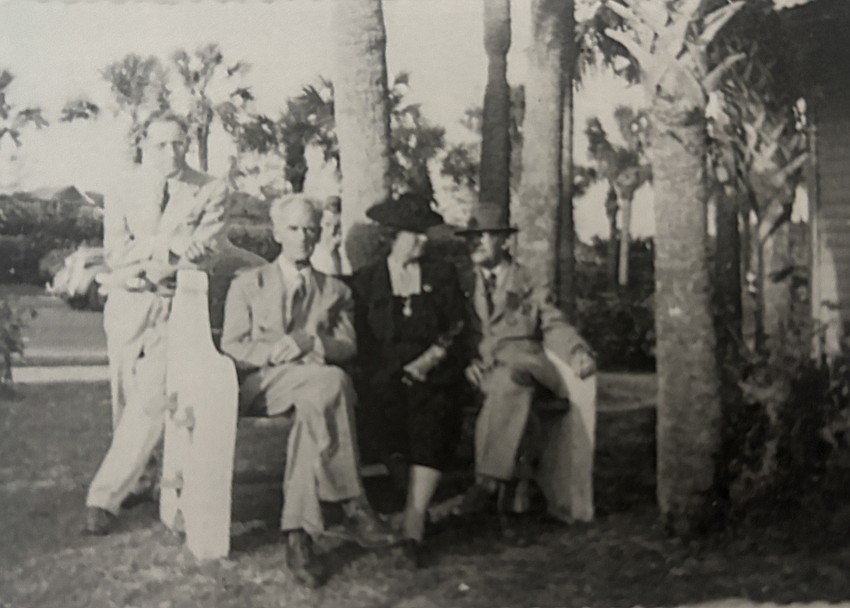
OMAM's cofounders Eileen H. Butts and Tom Coyne, the latter who was friends with Malcom, wanted Ormond Beach to accept that offer.
The Peabody Auditorium rejected the collection because of its religious nature. So did the Ormond Women's Club at the Anderson-Price Memorial Building.
So Coyne and Butts approached the Ormond Beach City Commission and asked to have the late mayor Rigby's law building. OMAM was born, though it was then called the Ormond War Memorial Art Gallery.
Butts wrote in a historical account, "They were delighted to have the building put to use. But Mr. Coyne insisted the pictures were too valuable to be placed in anything but a fireproof building. So I found myself going about soliciting funds to build the fireproof building."
They raised $10,000, the exact amount the building charged for the construction of four cement buildings to be added to the law office.
Butts wrote that she was disappointed the building was so expensive because she had a vision of a garden next to the museum.
"The ravines had been used as a dump — yes, right on our main street," she wrote. "It was full of debris — old tires, furniture, trunks, bicycles, etc."
She enlisted Henry Stockman, a Belgian-trained Chicago landscape architect, who told her he could build a garden for $8,000.
So Butts went to solicit more donations. Ninety percent of the population, she said, contributed.
But like with most projects, there were naysayers. And vocal ones, Butts wrote. They perturbed her enough that she spoke with a friend, the wife of Oakes Ames, whose husband was a local botanist (their home is now the City Attorney's office).
"She listened attentively and then, putting her arms around me, said 'Be of good cheer — We will make it a War Memorial — that will shut them up!'" Butts recalled. "And it did!"
On April 17, 1947, four parcels of land spanning three acres became the beginnings of the museum's gardens. Veterans helped to clear the land, and a memorial plaque inside the museum today honors all of Ormond's WWII soldiers.
"I can't say that every one of them contributed, but I do know that was the impetus — that returning servicemen and women came back to Ormond Beach and really liked the idea of having a tribute to freedom," Mason-Teague said.
Butts, who was the president of the Ormond War Memorial board of the directors at the time, as well as a member of the Garden Club of the Halifax Country, made the garden a chief project.
Thousands of plants were donated — 3,000 day lilies were given by Wheeler Gardens, a commercial firm; David Fairchild sent plantings and so did Ames, who grew orchids.
The garden was filled with camellias, hibiscus, iris, bamboo, palms and ferns, the Howells wrote in their book.
As a result, the garden isn't native. But because it's been here so long, Mason-Teague said, it is fully grown.
"It's so easy to forget that you're right in the center of Ormond Beach," she said. "The traffic falls away, the sounds of the waterfall and the bamboo blowing in the breeze. It's such a tranquil spot and unexpected."
In 1950, Fraser's wife, Mary Aldrich Fraser, presented the peacock fountain to the museum. The iconic waterfall was constructed in 1998. Both are iconic fixtures at the entrance of the museum, Mason-Teague said.
"I think pretty much every student that's gone to high school or college around here, gotten engaged, married, had a baby — they've all come to take a photograph in front of this waterfall," she said.
Today, the museum contains sculptures dedicated to past wars, including the Vietnam War and Korean War.
In 1963, the museum reorganized as a nonprofit and was renamed the Ormond Memorial Art Museum.
Ormond Beach artist Sang Roberson got involved on the board in the 1980s after a friend, Sara Fischer, asked her to serve.
The museum was very different back then, Roberson said.
"There was pegboard on the walls to hang paintings on, instead of nice, smooth smalls that you can nail into," she recalled. "It was very simple and quaint."
Roberson came on at a time where there was big turnover on the board — and big conflicts as members differed on the museum's direction.
Some wanted the museum to progress into showcasing more contemporary art pieces. Others wanted to shut it down entirely, and give the building back to the city to be used as a storage space for lawn equipment.
"We weren't going to have that," Roberson said. "We had a little battle and it was great fun," she added with a small laugh, "because we felt like the right side won and we got to keep it as an entity."
In 1987, the board of directors fired museum curator Meredith Dalglish, citing "financial reasons" and an inability to pay her salary of $1,000 a month, according to the Daytona Beach News-Journal article dated Oct. 20, 1987. But a board member, Robert Clair, told the newspaper the firing stemmed from her tastes in exhibits. They were too "contemporary for the board" and said the board preferred "artsy craftsy, hobby-type stuff."
He and Roberson were the only board members to vote against the firing.
Board meetings back then were sometimes very contentious, Roberson said.
"It was difficult going from the feeling of a private, little clique that ran it, to trying to open it more up to the public," she said. "They were conservative, the original board. ... They were very uncomfortable with anything that was the least bit avant-garde."
She remembered an exhibit brought on by Dalglish before her firing. It was an artist who made mixed media insects.
Roberson, who is a potter, thought it was great. Other board members were horrified.
"They didn't consider that art," she said. "Art to them hung on the wall, or it was a piece of marble sculpture."
In December 1987, the board asked the city to assume control of the museum, but the feud was resolved later that month by the board and the request to the city was withdrawn.
Fisher, who became the director, was an instrumental part of that, Roberson said.
"She was friends with a lot of the board members and they respected her a lot," she said. "She was very important in changing the direction of the museum, and we all supported her in that."
If the other board members had succeeded and the museum had been turned over to the city, Roberson said there would be a huge void today.
"I don't know what would have filled it because the gardens and the museum together are what we described as a verdant jewel on the corner of Halifax and Granada," Roberson said.
In 1998, Roberson helped to add another important historical element to the museum's gardens.
The Emmons Cottage.
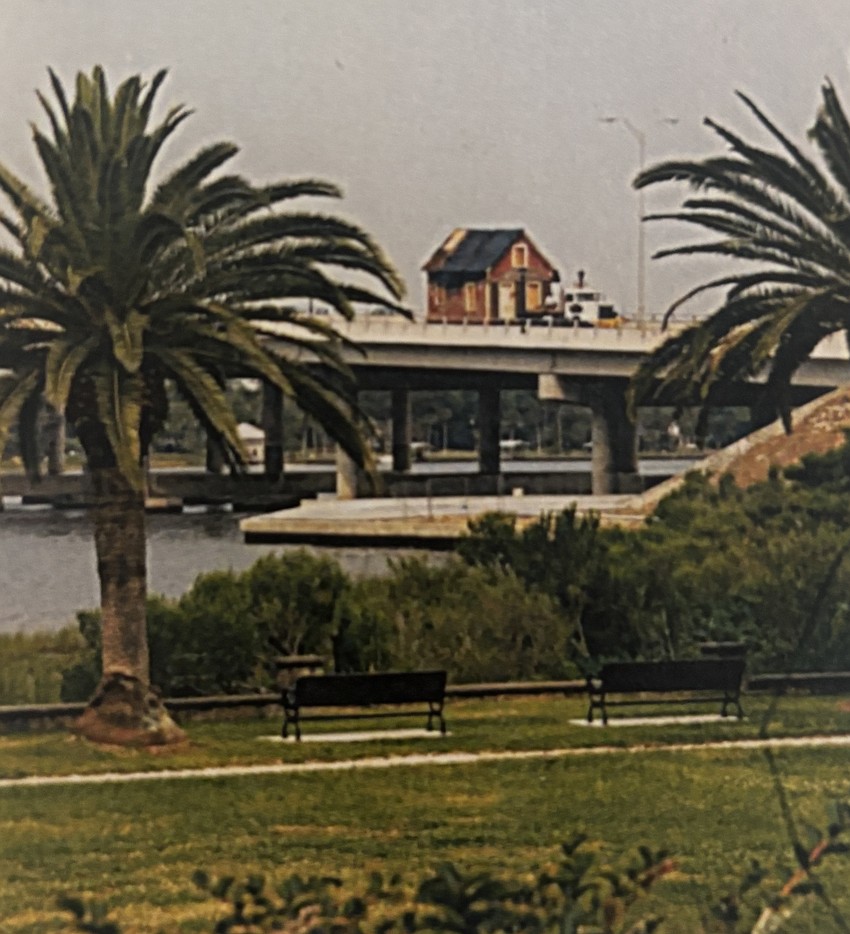
Built in 1885 and located across the river on the corner of North Beach Street and Dix Avenue, the Emmons Cottage was on the cusp of being demolished.
Aside from art, Roberson has a heart for historic preservation. When news spread that the cottage was about to be demolished, she got a call from a member of the city's Historic Preservation Board asking her to help.
Using money she had earned from that year's Smithsonian craft show, she bought the salvage rights from the DeLand company that sought to tear it down. Essentially, she paid the company not to demolish the cottage.
"That's a first for me," Roberson said. "I've never had to do that, but because I had a little money from that craft show, I couldn't think of a better cause than to save a little gem of a house."
What she loved about the house, she said, is that it's the kind of home a regular citizen would have lived in at the time. Putting it in close proximity to The Casements, the grand home of John D. Rockefeller, was great contrast, she said.
Together with her fellow Garden Club of the Halifax Country members, they approached the then-museum director, Ann Burt, to relocate the cottage to the gardens. Everyone was on board.
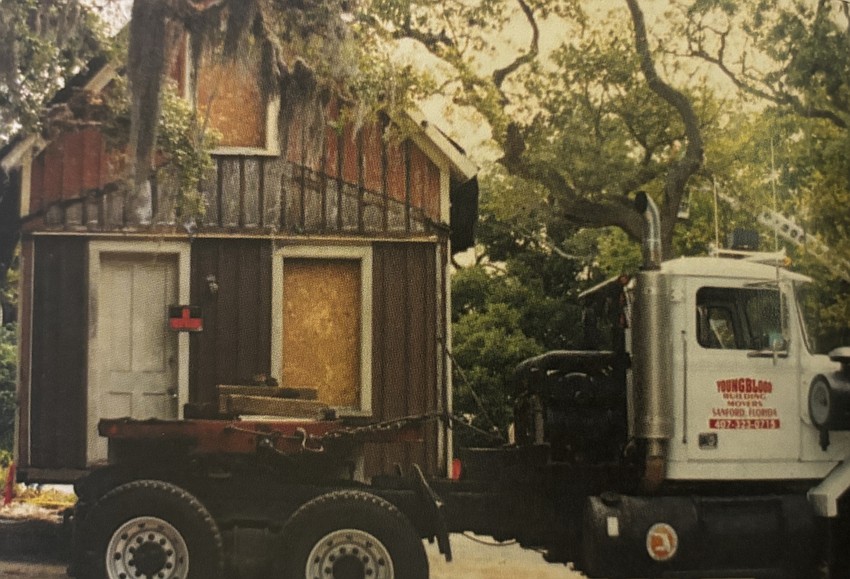
Roberson recalled the day the cottage was moved.
"They brought it over the bridge, and it was just adorable watching that tiny little house come over that great big bridge," she said. "But it was such an exciting day. Everybody. There was a big crowd there when we brought it in."
The Garden Club then created a program for children called Nature's Art Box. The kids tour the gardens and complete a painting inspired by what they saw. Part of the tour includes seeing the inside of the Emmons Cottage.
In 2006, the Garden Club added a memorial to Sandy Baird next to the cottage. Baird was a former museum board president and garden club member. Using dishes and small clay sculptures created by local children, Roberson and artist Lee Malerich helped build a mosaic wall around what is now the children's garden. The wall also contains the handprints and footprints of Roberson's grandchildren. Her son Shed and artist Chris Hill made an alligator bench, which kids still enjoy today.
"They say, if there's something the child can identify with, they'll always come back to see it," Roberson said. "I have kids that are parents now, who still come back and find their little handmade object that they made."
Every quarter, OMAM rotates the paintings part of the Fraser permanent collection, which has grown to 61 paintings.
The spiritual nature of his work is a part of the museum's story.
"All of them have the spiritual nature and themes of hope and forgiveness and recovery throughout," Mason-Teague said.
As she looks to the museum's next 80 years, Mason-Teague said she wants the museum to continue to grow — but do so in a way that honors the museum's roots.
The gardens are a big focus for OMAM in the near future, and the museum has a goal to add a new tribute art sculpture to honor veterans from the Gulf War.
Roberson said she hopes that the museum continues to serve the community for the next 80 years.
"I can't imagine a life without art, and this museum is our center of art in Ormond Beach," she said.
Mason-Teague wants the community to feel like the museum is theirs, and that veterans have a safe space to turn to. Since the museum's expansion in 2022, OMAM has added programming like its Veterans Creative Workshops to further that mission.
Her dream? For every Ormond resident to become familiar with the museum and gardens.
"The one thing that does still surprise me is how many people come through the door and say, 'I've lived here for 20 years and I never knew Ormond Beach had an art museum and gardens,'" Mason-Teague said. "So that would be my dream, and I think that that was part of the founding of the museum and the gardens back in the 40s — to honor artistic freedom, to have a space for the community, to be enjoyed by the community, and bring everyone together. That's what I hope we can achieve."