- March 31, 2026

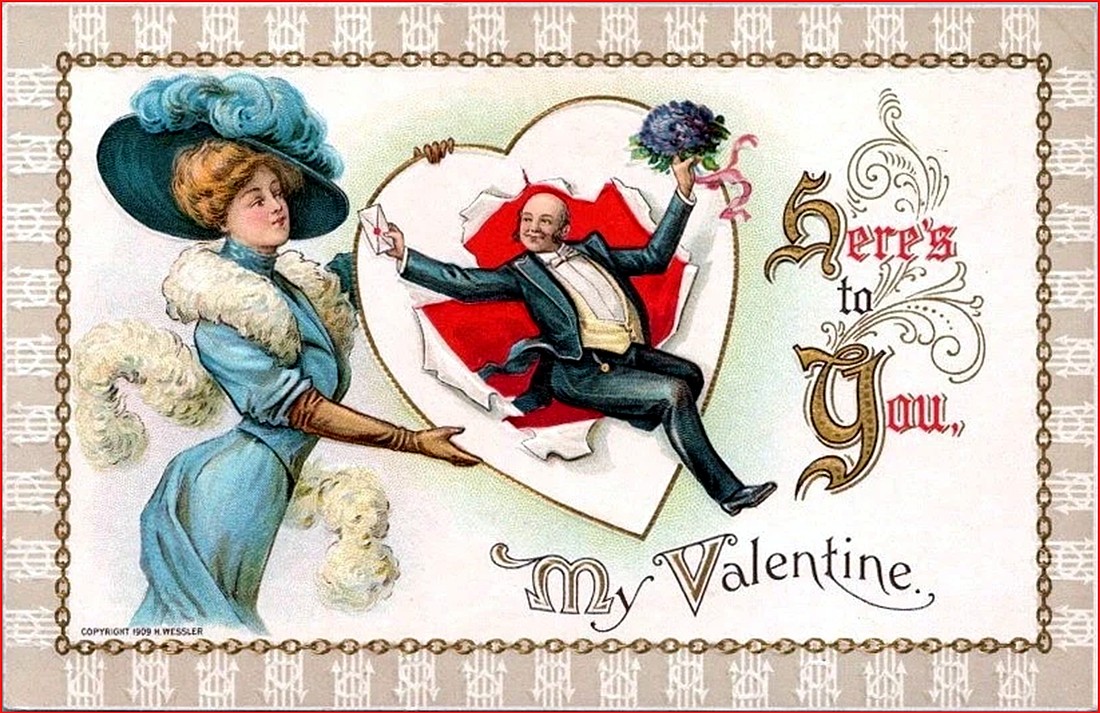
Valentine’s Day, also called Saint Valentine’s Day or the Feast of Saint Valentine, is a global holiday celebrated every Feb. 14.
In 496 A.D., Pope Gelasius I declared the priest Valentine a saint (over 200 years after his reported death). Pope Gelasius I also declared Feb. 14 as the day to honor St. Valentine, who was a martyr associated with heroics, sympathy and romantic legends.
The Valentine’s Day holiday replaced the ancient Roman pagan festival of Lupercalia, which was held annually in mid-February and originated around the 6th century B.C. Lupercalia was a festival that was intended to guarantee fertility, health and purification. It featured animal sacrifice, ritual nudity and the peculiar ceremonial practice of priests (Luperci) wearing goat skins and roaming through the streets flogging women with strips of goat hide to boost fertility and ward off evil spirits.
Lupercalia was dedicated to the Roman founders, Romulus and Remus, and the Roman god of agriculture, Faunus. Around 494-496 A.D., Pope Gelasius I officially banned Lupercalia reasoning that pagan traditions needed to be replaced with Christian ones.
St. Valentine himself is shrouded in mystery as there are at least three different legends about priests named Valentine or Valentinus (it is possible that two of them could actually be the same person).
One legend states that Valentine defied Roman Emperor Claudius II’s ban on marriage for young
men and secretly performed Christian marriage ceremonies. On Feb. 14, 270 A.D., Emperor Claudius II had Valentine executed in Rome for failing to renounce his Christian faith.
A similar legend suggests that Valentine might have been executed for attempting to assist Christians escape from Roman prisons, where they were harshly treated and often beaten and tortured. This legend states that while Valentine was imprisoned by the Romans he allegedly sent the first “Valentine” greeting to a young girl he fell in love with, possibly a jailor’s daughter, who visited him while incarcerated. He allegedly signed the letter “From your Valentine,” an expression that is still widely used today, especially on Valentine’s Day cards. He too was executed by the Romans.
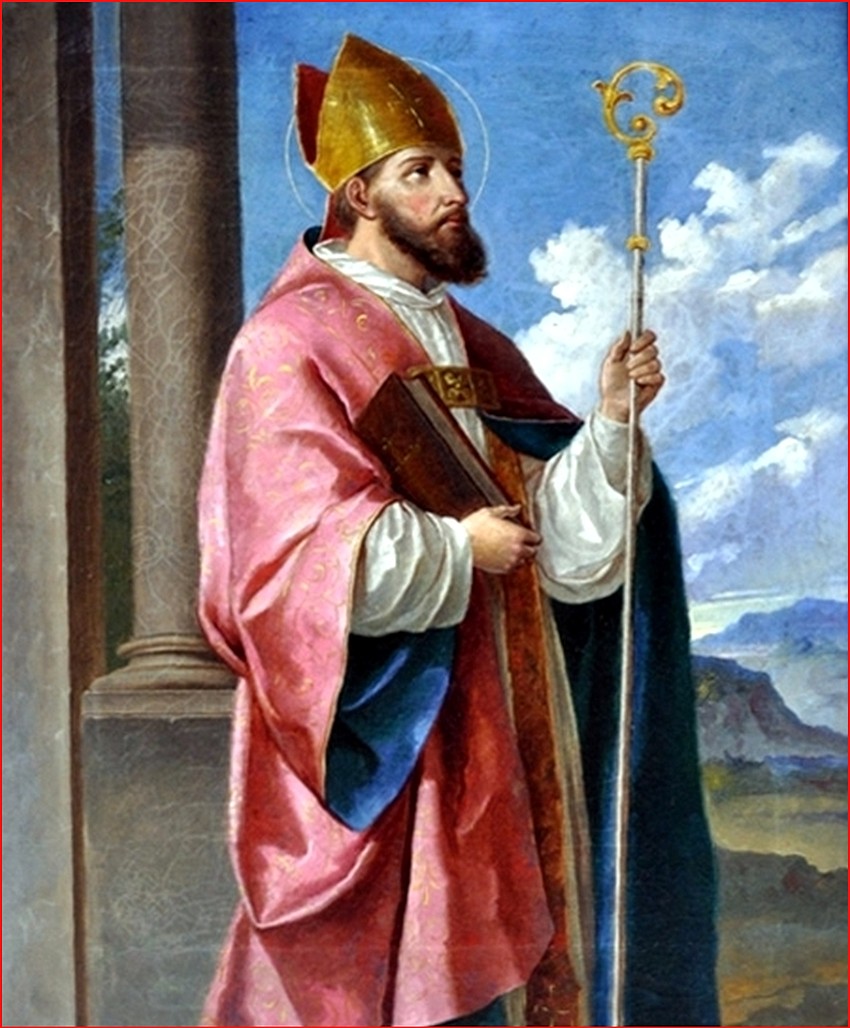
Another legend states that a bishop named St. Valentine of Interamna (modern-day Terni, Italy), is the actual namesake of Valentine’s Day. It was reported that Emperor Claudius II had this bishop executed for converting people to Christianity and refusing to renounce his faith.
The origin of the widespread use of hearts on Valentine’s Day is surrounded by a legend that states St. Valentine gave hearts cut out of parchment to soldiers and persecuted Christians to remind these men of their vows and God’s love.
St. Valentine’s Day began as an earnest Christian feast. During the 14th and 15th centuries, it evolved into a popular romantic celebration, which was sometimes associated to the belief that birds paired in early spring.
In 1375, the English poet Geoffrey Chaucer wrote “Parliament of Fowls,” which was the first reference of Valentine’s Day as a romantic celebration.
In 1400, the first reference to an annual celebration of love on Feb. 14 was written in the Charter of the Court of Love. This charter was allegedly issued by Charles VI of France and it describes lavish festivities which included dancing, feasting and jousting contests. A panel of judges, all females which included noblewomen, assessed sensual love poetry and songs written and performed by male members of the court.
In 1415, Charles, Duke of Orleans, wrote a Valentine poem to his wife while he was incarcerated in the Tower of London. This Valentine greeting is oldest in existence and is currently located in the manuscript collection at the British Library in London.
By the 1840s, the modern tradition of Valentine’s Day emerged as a popular holiday in both the United States and England. By the later part of the 1800s, Valentine’s Day became a major commercial holiday and an important source of economic activity around the world as it featured friends and loved ones exchanging candy, flowers (roses, especially red roses, are by far the most culturally significant, iconic and popular flower for Valentine’s Day), jewelry and other gifts, and it especially became a card-sending event.
In 1868, Cadbury, the English confectionery company, created fancy boxes in the shape of a heart that were filled with chocolates for Valentine’s Day. This gift idea quickly became associated with the Valentine’s Day holiday and is still popular today.
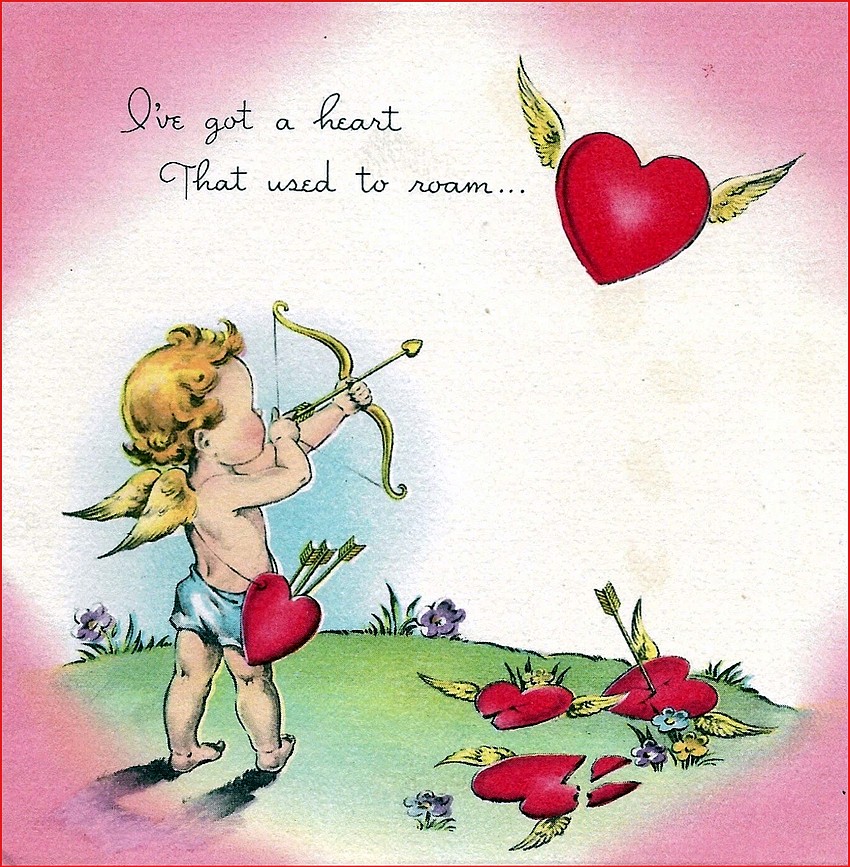
Mischievous naked winged cherubs with a bow and arrows are often depicted on Valentine’s Day cards launching arrows of love at unsuspected lovers. One of these cherubs is Cupid, the Roman god of desire, affection and erotic love. Cupid’s counterpart is the Greek god of love, Eros, who was a handsome immortal and used golden arrows to incite love. Eros evolved into the chubby mischievous winged child who acts as a matchmaker. Cupid and Eros are essentially the same deity.
By the mid-18th century, a large number of people from all social classes celebrated Valentine’s Day by exchanging gifts and handwritten notes to express love and affection.
In the 1840s, Esther A. Howland, “The Mother of the American Valentine,” began selling elaborately designed, mass-produced and pricey Valentine’s Day cards. Howland’s cards featured birds, cherubs, flowers, heart motifs, poems and other imagery that are common to this day. She introduced the “lift-up” Valentine’s Day card which featured multiple layers of texture, different colors, real lace, ribbons and other materials. Howland was responsible for popularizing Valentine’s Day greeting cards in the U.S.
By 1900, printing technology advanced to replace handwritten notes and letters with affordable pre-printed Valentine’s Day greeting cards and postcards. Modest postal rates allowed people from all walks of life to send Valentine’s Day greetings to loved ones regardless of the geographical distance separating them. During the 1900s, the Valentine’s Day card became a very popular holiday tradition.
According to industry data and Hallmark Cards, Inc., the largest private, family-owned manufacturer of greeting cards in the U.S., more than 145 million Valentine’s Day cards are mailed every year. This quantity of card-sending is second only to the Christmas holiday season.
Florida has a few Valentine’s Day traditions that are fairly unique. The classic romance associated with Valentine’s Day is coupled with tropical settings, coastal charm, waterfront dining, beach-side escapes, scenic boat rides and visiting theme parks. The gifting of flowers is actually more popular in Florida than the gifting of chocolate treats.
In 2026, consumer spending for Valentine’s Day in the U.S. is projected to exceed $29 billion (which would be a new record). This amount of consumer spending is up from $27.5 billion in 2025.
“You can’t blame gravity for falling in love.” — Albert Einstein
Randy Jaye has recently researched and nominated five properties that have been successfully added onto the National Register of Historic Places, and is the author of five history books. He also writes articles for historical journals, local newspapers, magazines, online publications, and has appeared on several radio shows and PBS documentaries. He earned both a master’s degree and a bachelor’s degree from California State University.