- April 1, 2026

A decade-old development in Daytona Beach has sparked one city commissioner to ask for a review of potential impact when older projects come back before the board.
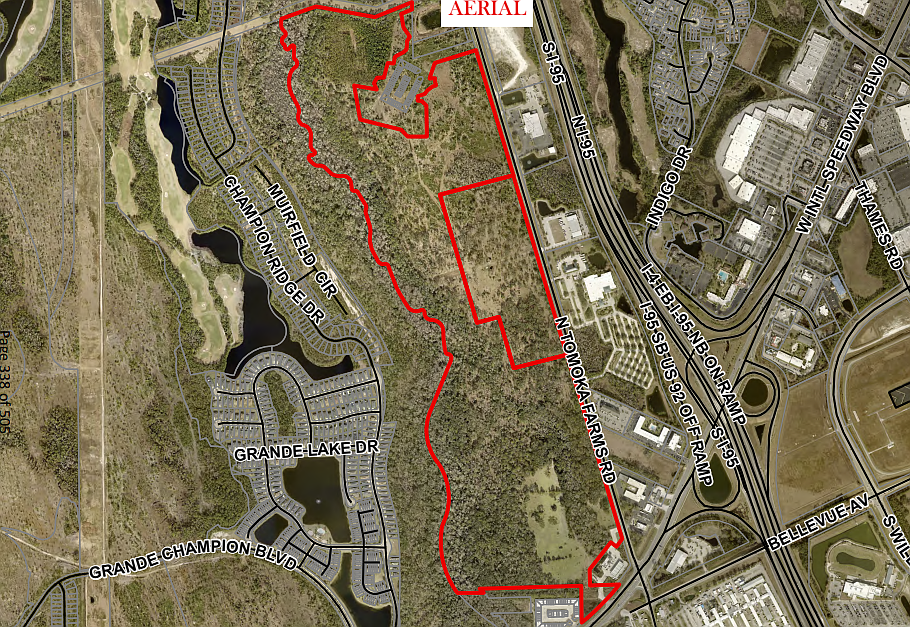
The Midwest Transit, Inc., Planned Master Development is a 226-acre development first approved in 2014. The development is located along the west side of North Tomoka Farms Road, on the northwest side of Interstate 95 and International Speedway Boulevard.
The development is approved for mixed-uses like medical offices, retail, hotels, commercial, general office space and residential uses, divided across different lots within the lot. All of those uses were approved in 2014, with an amendment in 2022 to expand light industrial use areas within the development, according to city meeting documents.
The amendment reviewed by the Daytona Beach City Commission on Feb. 4 is to allow residential uses on another section of the lot where it had not been previously approved.
Essentially, said Cobb Cole attorney Rob Merrell, representing the developers, the idea is to allow a developer to build residential units on a neighboring spot.
“We’re simply moving what was already allowed, 50 feet over,” Merrell said. “It’s literally next door.”
Merrell said it is not adding any additional uses than was previously approved, just expanding where those residential units could go.
But City Commissioner Monica Paris asked if it were possible for the commission to see a review of impact analyses for older projects like this before the commission is asked to approve changes. In the case of this development, she said, they’re making amendments on information from over a decade prior.
“All of the information that was provided here like the traffic study, school concurrency, was done 12 years ago,” Paris said. “I'm not against the development. It's just, I can't make decisions on something [when], especially now, we've had so much development happen.”
The request would not necessarily apply to this planned development, but future ones. City Attorney Ben Gross said he’d need to do some research to see if requiring such analyses would be legally possible.
The city’s land development code outlines criteria developers must meet at each stage of the application process, and, Gross said, there are some state laws that may apply, too.
“I'll do some research between now and the next meeting and help you determine whether that would be something you could legally require as a condition of a rezoning for a PD,” Gross said.
Additionally, requiring an in depth analysis at this stage might not be worth it. It could be years between when a development application is approved and when it comes before the board for site plan approval, just like the Midwest Transit, Inc. development.
“I hear where you’re coming from,” Merrell said. “It’s a plan that’s been around a while, but it’s one of these long-term plans that happens over time. There are several that are still out there that are being built years down the road.”
At this stage of an application, the analysis for the zoning and comprehensive plan requirements is also different from the fuller analyses conducted for a site plan, Merrell said.
Paris still asked Gross to conduct the legal research. She said she didn't want to approve something and be responsible for taking care of it later. When the commission is approving a planned development, she said, they’re saying it has a public benefit.
“I just want to make informed decisions,” Paris said. “I want to see if it's possible when something happens like this [development] and it comes before us again, that it gets reviewed again.”