- March 20, 2026

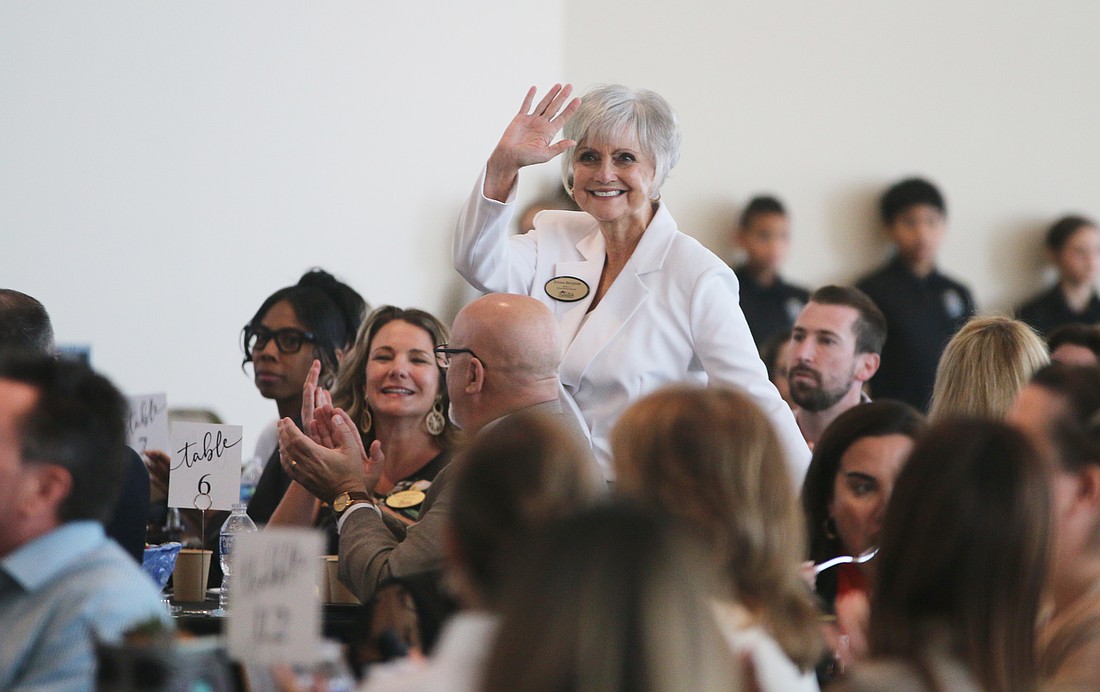
Should a School Board member have to pay to obtain public records from their district? Should budgets be presented with line items? And should the attorney that represents the district also represent the School Board?
These were questions by Volusia County School Board member Donna Brosemer that led to new bills filed this legislative session in the Florida House and Florida Senate. House Bill 1073 advanced the Education & Employment Committee after a unanimous vote on Tuesday, Feb. 3. Senate Bill 1620, filed by Sen. Tom Leek, was also considered on the same day. It passed the Education Pre-K committee with 12-6 vote.
The bills, if signed by the governor, would establish a "District School Board Member's Bill of Rights," dictating that officials be given free and timely access to requested school district documents, including those not deemed as public records; be able to see a budget by line item; and have an attorney not employed by the district represent the board.
"I've worked with and in local governments for most of my professional life in Florida," Brosemer said. "I had never encountered a situation where the elected officials are charged for public records — for any document that they request. But that was one of the first things we were informed would be the case."
Brosemer, who represents District 4 on the Volusia County School Board, said that since then, when she requests a document, she's either ignored or charged for the records.
"I can't imagine a school board member not having access to documents that they need or being able to talk to anybody," Rep. Yvonne Hinson, of Gainesville, said during the Feb. 3 hearing.
Discussion during the hearing questioned whether the bill was addressing an isolated issue at VCS, or whether it was happening in other districts.
The consensus? If it's happening in Volusia, it's probably happening in other school districts.
"I think that it is necessary that we have to push this forward, whether we think it's one district, whether we think it's a few," Hialeah Rep. Alex Rizo said. "We need to say it black and white in statute. I believe that withholding of information to a school board member is something that just should be unconscionable."
Brosemer said she met with Leek last summer and spoke with him about this and other issues she'd encountered during her time on the Volusia County School Board. As she has a background in public policy and legal research, she examined state statutes and found areas where small changes could be made.
HB 1073 was sponsored by Rep. Traci Koster, of Tampa, and she said during the Feb. 3 hearing that she wasn't filing a bill targeting Volusia County.
"I'm filing a bill for the state of Florida, that will apply uniformly to the state of Florida, and it will put into practice what I believe to be the best practices that hopefully, most of our school districts are already implementing," Koster said.
HB 1073 and SB 1620 also include a clause banning districts from requiring employees sign non-disclosure agreements.
Last August, Brosemer asked the district to rescind an NDA it asked about 110 employees to sign. She argued — and later provided a legal opinion supporting her stance — that the NDAs were unconstitutional under Florida's public record laws. At the time, School Board Attorney Gilbert Evans argued they were valid; that the district created them to protect VCS from liability.
The NDAs sunsetted in December, as announced to the School Board in its Jan. 13 meeting.
Former ESE teacher and VCS administrator Shane Story spoke before representatives at the Feb. 3 hearing. He said he lost his job when he refused to sign the NDA.
"HB 1073 addresses these systemic failures, restores transparency, reinforces proper oversight and ensures that public institutions remain accountable to the people they serve," Story said.
Brosemer said to the Observer that, during a subcommittee hearing for HB 1073, the most prevalent question from legislators was, "Why do we need this bill?"
"All of the primary elements of the bill should be obvious to the average person, and I would say for decades they were, but statutes are very often written relatively broadly, making certain assumptions," Brosemer said. "And every once in a while, someone comes along with a more creative interpretation and Volusia County happened to be in that situation where several of our statutory interpretations were different from what has been customary."