- March 17, 2026

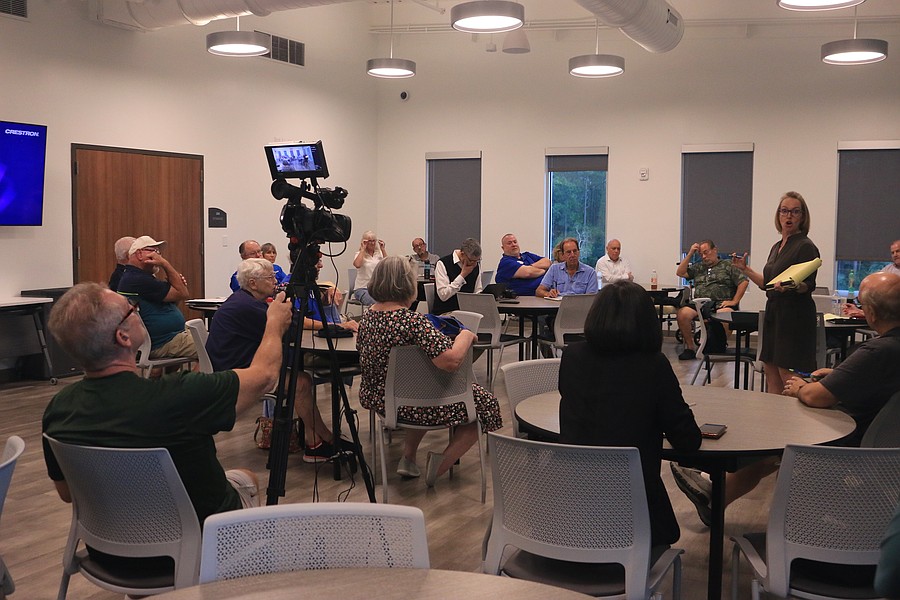
Over a dozen people showed up for the first Town Hall and public workshop for the charter review process. Photo by Sierra Williams
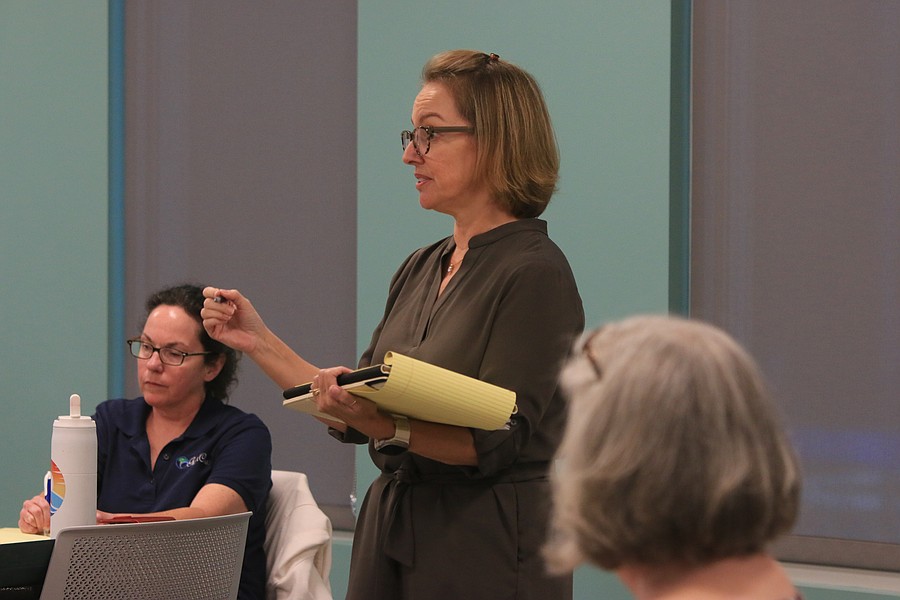
Georgette Dumont, a UNF professor, was hired to act as the mediator for the the Palm Coast Charter review process. Photo by Sierra Williams
Over a dozen people, including several committee members, attended the first community workshop to review the Palm Coast City Charter, on Sept. 29, at the Southern Recreation Center.
The Palm Coast City Council has appointed a five-person Charter Review Committee to submit suggestions for changes. Any changes made to the charter will have to be approved by a referendum vote on the November 2026 ballot, and the city is hoping to ensure public participation in the process through a series of town hall meetings and workshops.
The city hired Georgette Dumont to help facilitate the process. Dumont is a University of North Florida associate professor in political science public administration with experience in charter reviews.
Dumont said the workshops, more so than the committee meetings, are for citizens to provide their input.
“This is so we get a broad view of what people want,” Dumont said.
This was just the first workshop open to public discussion. The next will be held on Oct. 23 at City Hall while the next charter committee meeting will be on Oct. 6 at 6 p.m. at City Hall.
Attendees started with the basics like, what are the powers of the City Council? What can be changed?
“This is an opportunity to identify some of those pinch points that citizens are having,” she said.
The following discussion was engaged and thoughtful, with none of the political discord that occasionally comes out in the City Council meetings, both during public comments and from the dais.
The attendees spent two hours discussing the pros and cons of a variety of topics including expanding the number of council members, strengthening restrictions for absences from the dais, requiring council members be Palm Coast residents for a minimum of a year before being eligible and expanding the residency restriction for city managers.
Two major topics have plagued Palm Coast for the last year: clarifying in the charter when council seats are filled from unexpected vacancies through appointment or election, and adding repercussions for charter violations by council members.
Another topic was the city’s setup as a city manager-based system, in which the city manager runs the administrative and day-to-day work of the city, and the council members and mayor, comparatively, have a more limited role. The current charter forbids interference from City Council in staff duties.
One person suggested the city should move to a strong-mayoral format, but others felt that was not a good idea.
Resident Barry Moore pointed out that the current setup means the mayor and council “have absolutely no political power outside of their council room.”
“The only political power they have is if two other council people vote the way they want to,” Moore said. “They don't have the power to make edicts. They can't do proclamations. They have no political power to hire or fire beyond that which the council has – and that's a good thing.”
One thing the public will have to remember is this is a republic, not a democracy, he said. The city is electing people to lead on residents’ behalf, he said, because no one has time to do the “old New England Town Hall” pure democracy format.
On a more practical note, Mike Langello, a Palm Coast resident who serves on the Flagler County planning board, said the city manager position requires “a certain type of person,” with the right qualifications to run everything from the garbage system to personal relations.
“Anybody can be elected mayor,” Langello said. “I think paying for a good quality person [to be city manager] makes more sense. Again, you get elected by standing on a corner with an A-frame sign.”