
- March 16, 2026

Were Volusia County Schools' non-disclosure agreements for some of its district staff "unconstitutional?"
According to two attorney — both who have represented Volusia County School Board, past and present — the answer is no.
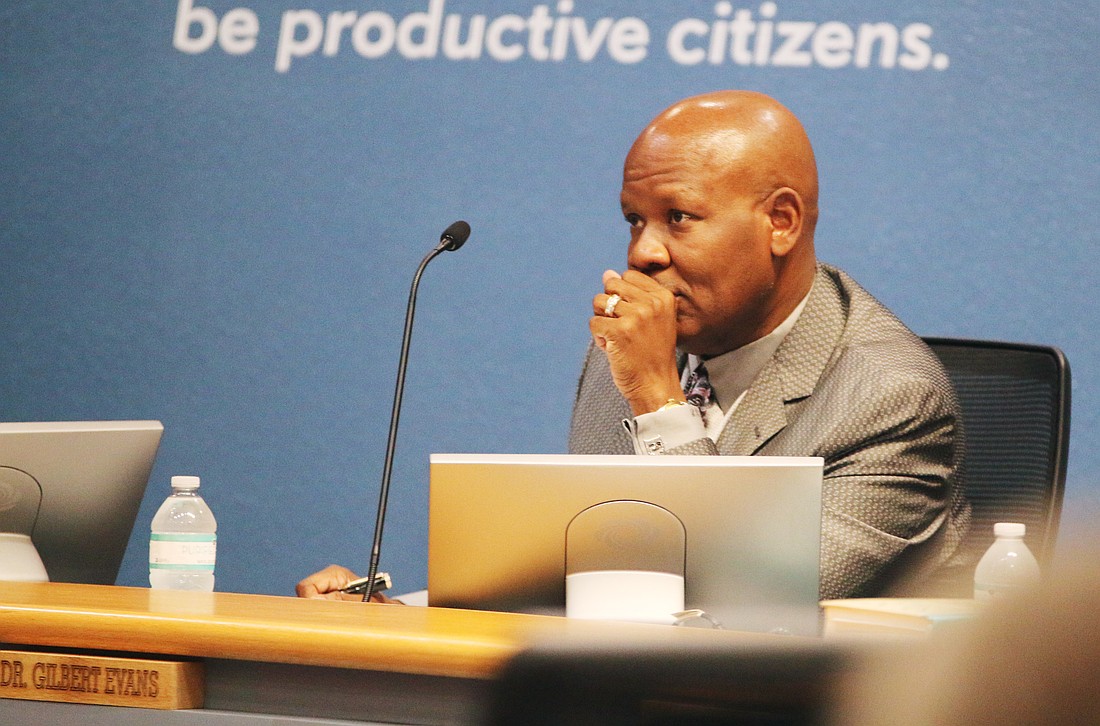
During a board meeting on Aug. 26, School Board member Donna Brosemer called for the district to rescind an NDA it asked about 110 of its 8,200 employees to sign, calling it unconstitutional under Florida's public record laws. At that meeting, School Board Attorney Gilbert Evans argued that the NDAs were valid, and his opinion remains the same.
The NDA was created to protect the school district from liability, Evans told the board during the School Board's workshop on Tuesday, Sept. 23.
"It was created to ensure that sensitive information, such as information regarding students and staff safety plans, legal proceedings, discussions and proprietary software owned by the district is not compromised," Evans said. "It was created as a deterrent from sharing unauthorized information."
The NDA, he said, is not "an instrument used in the district to hide or conceal financial information."
The School Board received a legal opinion supporting the NDA from former School Board Attorney Aaron Wolfe as well as a legal opinion written by a third-party attorney, on Brosemer's behalf. They took a recess to allow board members to review both opinions and the district's response.
Upon returning to the board room, Wolfe went over his legal opinion, countering Brosemer's and stating that the district's NDA states that confidential information doesn't include that which is required to be disclosed by law, regulation or court order.
"The Florida Constitution requires the disclosure of public records unless exempted by general law," Wolfe said. "Thus public records are required to be disclosed by law, and so the NDA does not encompass public records and does not add definitions as to what types of documents are to be considered confidential under state law. Therefore, the NDA is not unconstitutional."
In regards to claims the NDA violates the First Amendment, Wolfe said that nothing in the NDA prohibits or restricts employees from "making disclosures protected under whistleblower provisions of federal or state law." A number of courts, he added, including the U.S. Supreme Court, have rejected First Amendment challenges to NDAs.
Wolfe added that NDAs are an operational matter under the administration of the superintendent.
Brosemer said that she wrestled with the fact the justification for the NDA cited the NDA itself, and said that the introductory sentence — the district's definition of confidential information, which includes budgets, funding sources and allocation of resources — was the most concerning.
Wolfe had stated these included information such as retirement contributions, deductions, income tax information, and other similar financial data.
"I think in a lot of your analysis, there was no distinction made between the way NDAs can be used in the private sector and the way they can be used in the public sector," Brosemer said.
She also asked if any employees refused to sign the NDAs, and if so, was there an "or else?"
"No individual was told, if he or she does not sign the NDA, that he or she would be terminated," Evans said.
Three employees didn't sign the NDA, and Evans said nothing was said to them since.
Brosemer said she felt it was important to raise this issue due to its discussion in the community. Plus, she still feels that NDAs for a public agency are "inappropriate."
"I do not believe that this has anything to do with interfering with the administration of the school," she said. "The board's job is oversight, and so because this appears to me to conflict with constitutional structure, I believe that it was my responsibility as a board member to bring it forward to the Board for discussion. What the board decides to do is up to the board."
If the NDA was created so that employees would be prevented from speaking about someone else's retirement contributions, Brosemer said, she would like to think there are existing ethics rules or training to address the issue instead.
She requested that the NDAs be modified to be more specific.
However, the board agreed with the attorney's opinion: NDAs were an organizational matter.
"I think there's lanes," School Board member Jessie Thompson said. "... There are things that come before us, policy being a major one, but that kind of stuff (NDAs) falls under organization. That's why we pick the superintendent."
Editor's note: This story was updated at 10:25 a.m. on Wednesday, Sept. 24, to correct School Board attorney's first name in the story deck.