- March 18, 2026

The Flagler Home Builder's Association has served Palm Coast a 14-day violation notice, the first step in legal action over Palm Coast's recent increase to impact fees.
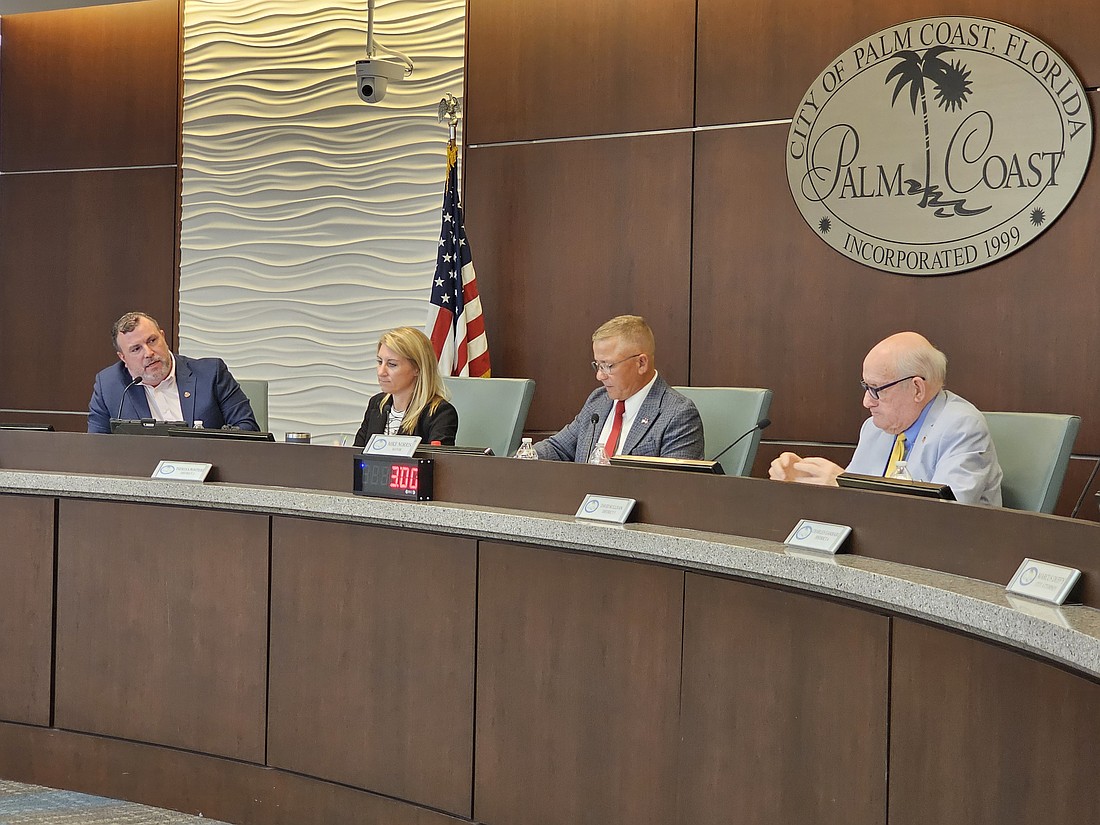
The notice was sent to the Palm Coast City Council on Aug. 27, giving the city until Sept. 11 to repeal the impact fee ordinances passed in June. Palm Coast City Attorney Marcus Duffy told the council on Sept. 2 he and his staff are still analyzing the 19-page notice and will have a suggested course of action in the next week or two.
“If I have to call a shade meeting, I will call that, but I do not see calling that right now,” Duffy said.
A shade meeting is a closed-door meeting that is typically only allowed when the council is discussing active legal cases involving the city. Until Duffy requests a shade meeting, any discussion of the letting with Palm Cost City Council members will need to take place at public meetings. The next meeting is a workshop scheduled for Sept. 9 at 6 p.m.
In June, the Palm Coast City Council increased its impact fees dramatically, arguing the extraordinary circumstances of recent extreme growth and increased inflation costs over the last six years. Though the impact fees vary for type of development, for a single-family home, the impact fees increased by $5,881 across all three fees: impact, fire and transportation.
"The Flagler HBA alleges that the City unlawfully adopted three separate impact fee increases which more than double the impact fees on homes and businesses," a FHBA press release said.
Typically, Florida state law prohibits municipalities from increasing impact fees by more than 50% of the current rate and any increase must also be phased in over a two- to four-year period and the fees can not be increased but once every four years.
However, Florida Statutes allow exceptions in the case of extraordinary circumstances. The lawsuit will argue "that the city’s fee increases lack the required nexus to new development and violate state law, creating an unnecessary burden on residents, businesses, and potential homeowners," the press release said.
Attorney Daniel Webster of Daytona Beach is representing the FHBA, Intracoastal Construction, LLC, Integrity Homes USA, LLC, Thomas Consulting and Construction, LLC, 1621 Building and Remodeling, LLC and Florida Green Building Construction, Inc., contractors and real estate developers that do business in Palm Coast. Palm Coast residents William R. Barrick and Brad M. Thomas are also listed as his clients in the legal notice.
"My clients are prepared to file a civil action to contest all three (3) Ordinances if the City does not repeal, or take affirmative action as required pursuant to the above- referenced statutes to repeal, within fourteen (14) days after receipt of this notice," the legal notice reads.
Councilman Dave Sullivan said Palm Coast went through a long process with the impact fees, and the council was very careful to do things in a legal manner. The Home Builders Association had plenty of time to talk in the meetings, and event agreed with increasing the impact fees.
“The question was how much,” Sullivan said. “We discussed that a lot, and we actually came back off what the staff had recommended.”
In the end, he said, there is no “government group above” the city when it comes to deciding impact fees.
“We're the final deciding factor on that,” Sullivan said. “So the Builders Association can take their shot.”
Webster is a practicing Daytona Beach attorney with a focus in, among other areas, real estate, construction litigation and civil litigation, according to volusiabar.org.
Webster said in the notice that Palm Coast violated a senate bill preventing cities from adopting more restrictive amendments to land development regulations within a year of a hurricane making impact – in this case, Hurricane Milton.
He also states all three ordinances violate the Florida Impact Fee Act in multiple ways, including that the data relied on to make the decision was national and state data, not local, and thus insufficient under the Florida Impact Fee Act and caselaw.
In tandem with Long’s message, he states the listed “extraordinary circumstances… do not meet any definition of extraordinary circumstances, as applied under Florida caselaw.”
Webster said the inflation and population growth relied upon to make the decision was “the norm, certainly not extraordinary” in Florida.
FHBA Executive Officer Annamaria Long said the notice accurately states the defects and deficiencies of the ordinances the city passed.
“We are committed to protecting citizens and ensuring a fair business environment in our community,” she said.