- March 18, 2026

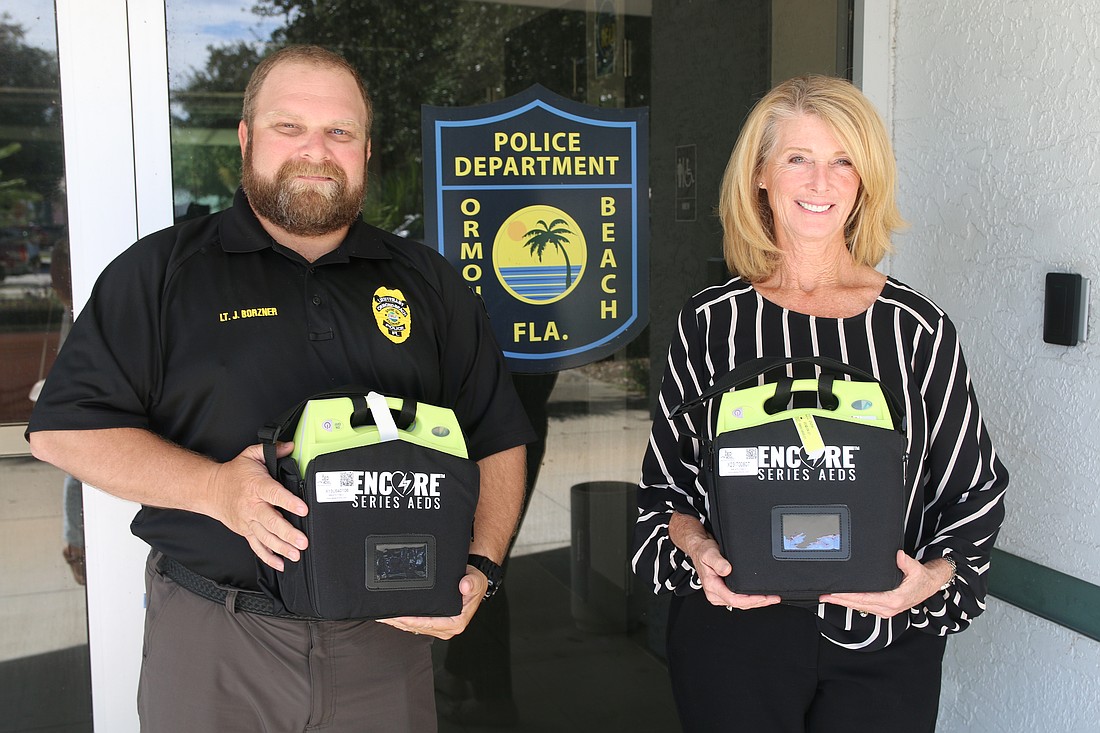
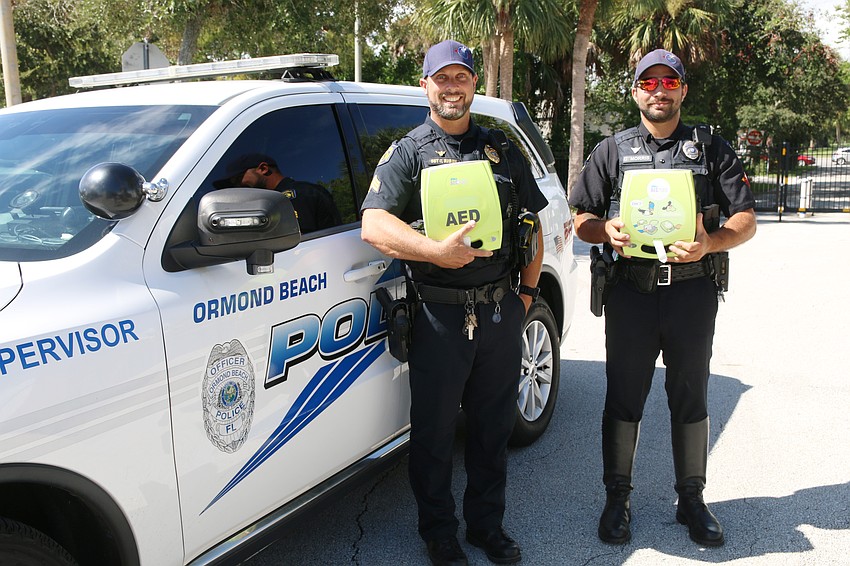
The Ormond Beach Police Department has added another tool to combat opioid induced overdoses: Automated external defibrillators.
The police department received 75 AEDs last week thanks to a $54,000 grant from Volusia County's Opioid Abatement Funding program. Each patrol car will be equipped with an AED within the next two weeks.
When OBPD heard about the available funding, Lt. John Borzner said they started researching new ways the department could approach overdose calls to prevent deaths.
"A lot of times in an overdose situation, what it does is it causes the individual to go into cardiac arrest," Borzner said. "And even with Narcan — and stuff like that — that might be able to start reversing the effects of the drug, it could still put their heart in a rhythm that will not recover. That's obviously where the AED will come into play."
OBPD's officers are already trained on how to use AEDs. Borzner said that's part of their CPR training every two years. Additionally, AEDs are available in different locations throughout the city, including recreational facilities and City Hall.
It's one of those things that it's better to have it and not need it, than to need it and not have it. ... The only thing it can do is help increase the chance of survival for somebody in cardiac arrest." — LT. JOHN BORZNER, ORMOND BEACH POLICE
But having them in patrol cars with officers means a
better chance of increasing response times overall, as Borzner explained that in some overdose calls, officers are called in first to ensure the scene is safe for paramedics or fire rescue.
In such scenarios, "minutes really do matter," said Ormond Beach City Commissioner and Deputy Mayor Lori Tolland, who serves on the county's Opioid Abatement Advisory Board.
"It's all about timing," said Tolland, a retired registered nurse. "And if they are the first ones to get to a site, they can start this process before the EMTs get there."
Tolland said when she first got appointed to the advisory board to represent Ormond Beach, she reached out to staff to let them know that the grant cycle was open.
The City Commission approved the grant award from the county program at its meeting on April 15. According to a city staff report, the city had submitted an application for funding on Nov. 19, 2024, for the application cycle that opened in October 2024, where $4 million were available.
The advisory board was established in 2022 after the county received over $35 million in settlement funds from a 2018 state lawsuit against opioid manufacturers and distributors for their role in the ongoing opioid epidemic.
OBPD responded to over 30 overdose calls within the city in 2024, according to the city staff report for the grant award.
The agency announced the new AEDs in a press release on Aug. 29, stating that "having them readily available in patrol cars ensures officers are better prepared to take immediate, potentially life-saving action."
"The addition of the AEDs for each officer reflects our commitment to serving Ormond Beach with the highest quality of care and preparedness," Police Chief Jesse Godfrey said in the press release.
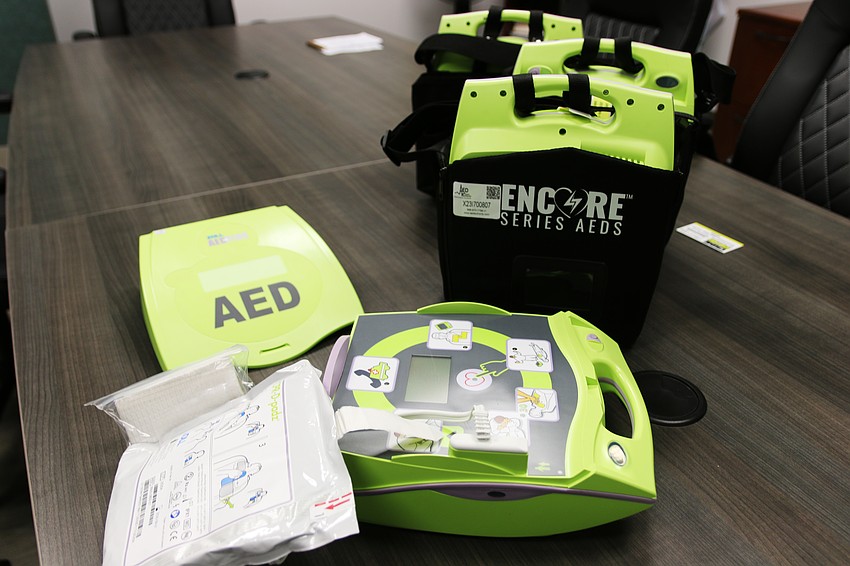
AEDs are user-friendly. Though OBPD's officers are trained, the device itself walks the user through the steps to administer the electrical shock to the person in need.
It's not uncommon for local law enforcement to carry them. Daytona Beach Shores — whose public safety officers have the duties of sworn police officers, firefighters and EMTs — has equipped all of its public safety vehicles with AEDs. The Volusia County Sheriff's Office also has AEDs, but mostly for the rural areas.
There's no downsides to having law enforcements be equipped with AEDs, Borzner said.
"It's one of those things that it's better to have it and not need it, than to need it and not have it," he said. "... The only thing it can do is help increase the chance of survival for somebody in cardiac arrest."
And that could be anybody — an overdose patient or a citizen playing tennis, like what happened at Oceanside Country Club in March of this year where a player collapsed on the court due to cardiac arrest; he was saved through CPR and the use of an onsite AED.
It's all about timing. And if they are the first ones to get to a site, they can start this process before the EMTs get there." — LORI TOLLAND, ORMOND BEACH CITY COMMISSIONER
OBPD spokesperson Pauline Dulang said the department is grateful for the commission's support of public safety.
"This really just reflects the amount of quality and care that we put toward serving the Ormond Beach community," Dulang said. "We really want to do our best with what we have and we just really care."