- March 13, 2026

Daytona Beach will be making auditing the city’s usage of purchasing cards a priority after two weeks of backlash.
Zone 4 Commissioner Stacy Cantu motioned for the item to be a priority audit at the Nov. 19 commission meeting, clarifying that the city auditor – Abinet Belachew, hired in September – should begin work on it immediately after finishing his current project. Cantu said that project should finish on Friday, Nov. 21.
Some of the commissioners felt the matter could have been brought to the city’s attention in a different manner, so as not to create “a narrative” when there wasn’t one.
Cantu said she does not work for her fellow commissioners or city staff.
“I'm gonna sit and watch the taxpayers's dollar,” she said. “I'm going to sit up here and do my job and I'm going to watch what the employees or anybody in this place is spending because it's not our money to spend.”
The commission voted 5-2 to prioritize the P-card audit, with Mayor Derrick Henry and Zone 2 Commissioner Ken Strickland voting against prioritizing the audit. The two did agree to an audit for P-cards at the Nov. 5 meeting.
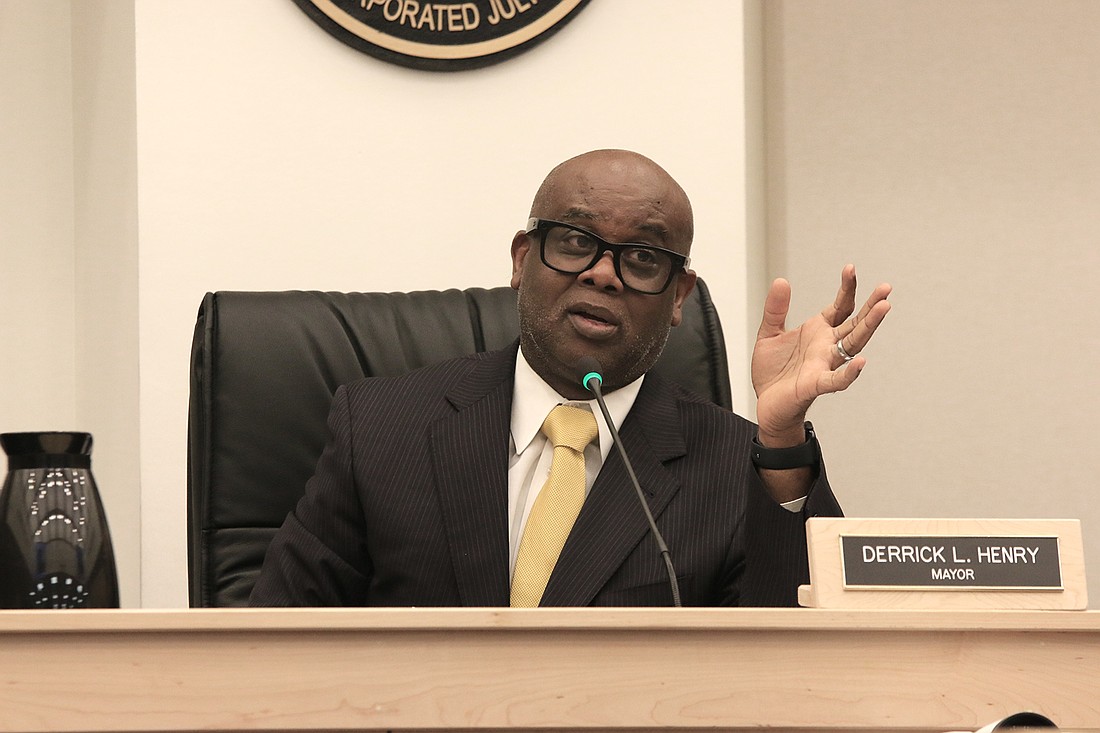
The city has been under fire about the usage of its P-card system for the last two weeks after Cantu initially brought up the issue in the Nov. 5 City Commission meeting. Cantu originally requested the cards be made a priority then, but Mayor Derrick Henry said at the time, and again on Nov. 19, that he did not see this as “a chaotic situation.”
“You cannot allow a narrative to run amuck in your city,” he said. “Staff having to overreact to all of this is a part of what creates chaos when this is not a chaotic situation.”
Henry said it was “a matter of opinion” whether or not an audit on the P-cards should be prioritized. While he agreed the P-cards policy and usage needs to be reviewed, he did not feel the audit needed to rise above other audits already on the list.
Over the previous two weeks, he said, Daytona Beach has received around a thousand public record requests regarding the P-cards. If Daytona Beach had “done something that was so radically wrong,” he said, investigative journalists would have found it.
“I haven’t seen any evidence of anything that has risen to a level that makes me want to run in a hole and hide or assume that we’re full of corruption,” Henry said.
The P-cards have since been cancelled – but not because of the recent inquiry.
Instead, some card numbers were accidentally leaked alongside users' names and social security numbers on a city website created to answer some of the recent accusations about the cards, according to statements made by City Manager Deric Feacher.
The city’s IT department accidentally posted the personal information in P-card billing statements on the website, Chief Information Officer Hossam Reziqa said. The department took it down as soon as it realized the information was not redacted.
But how was the information missed in the redaction process?
Reziqa said in “the window that we had to work with, we immediately put everything out” in response to a request from the commission and from “some of the public pressure, as well, to make sure we put everything out and are being transparent.”
The IT staff is undergoing training as to what information is necessary to be included in posted information and what should not be. Typically, a records request is redacted by the originating department, City Clerk Letitia LaMagna said. Staff city-wide will review what is appropriate to release, she said.
“I think a lot of times they're afraid to not provide everything,” she said.
Feacher said the city was already reaching out to anyone whose information may have been compromised with the leak. The city has also ordered new P-cards from the bank.
The website answers basic questions about P-cards and their approved uses. P-cards, or purchasing cards, are city-issued cards that can be used for approved “commodities and services” that do not exceed a $3,000 limit for a single transaction, according to the website. They also have a monthly credit limit of $25,000.
The 2024 and 2025 card statements were posted for transparency, Feacher said. Because of the breach in personal information, the statements have been removed while they are reviewed.
Feacher said the statements should return to the site by Dec. 8.
The city’s website addresses some of the purchases drawing the public eye, including a $12,851 purchase at SeaWorld. The SeaWorld purchase was for an end-of-year trip for children enrolled in a city summer camp.
The campers paid the city $40 each for tickets, which was deposited in the department’s expenditure budget to offset the cost of the trip, the website said.
That totaled $10,626.51 and another $1,281 from the Neighborhood Services department helped sponsor low-income students who would otherwise be unable to participate and the remaining $907.90 covered trip expenses for Park & Recreation staff chaperoning the trip.
The context surrounding the purchases is important, Zone 5 Commissioner Dannette Henry said.
“When you don't have context,” she said, “you have journalists and different people that make it seem like – if you've ever read the book 'Henny Penny' – ‘the sky is falling, the sky is falling, the sky is falling.’”
In an organization as large as Daytona Beach, the P-card system is more efficient, she said.
Using the example of the SeaWorld trips, Henry pointed out it would be inefficient for the city to have individually paid for the tickets using the cash received from the students instead of purchasing them from the budget and refunding that purchase with the money from the campers.
Taking the purchases out of context can also spread misinformation, she said.
“That’s what a lot of people are doing right now because they didn’t understand the context first,” Henry said. “They took the story and ran with it.”