- March 17, 2026

Daytona Beach’s $2.3 million settlement offer to Ormond Beach will expire on Dec. 3, as the two cities prepare to go to trial in their lawsuit against the Avalon Park Daytona Beach development.
The two cities and Avalon Park are scheduled to go for jury selection on Dec. 3. Daytona Beach City Attorney Benjamin Gross said on Nov. 19 the litigation council had hoped the Ormond Beach Commission would review the settlement offer at its Nov. 18 meeting, to no avail.
But a shade meeting – a meeting between elected officials that is held out of the public eye to discuss active litigation – to discuss Avalon Park has since been scheduled alongside the Ormond Beach Commission's regular Dec. 2 meeting, Ormond Beach Mayor Jason Leslie said in a phone interview with the Observer on Nov. 24.
The plan, he said, is to hold the regularly scheduled meeting at 6 p.m., convene the shade meeting, and then reconvene with the regularly scheduled meeting. Presumably, he said, a resolution will be ready to be voted on after the shade meeting in the regular meeting agenda.
"That's going to be the discussion for the shade meeting, though, is about pretty much where we're at with this thing, what our options are, and then the commission will give direction to city staff," Leslie said.
The cities and Avalon Park are running out of time to settle the lawsuit before it goes to court. Gross said Daytona Beach, Ormond Beach and Avalon Park had jointly filed a motion with the judge earlier on Nov. 19 to delay the trial, but the judge had denied the motion “to keep pressure” on the parties to settle.
But the denial puts both cities on a clock when it comes to attorney costs.
“Our litigation council is now in a position where they're going to have to gear up and start engaging in substantial costs to prepare for the trial,” Gross said.
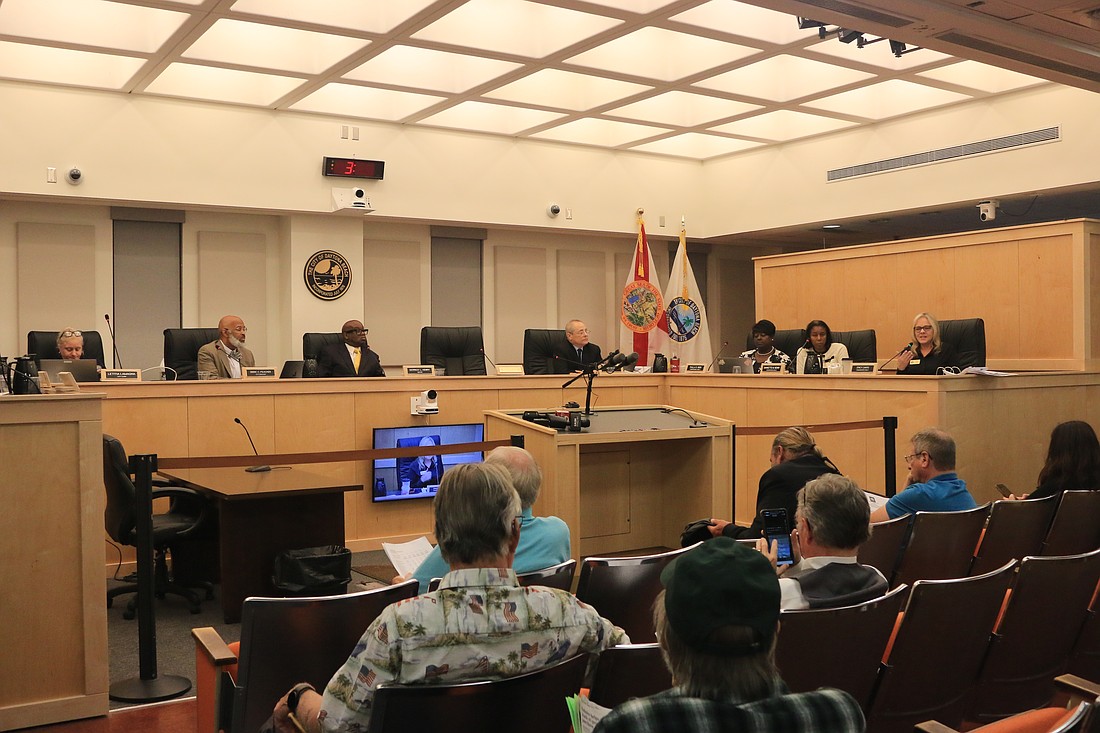
In an attempt to avoid those “substantial costs,” Gross prepared a resolution that would allow City Manager Deric Feacher to approve or withdraw a settlement offer to Ormond Beach of up to $2.3 million through Dec. 3. The commission approved the resolution 4-2 on Nov. 19.
The settlement offer would buy out Ormond Beach’s rights to water and wastewater services to Avalon Park, which is what the lawsuit is about. In 2006, the two cities entered into water and wastewater service agreements that, in part, say the area around Avalon Park is in Ormond Beach’s service area.
Ormond Beach, per the agreements, has the right to service the area and then sell the utility services wholesale to Daytona Beach, as well as charge Daytona impact fees for providing the services and some of the related line extension costs.
Daytona Beach then can sell the utility service at retail price to Avalon Park. If Ormond is unwilling or unable to service the development, Daytona has the right to do so instead.
But the utility service rights is, functionally, Ormond Beach’s only way to have a say in how large Avalon Park gets. Originally, the 3,000-acre development, located within Daytona Beach city limits, had proposed 10,000 new homes. That has since decreased to just under 8,000 homes, but would regardless have an impact on Ormond Beach’s neighboring infrastructure.
Avalon Park sued both cities in 2024, accusing Ormond Beach of failing to provide necessary information for the development to move forward with infrastructure designs. The three parties have been in mediation since June and are scheduled to go to trial on Dec. 8.
Daytona Beach’s settlement offer can not be accepted without first being approved by the Ormond Beach Commission.
“We believe that this is the best way to help encourage what would hopefully be an amicable settlement,” Gross said.
At the Nov. 18 meeting, Ormond Beach Commissioner Travis Sargent requested, with commission consensus, that the city manager and attorney schedule a shade meeting to discuss the settlement and lawsuit.
Leslie said staff has had individual meetings with commissioners, and while he can't speak for the other commissioners, he said he "feels pretty confident" in the background information to make an informed decision.
"My decision is going to be based on what's what's best for the community," he said. "Not just today, not just tomorrow, but also long term."
This story was updated at 4:04 p.m. on Nov. 24.