- March 18, 2026

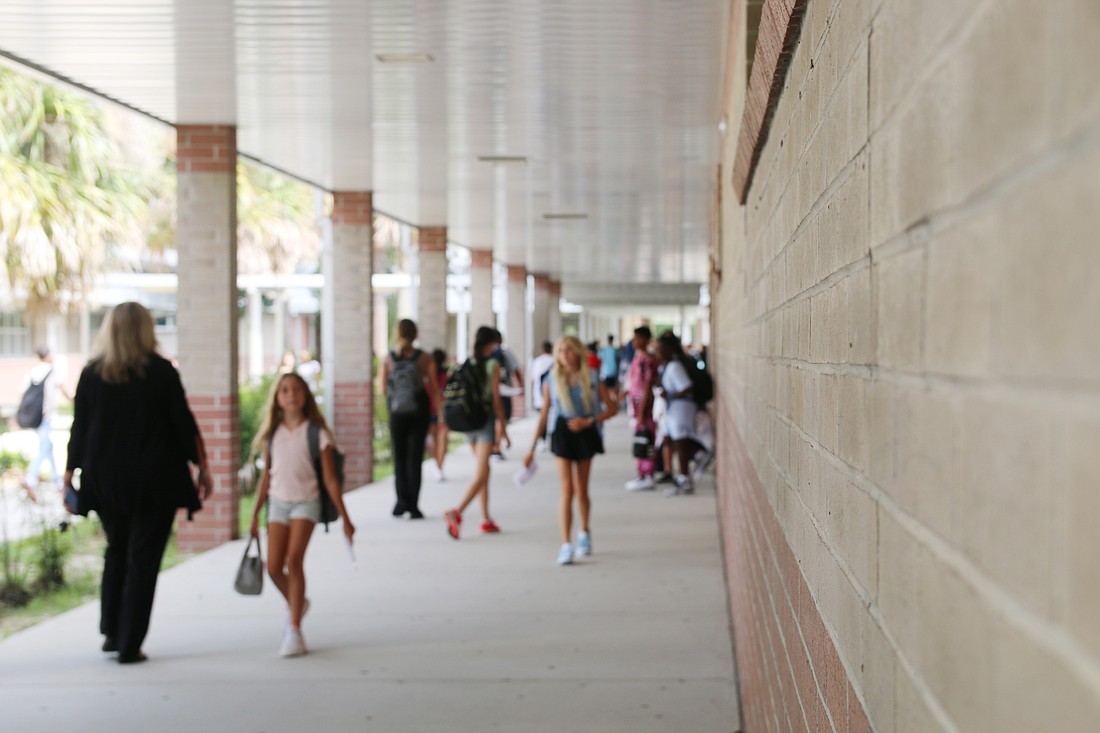
Volusia County Schools is planning its budget for 2025-2026, and with a smaller budget and less expenditures, district staff reports it will only need to dip into its reserves for about $8 million.
This is almost 70% less than the operating deficit the district reported for the 2024-2025 fiscal year, where VCS had to spend down $25.15 million; though originally, the district budgeted for a $25.8 million shortfall.
The $8.02 million needed from reserves to compete the operating budget is a "controlled spend down," VCS Chief Financial Officer Todd Seis said during a board workshop on Tuesday, June 24. It may look like the district is operating "in the red," he explained, but it isn't.
"We have the funds available," he said. "We're adding the resources to make sure that every student succeeds."
The deficit has continued to decrease since peaking in 2022 at $41 million.
The district is budgeting $541 million for its 2025-2026 operating budget, with expenditures estimated at $549.02. Expenditures for next fiscal year are $43.58 million less than the current budget's.
With declining enrollment coupled with factors like cost of living increases compared to student funding allocations, school districts across the state are facing similar budget constraints, and Volusia County School Board member said that leads to "tough decisions."
"The tough decisions we made last year, the tough decisions the superintendent made last year, the tough decisions our teachers, staff and students had to endure — because that's not gone away from me — is what allows us to be in a better position this year," Colon said.
Last year, Superintendent Carmen Balgobin announced that about 284 teachers would be displaced, with cuts being made at the district level as well.
Everybody on the VCS team made sacrifices, Colon said.
"Our biggest concern was being able to stay open and being able to continue to serve our students," he said. "And when you're down to 8 [million], the story of perspective and buy down, and how we plan that, is a whole lot more palatable that when you're talking $40 million."
The district will be receiving a little bit more funding per student for 2025-2026 — $41.62, to total $5,372.60 in base student allocation dollars.
But while the district technically received $5,330.98 in BSA dollars per student for 2024-2025, it also had to repay $4.9 million to the state due to a lower enrollment than expected.
With this is mind, Seis said that what started out as a BSA increase last year turned into a $76 decrease in funding per student, impacting both traditional, virtual and charter school programs.
The state has also added a new categorical funding program called "Academic Acceleration Options Supplement," which is intended to support academic programs like AP, IB, dual enrollment and Career and Technical Education.
School Board Chair Jamie Haynes thanked all the parents, students and teachers that reached out to the Legislature about continuing to fund these programs.
"We're keeping the money, but they've put it into a new pot because they're going to monitor it and make sure it's being spent correctly," Haynes said. "Although it was being spent correctly. It's just it had other things in with it."
Haynes said she looks forward to showing the state that those fund are certainly used for educating students, and hopes that the category gets more funding in the future.
Additionally, the teacher salary allocation will also be increasing by 0.54%.