- March 18, 2026

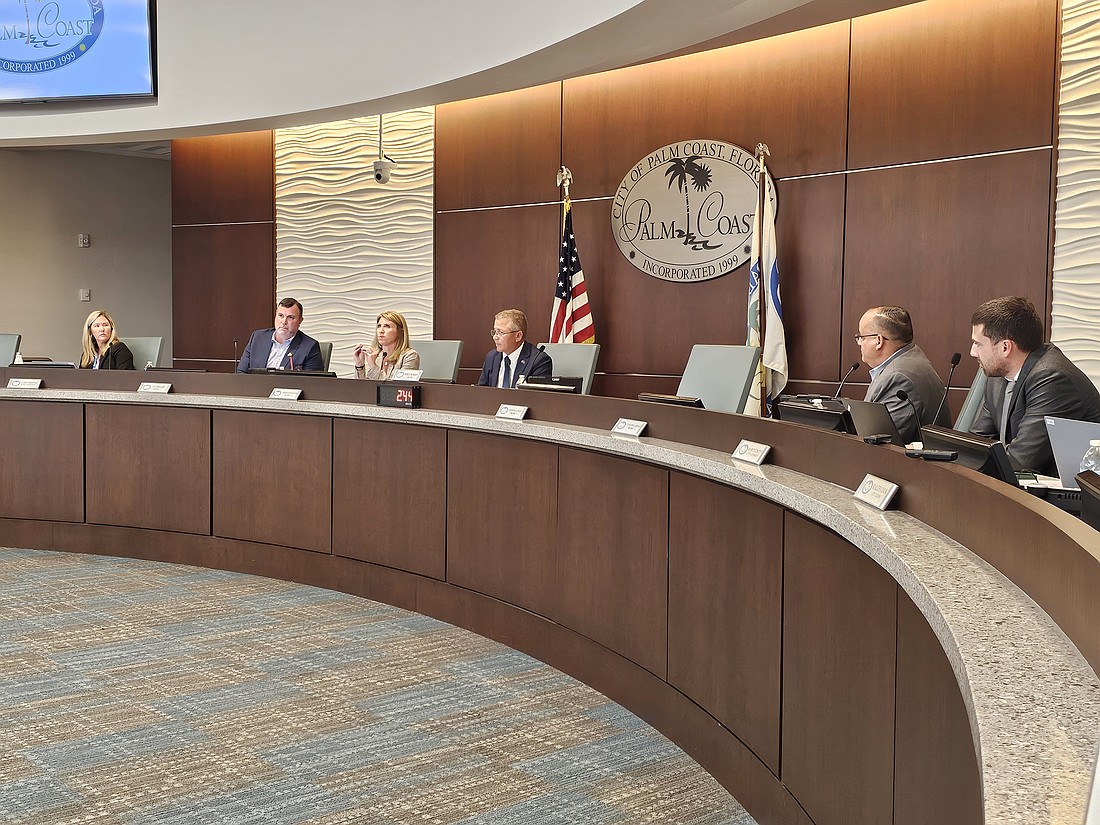
The Palm Coast Council has approved its new impact fees, with the overall impact fees for new single-family homes by $5,881 across all three fees.
Though the rates are increasing significantly, the Parks and Recreation rates were reduced from an originally proposed increase of 98% and transportation rates - which vary depending on the type of development - were reduced from a proposed 137% increase for single family residential homes. Vice Mayor Theresa Carli Pontieri said the council has worked hard to analyze the effect on Palm Coast’s building community and avoid “shocking the system.”
“We are course correcting in what we are doing here today,” Pontieri said. “We’ve been fair, we’ve been calculated, we’ve been very reasonable in our efforts to ensure growth pays for itself while, at the same time, not outpricing our essential workers and young professionals.”
The city has been able to increase the rates so extensively because of its extraordinary circumstances of extreme growth rate and the “dramatic” increase of inflation rates in the last six years, according to Jonathan Paul, the transportation impact fee presenter from NUE Concepts.
Both the parks and recreation and fire service impact fees, which were under the final review by the council before being adopted, were unanimously approved.
The fire services impact fees did not undergo any significant changes since it was presented in May. This rate has gone up 98%, increasing the rate for a single-family homes to $859 per dwelling unit from $434.51. The fee similarly increased 95% for non-residential units to $1,364 per 1,000 square feet.
The Parks and Recreation fees underwent some changes, where the council removed several projects from its future Capital Improvement Project list to lower the increase to this impact fee. The final approved rate increases 73%, from 1,828 per dwelling unit to $3,164.
The transportation impact fees still face one more vote before the new rates are adopted. The council made multiple changes to how these rates were calculated, as the original study suggested increasing the rates 137% for single family homes.
Since the original presentation in May, the council has removed state road from the calculation, with the exception of State Road 100 from Belle Terre Boulevard to Old Kings Road, assumed an anticipated $30 million in state or federal funding - which lowers the impact fee rate - and changed the residential calculation to be based on the home’s square footage.
Now residential homes will be based on the home’s size: a 1,000 square foot home will pay $3,770 in transportation impact fees while a 2,000 square foot home will pay $7,540. The council went this route to try to mitigate the impact on first-time home buyers and essential personnel like teachers and first responders.
“If you build a smaller home, you pay a smaller fee,” Paul said. “If you build a larger home, you pay a larger fee.”
Up until the June 17 meeting, the study also included a reduced fee for Palm Coast’s vested ITT lots, per the direction of the 2018 City Council, who last updated the rates. Paul said the reasoning was because the existing infrastructure reduced the number of generated trips. The reduced rate shaved almost $2,000 off the impact fee for the ITT homes of 2,000 square feet.
But this council was “frustrated,” as Pontieri said, by the reduced rate. The council, she said, had been wracking their brains for way to reduce the impact rates and had been told they could not “cherry pick” the mechanisms used.
“We have been killing ourselves up here trying to balance interests between making housing affordable for our workforce,” Pontieri said.
Ultimately, the council removed the reduced rate for the ITT lots, which will now be charged the same rate as other residential homes, based on the home’s size.
“It is still an impact,” Mayor Mike Norris said of the homes.
Though removing the rate does not change the calculations, it will change how much the city could anticipate from transportation impact fees from residential housing.
Flagler Home Builder Association’s Executive Officer Annamaria Long said the change to the ITT lots would create “a significant dollar” amount over time. Long, representing the FHBA and the building community, has said repeatedly in council meetings that there are no extraordinary circumstances.
While inflation for construction costs has gone up, she argued, it by itself is not an extraordinary circumstance. She also argues that population is not a factor that can be considered because the 2018 studies anticipated the growth rate to be as it is, even though Palm Coast has not met the projected growth rate from 2018.
The law requires extraordinary circumstances be “severe, unforeseen and local,” she said.
“We planned for higher growth than occurred and we’re now planning for lesser growth than we did previously,” she said.
Paul disagreed with Long’s statements.
“By all metrics that we’ve looked at population growth, growth is growing quite dramatically in Palm Coast,” Paul said. Of inflation, he said, “For a fact, and it’s not disputable, inflation increased dramatically between 2018 and where we are today.”