- March 18, 2026

After a seemingly deadlocked debate over the fire services fund, the Volusia County Council has adopted a tentative, maximum millage rate of 3.2007 for the 2026 fiscal year, the same rate as last year’s budget.
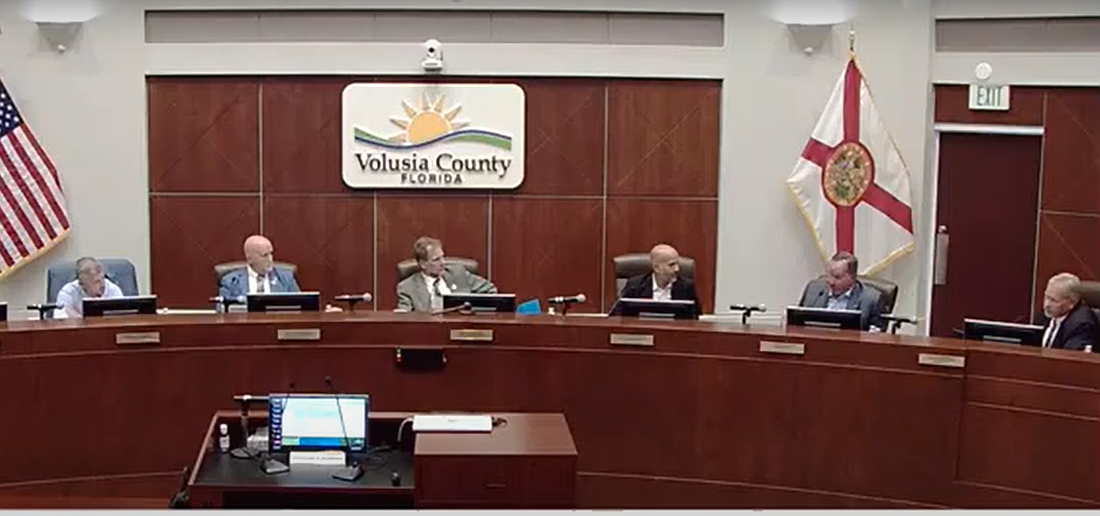
With Councilman Jake Johansson absent from the July 22 meeting, the remaining six members were divided on whether or not adopt the fire service fund’s millage as the proposed rolled-back rate of 3.6236 or to adopt the current rate of 3.8412 for the fund instead.
Three members – Matt Reinhart, Danny Robins and David Santiago – wanted to adopt the flat rate for fire services fund, as the council could always reduce the rate at the September budget meetings, while the remaining council members – Troy Kent, Don Dempsey and Chair Jeff Brower – wanted to adopt the rolled-back rate as presented.
“When I hear staff say, ‘we have all the funding we need for what has already been asked for,’” Kent said, “that was key for me. Staff answered the question.”
The meeting on July 22 was only to adopt the maximum millage rates: the council is able to reduce the rate further if needed by the final budget meetings.
The county’s proposed budget for fiscal year 2026 is $1.4 billion, with 47% being the general fund budget of $203 million, which is one of 10 funds funded by ad valorem taxes. Volusia County’s Chief Financial Officer, Ryan Ossowski said the county is maintaining its 3.2007 rate from the 2025 budget, mainly because declining revenue in other areas: sales tax fund transfer decreases, state revenue sharing decline, a decrease in constitutional officer fees.
Of the other nine ad valorem funds, five were proposed with rolled-back millage rates for the 2026 budget: the library fund, decreasing from 0.3891 to 0.3697; the Ponce DeLeon Inlet & Port District, from 0.0692 to 0.0660; the Silver Sands Bethune Beach MSD, from 0.0106 to 0.0099; the East Volusia Mosquito Control fund, from 0.1647 to 0.1573; and the fire services fund, from 3.8412 to 3.6236.
It was the fire services fund that set the council on the precipice of two back-to-back failed motions. Robins and Reinhart said that they would like to see the fun set at the flat rate to give the fire services building budget extra funding.
“There’s lot buildings going up around us,” Reinhart said. “And I don’t want to be short changing them.”
County manager George Recktenwald said the fire services building budget and timeline works with the proposed budget, with multiple projects already fully funded. Changing the rate from the rolled-back rate would allow additional funding that could speed some projects along, he said, but the issues facing the building timeline often had less to do with funding and more to do with finding appropriate locations for new stations.
There are around 20 fire stations that need upgrades, he said.
Robins pointed out that the cost of land – as well as equipment and construction costs – are likely to keep increasing. Santiago said keeping the rate flat would give the council flexibility to further review the budget between now and the final adoption.
The opposing council members wanted the rolled back rate. Kent said he trusted the fire chief to propose a budget that meets all the needs of the county.
“I can’t support that at this time because I don’t think it’s financially the prudent thing to do,” he said.
Dempsey said he’d like to see the council cut back on taxes where possible to help out its citizens.
“I think we’re on the cusp of another recession,” he said. “I think out taxpayers are going to be hit with a rough economy over the next couple of years.”
The first vote to approve the fire services fund with the flat rate failed in a tied vote, 3-3. But the next steps were murky, as another vote to approve the fund with the rolled-back rate would have also ended in a 3-3 failed tie vote.
A tentative millage rate is required by state statute to be set 35 days after the property appraiser sends in the final property values, giving the council until Aug. 4 to set the maximum rates. The statutes also do not require the council to be the ones to certify and set the maximum rates, just to adopt the final millage rates, Ossowski said. Setting a rate is the job of the budget officer: the county manager.
Traditionally, he said, the council has always set the maximum millage rates. Legally speaking, the budget officer – the county manager – is the one required to certify a maximum rate by the 35-day deadline, not the council. But it would have been the first time a county manager would have needed to input a rate not set by the council, he said.
There was some debate on whether or not the council should hold a special meeting when Johansson returned, but another council member was likely to be out in that time span.
After researching what would happen if a rate wasn’t set – which could have prevented the council from levying a tax at all – Ossowski said that, ultimately, erring on the side caution to give the council enough flexibility in the future, the county manager, as the budget officer, would have instituted the flat rate of 3.8412 for the fund if the council failed to pass a millage rate for the fund.
In order to avoid setting that precedent, Kent, who voted against the flat rate fee, motioned to reconsider instituting the flat rate for the fire services fund. The council then unanimously adopted the flat rate as the maximum millage rate for the fund.
“Unless I am moved tremendously, I’m still going to be in favor of rollback,” Kent said, referencing the adoption of the final millage rates.
The council unanimously approved the other nine funds without changes and the budget meetings to adopt the final millage rates and the budget have been set for Sept. 4 and 16 at 5:01 p.m.