- March 16, 2026

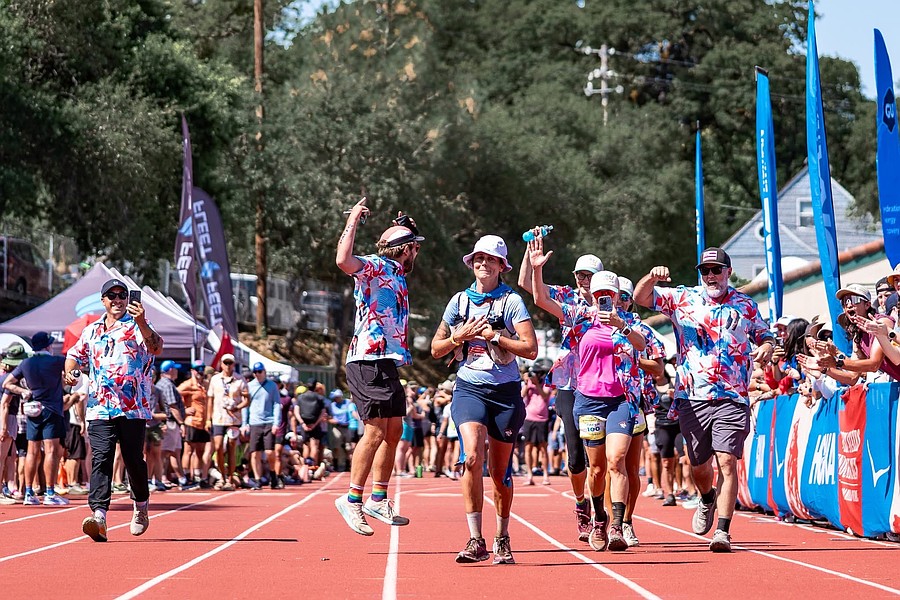
Carrie Meng's crew celebrates as she runs on the Placer High School track in Auburn, California, to complete the 100.2-mile Western States Endurance Run. Courtesy photo by Gary Wang
Carrie Meng finished the 100.2-mile Western States Endurance Run on June 28-29. Courtesy photo by Andy Wacker
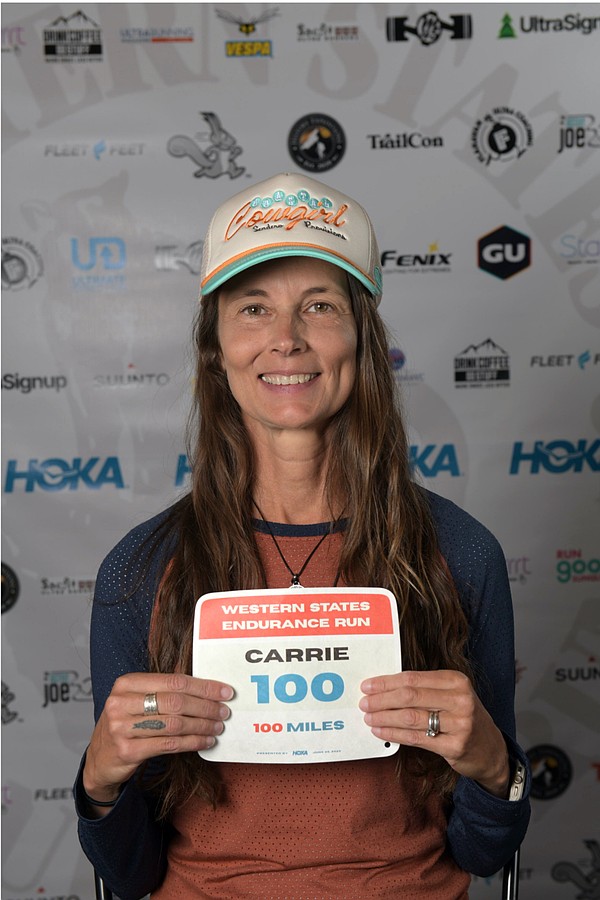
Carrie Meng holds up her bib number which happens to match the number of miles she ran in under 30 hours at the Western States Endurance Run. Courtesy photo by Luis Escobar
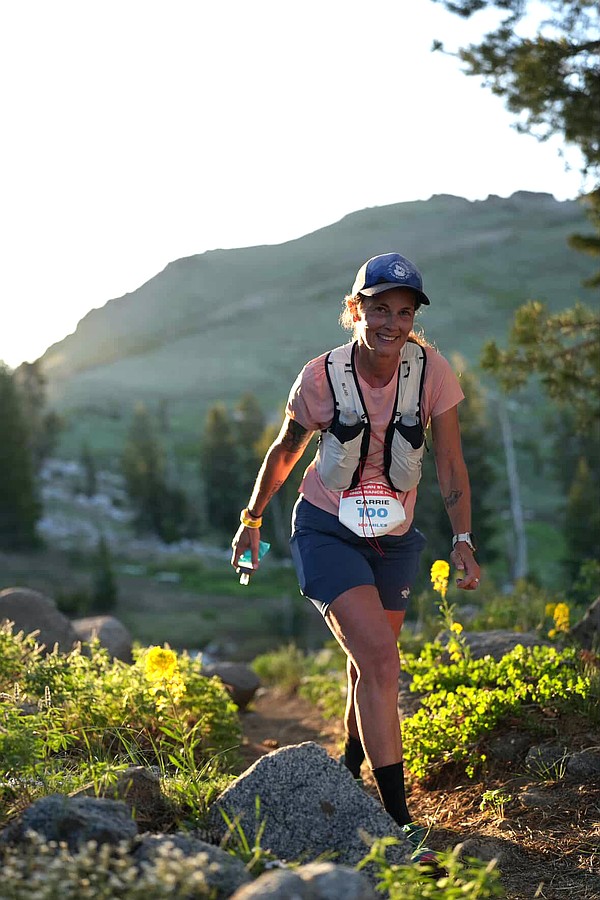
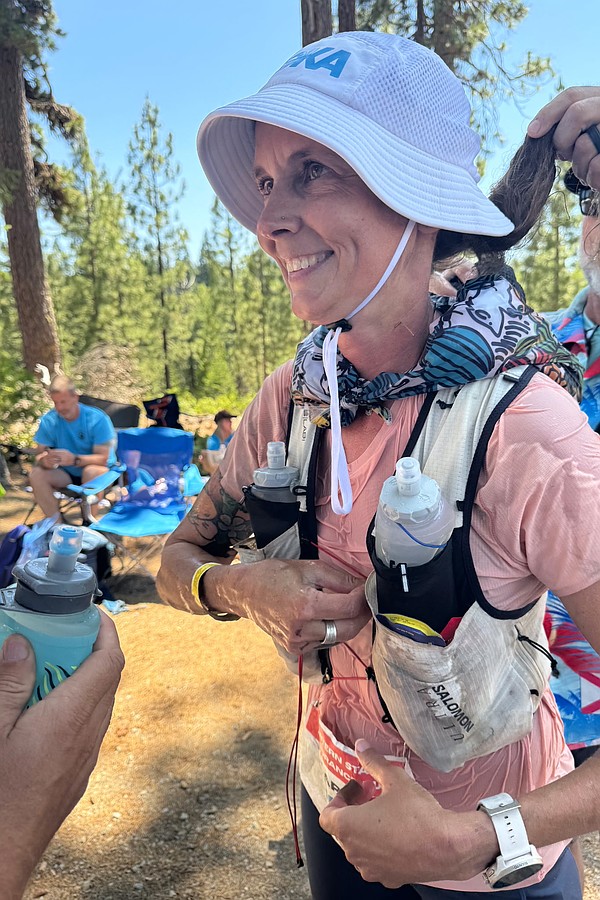
Carrie Meng stops at an aid station. Courtesy photo
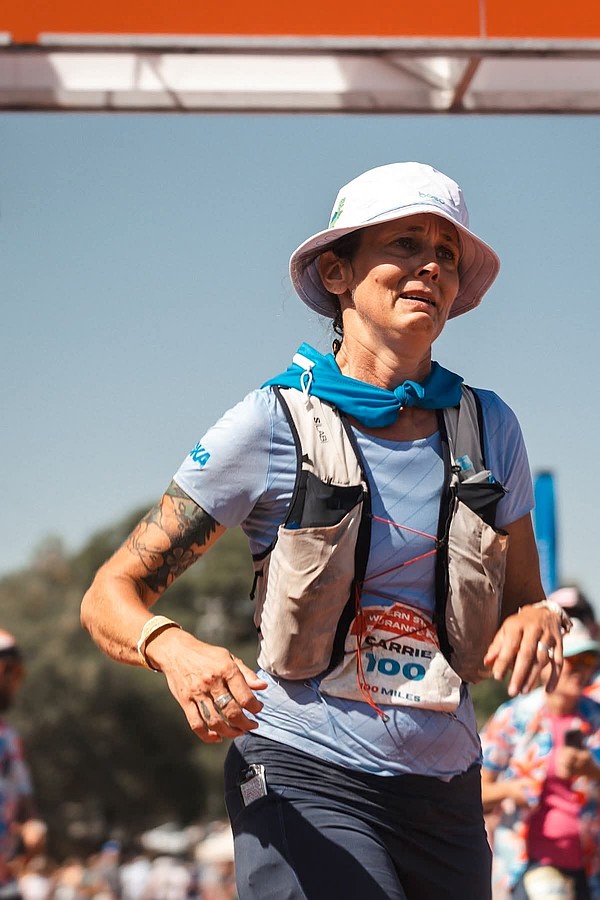
Carrie Meng has tears of joy as she runs around the Placer High School track in Auburn, California, during the Western States Endurance Run's Golden Hour. Courtesy photo
The perk of completing the 100.2-mile Western States Endurance Run during the Golden Hour — the final hour before the cutoff — is you get to run around the Placer High School track in Auburn, California, with the bleachers, sidelines and infield filled with thousands of spectators cheering for you as you summon those last few ounces of energy to finish.
By the time Flagler Beach's Carrie Meng got to the final 400 meters of her quest on June 29, tears of joy were streaming down her face. And not just because she finished the world’s oldest 100-mile trail run in 29 hours, 26 minutes and 50 seconds — with time to spare before the 30-hour cutoff — but because she got to experience the intoxicating scene from a runner’s perspective.
I cried the entire lap. ... I got to experience the magic of the Golden Hour. Some people call it the best hour in trail racing. It’s like nothing else.
— CARRIE MENG
“I cried the entire lap,” she said. “It was a good cry, a happy cry, hearing everybody cheering for me. I got to experience the magic of the Golden Hour. Some people call it the best hour in trail racing. It’s like nothing else.”
Experiencing the race from a runner’s viewpoint is why Meng ran. She has been the WSER’s assistant race director since February, 2023. Gaining a spot in the field on her own would have been nearly impossible. There are 369 spots in the field with about 275 going into a lottery. About 10,000 people applied for those spots, Meng said.
Race Director Craig Thornley reserved a spot for Meng. He told her she needed to experience the race as a runner.
It was only her second 100-mile ultramarathon. Her first was her qualifying race to get in. But the 100-miler in Florida hardly compared to the rugged terrain of the Western States course which starts in Olympic Valley, California, climbs more than 1,800 feet and descends nearly 2,300 feet.
Meng performed her duties as assistant race director up until the night before the race. As a result, she said, she was tired from the start.
“I think my level of fitness was better than my finish time,” she said. “There were a lot of challenges, which is part of ultra running. But I couldn’t ask for a better race experience. Coming in, I didn’t know what to expect or what I was capable of.”
She fell twice within the first 25 miles, banging up her knee and ankle. She was nauseous for at least the last 45 miles, she said. And throughout the night she battled the urge to sleep. She took two-minute doze offs, she said.
“Even though I was trouble shooting, there was a community helping me along the way, whether it was my crew, my pacers or the volunteers at the aid stations,” Meng said.
As Meng finished, her crew members jumped for joy and recorded her achievement on their cell phones.
Meng finished 245th out of 285 finishers. There were 92 runners who finished in under 24 hours, winning a handmade silver belt buckle. Meng won a handmade bronze belt buckle, which is now occupying a shelf in her office.
Meng doesn’t plan to run the WSER again.
“Hopefully, I’ll be working the event for a very long time,” she said. “It’s very difficult to be the assistant race director of the event and run it. If you’re running, it needs to be your primary focus. I still had work responsibilities.”
She is looking forward to running slightly shorter trail races, 100 kilometers and less.
“But I’m not writing off 100-mile races all together,” she said.