- March 17, 2026

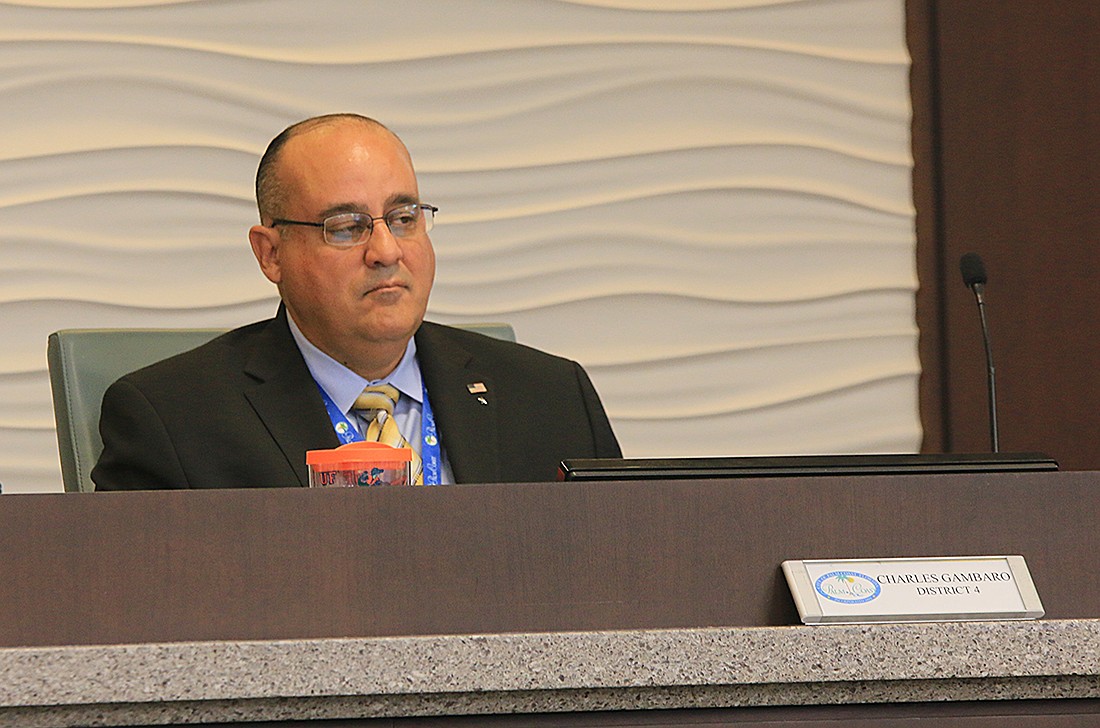
The Palm Coast City Council is considering diversifying the type of housing allowed on duplex-zoned lots in an effort to expand affordable housing to essential workers.
At the Dec. 4 City Council meeting, Councilman Charles Gambaro asked the council for consensus to take steps in altering the city’s Land Development Code to allow separate, smaller-sized homes to be built on infill lots zoned for duplexes.
The idea would only be applicable to infill lots, not new developments, he said, and merely separates the two units to individual single family homes that could be more affordable to purchase.
“The cost per square foot is still the cost per square foot,” Gambaro said. “This is why, potentially, a smaller, high-quality home could present an opportunity for residents to attain affordable housing.”
The rest of the council was tentatively on board with the idea, and gave consensus for city staff to prepare a presentation on the change.
According to the city’s current Land Development Code, Single-Family Residential District 1 zoning has a minimum lot size requirement of 6,000 square feet, while SFR District 5 has a minimum lot of 20,000 square feet and a Duplex District a minimum of 9,000 square feet.
A smaller, high-quality home could present an opportunity for residents to attain affordable housing.”
– CHARLES GAMBARO, Palm Coast councilman
Palm Coast requires the minimum living area of a single family home in any single family residential district to be 1,200 square feet. A Duplex District has a minimum living area of 800 square feet, as it assumes two residential units on the lot.
“They're already zoned for a double residence on that piece of property, and they're a little bit wider than a standard single family lot,” Councilman Ty Miller said. “So really, the question is, do they have to be adjoining or not?”
Gambaro’s suggestion comes as Flagler County’s Affordable Housing Advisory Committee is preparing to present a report of recommendations to the City Council and the Flagler County Commission on ways to encourage affordable housing.
The AHAC is a joint advisory board between Palm Coast and Flagler County that promotes strategies targeted at affordable housing. Gambaro serves on the board as Palm Coast’s representative.
The report shows AHAC recommends both boards establish a variety of incentives, initiatives, policies and ordinances that would make affordable housing attainable for low income families. Those initiatives include ways to diversify housing.
Diversifying the available housing is one way to make housing more affordable, Flagler County Housing Program Manager Devrie Paradowski said in an interview with the Observer. Flagler County has a shortage of affordable housing units, she said.
“In the city of Palm Coast right now,” she said, “there are no incentives specific to affordable housing.”
According to the 2024 Shimberg Center for Housing Studies, Flagler County has a deficit of available affordable housing. With just under 12,000 renters in 2024, 37% were considered “cost burdened renters,” or people paying more than 40% of their income on rent.
The Shimberg report also shows that Flagler County has a deficit of affordable housing across the Area Median Income spectrum, especially for individuals making 60% and 80% of Flagler County’s AMI.
The report defines “low income” as a person whose income is 60% of the area’s median income.
But the need for diverse housing is not new. Palm Coast’s Community Development Block Grant program is required to analyze impediments to fair housing, Paradowski said, and a lack of diversity is one of the issues.
A proposal like Gambaro’s does increase the options available to the cost burdened, but, Paradowski said, what is really important are the incentives that ensure the housing is affordable for people in different income brackets.
Without the right incentives and policies in place, these smaller homes could potentially become “luxury cottage homes” by developers, she said, that don’t end up being affordable to the people who need them – a concern shared by the council at the Dec. 4 meeting.
One recommendation to diversify housing in the AHAC report is to develop an Accessory Dwelling Unit ordinance that, consistent with state law, allows an independent residential unit on the same lot as a primary home.
Vice Mayor Theresa Carli Pontieri said outright that she would not support an ADU or “tiny home” initiative.
“As long as we have more folks coming in than we have supply on demand, it doesn't matter what we institute,” she said. “And my concern is packing people in like sardines.”
My concern is packing people in like sardines.”
– THERESA CARLI PONTIERI, Palm Coast Vice Mayor
Pontieri said that while she was on board with the explicit circumstances outlined in Gambaro’s proposal, she wouldn’t be amenable to changes that would increase the density, especially without council review.
But the AHAC report recommends to adopt general local incentives that encourage “affordable housing production.”
One way to do this is to maximize the cost efficiency through lot sizes. Larger lot sizes, and larger minimum living space requirements, cost more to purchase and build. It also lowers the cap on the number of available homes.
But lower minimum lot sizes “unlocks densities” and would allow for smaller homes and a greater variety of home types, the report said. It simultaneously improves affordability.
Gambaro’s proposal, if adopted by the council in the land development code, would simply split a duplex from having a shared wall to being separated units on the lot.
As it is, a typical single family home is too expensive for the essential worker in Palm Coast, Gambaro said. They’re “out of reach.”
“I think it’s important to explore the options,” he said.