
- March 16, 2026

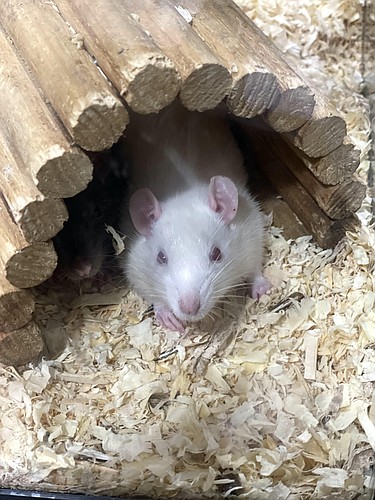
Will experiments on animals ever truly end?
The U.S. is beginning to chip away at the amount of money spent on animal research and the number of animals held captive to endure painful, often useless experiments.
The Physicians Committee for Responsible Medicine (PCRM), a non-profit organization consisting of over 17,000 physicians and nearly 1 million members is pleased that in February 2025 caps were placed on government funded universities’ research grants. University animal research is funded by our tax dollars, harms animals and yields little benefit to human health.
In one such study in Michigan, researchers have induced heart failure in hundreds of dogs in a cardiac research experiment that has been running since 1991 but has failed to help a single patient, according to PCRM.
In April 2025, the Food and Drug Administration announced plans to phase out animal tests in their monoclonal antibodies development. The Environmental Protection Agency has long required millions of animals every year to undergo testing for products like fuel additives and pesticides. The EPA had set deadlines around 2018 to reduce animal testing by 30% by 2025 — a goal which was not met — but the current EPA administrator, Lee Zeldin, is committed to eradicate animal testing for products altogether by 2035.
Then on May 4, 2025, National Institutes of Health (NIH) Director Jay Bhattacharya announced that dog experiments had been shut down at the NIH campus. It is believed that in recent years well over 2,100 beagles died in brutal septic shock experiments at NIH.
The above are all steps in the right direction, not only for the animals, but for science itself. Animal experiments are less reliable and often not predictive of effects in human medicine. NIH Director Bhattacharya said, “It’s easy, for instance, to cure Alzheimer’s in mice, but those things don’t translate to humans. More than 90% of drug trials fail between animal and human testing trials.
Animal experiments are expensive, often completely ineffective and come at a steep cost ethically. Laboratory animals suffer living in intensive, often solitary confinement, undergoing painful tests involving tube feeding, forced inhalation of substances, multiple surgeries and so much more.
Advancing technologies such as organ-on-a-chip technology or computational modeling offers a more effective alternative to animal testing. Many scientists around the globe are embracing the progress.
The United States is seeing a seismic shift in how animals are used in research. I n time animals may hopefully not be used at all. Ending the agony of these animals by finding and implementing effective alternatives to animals in research could be one of American science’s most important achievements.
Amy Carotenuto is the Executive Director of Flagler Humane Society.