- January 29, 2026

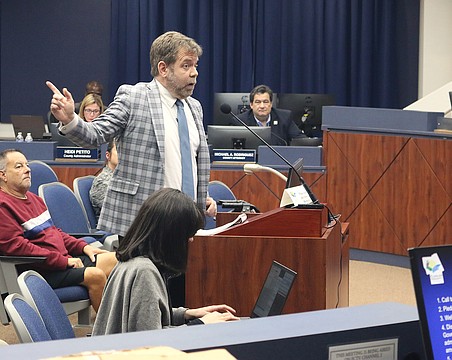
School board budget meetings can be a real snore, which is probably why so few attend them. Or maybe they figure that what they think doesn’t matter, and that the issues they raise won’t be addressed anyway, so why waste their time?
They’re not wrong. Unfortunately, board members interpret empty chambers as satisfaction. It’s hard to argue otherwise. It looks like no one cares. The question then is, should public bodies base their actions on their defined obligations, or only on whether they believe the public cares?
After warmly and enthusiastically and gratefully welcoming about 300 new teachers to Volusia County Schools, the board met for a workshop, regular board meeting, and the public hearing required by Florida Statute, at which we theoretically discuss the budget, and then adopt the millage rate for the next tax year.
The millage rate is not set in stone. This time, the vote was based on the preliminary budget for 2025-26, and theoretically we can lower the proposed millage rate in our final vote in late September.
We can theoretically do things, but we don’t actually do them. Questions are politely asked about the arithmetic: Is our budget balanced? Yes. This budget is smaller than last year’s, right? Yes. All sounds good then, thanks.
No one asks how the money is spent.
In fairness, it’s hard to do. Florida Statute doesn’t require that school districts post full line-item budgets, as other local governments are required to do. We are required to post budgets in “plain language,” so we get narratives with categories of spending, blocks of services lumped under generalized labels, where we can’t tell what goes where, to whom, in what amounts, or for what reason.
I played the videos from the last two years of preliminary budget hearings to get a sense of the protocols, and how the board approached the subject. Last year, the only question was the usual, Is our budget balanced? The year before, there was some discussion about the end of ESSER (Covid) funds, where the board was reassured that the district was fully prepared to lose those funds, and there would be bo disruption. As was widely reported, things clearly did not go as planned.
To her credit, Ms. Haynes raised the issue of administrative staffing levels, and asked the superintendent to look at ways to reduce spending there, instead of always going to the front line. Since it was only an ask, and not a directive, there is unfortunately no evidence anything came of it.
The process was equally sanitized this time too. There were numerous declarations of the evils of social media, and indignant demands that only “experts” should be trusted. Ironically, the workshop had included a presentation about a new reading program, during which we were reminded of the days when “experts” replaced phonics with “whole language,” an approach that arguably crippled several years of early reading before it was broadly denounced and abandoned.
So who defines “expert”?
My experts, as I have said many times, are my teachers and school administrators. They are on the ground, doing the heavy lifting, figuring out what works and what doesn’t.
They are the ones required to move kids around to produce the desired graduation rates. Or administering the same tests multiple times and eliminating the hard questions so the test grade is higher. Or who describe their ESE classes with 3 grade levels, multiple special needs, and 30 students, all in the same class, with just one para to help them.
Does the current budget reflect the needs of those experts? It’s hard to tell, because they are never candidly discussed. We’re too busy making everything pretty.
Government budgets can make you wonder who thinks like this. Then again, even those of us who hate to read them are able to ask some obvious questions:
So many questions no one asks. So few answers no one wants. Does the board’s apathy mirror that of the public, or vice versa? It doesn’t matter. We as a board are not cheerleaders. We are charged with oversight, as we struggle to get relevant documents. Whether or not the public cares, it’s our job.
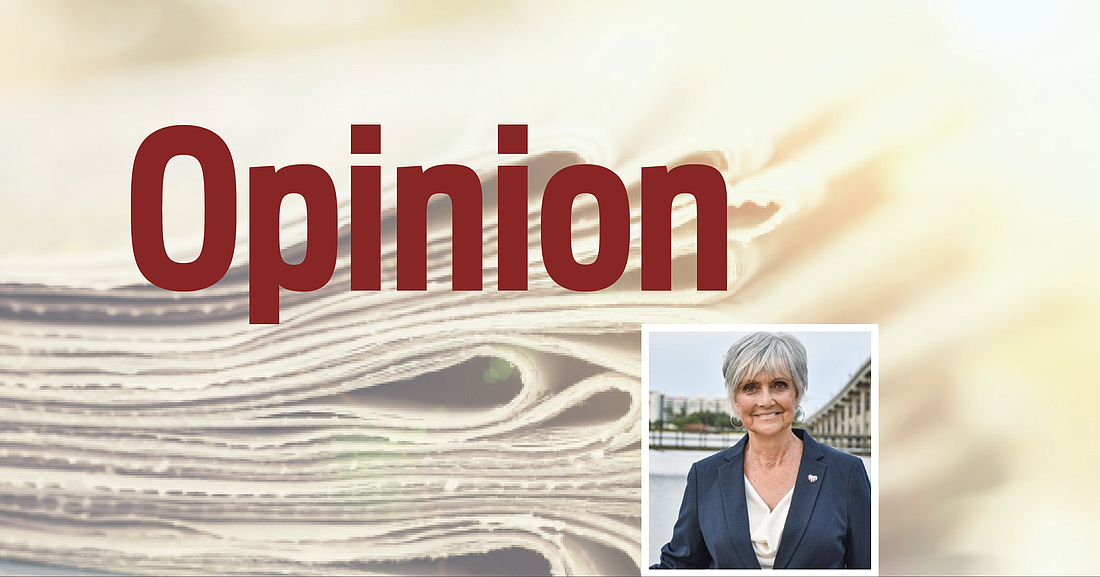
Donna Brosemer represents District 4 on the Volusia County School Board.