
- March 15, 2026

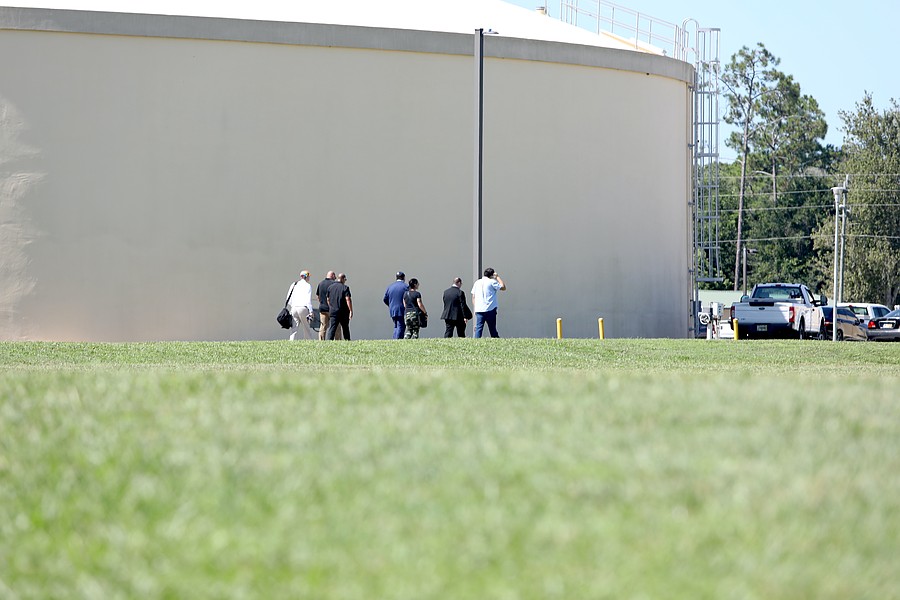
Randy Fine, city officials and media walk past a tank at Palm Coast's Wastewater Treatment Plant 1. Photo by Brent Woronoff
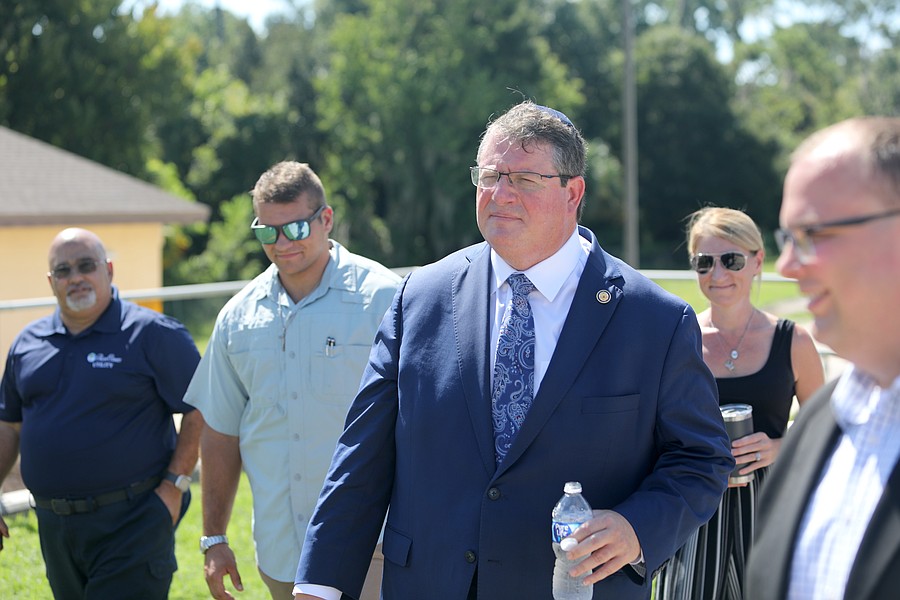
Congressman Randy Fine (center) takes a tour of Wastewater Treatment Plant 1. Photo by Brent Woronoff
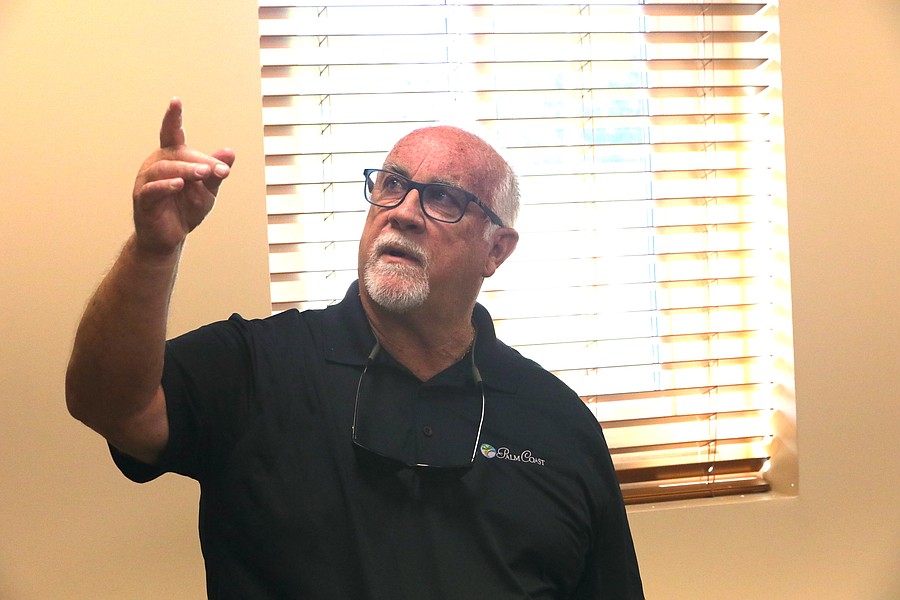
Wastewater Treatment Plant 1 Lead Operator Dan Niemann (left) explains a process to Congressman Randy Fine. Photo by Brent Woronoff
City Wastewater and Reuse Manager Danny Ashburn points to a slide during a PowerPoint presentation. Photo by Brent Woronoff
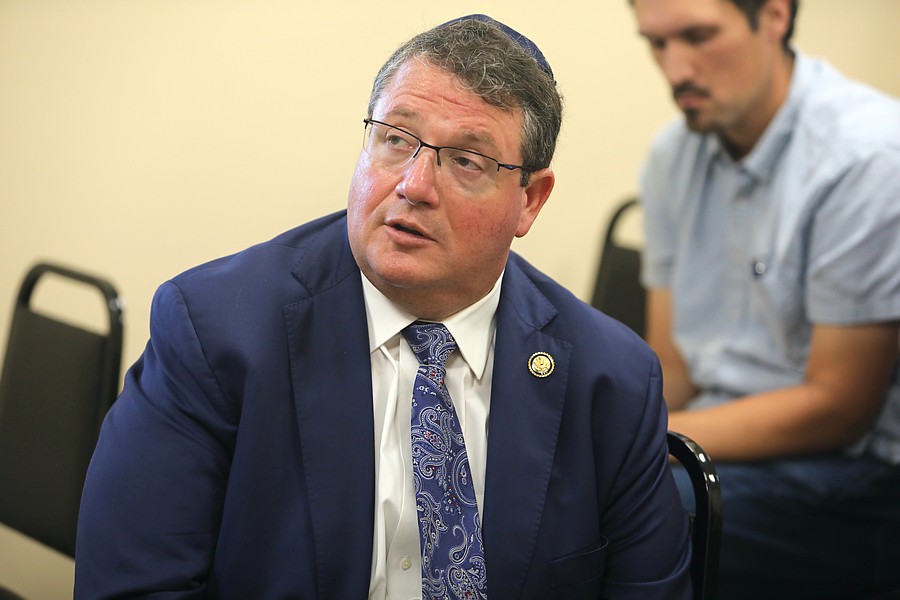
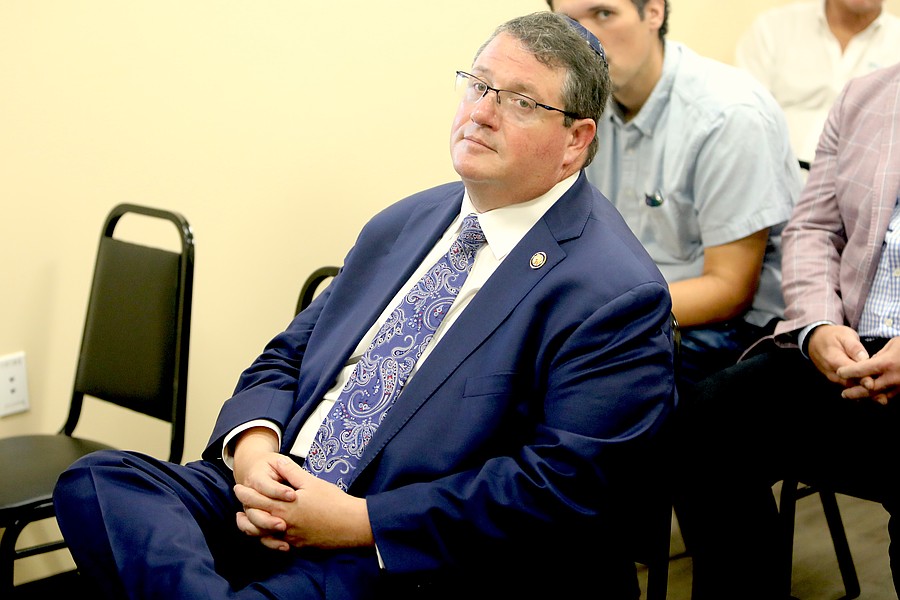
Congressman Randy Fine views a presentation at Palm Coast's Wastewater Treatment Plant 1. Photo by Brent Woronoff
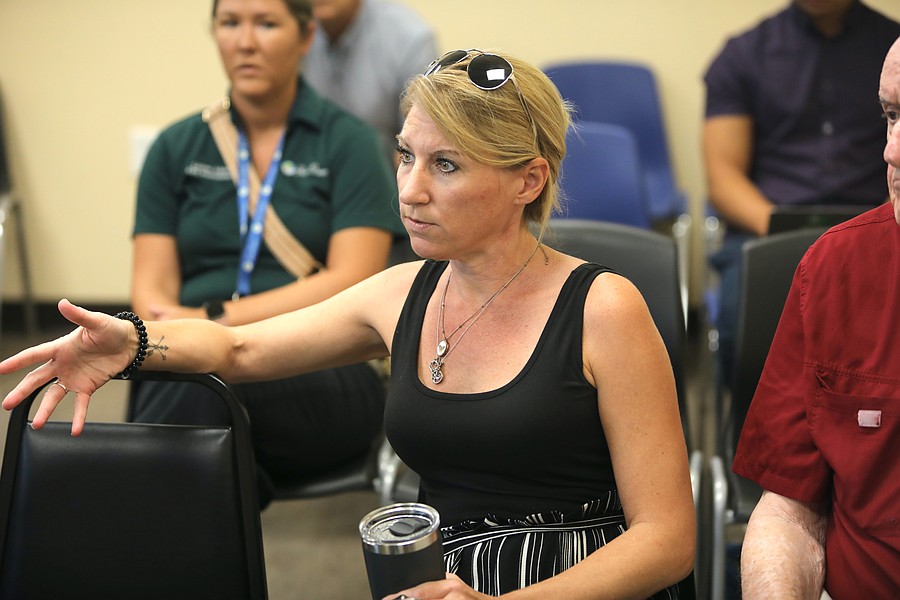
Palm Cost Vice Mayor Theresa Carli Pontieri answers a question from Congressman Randy Fine about the city's wastewater issues. Photo by Brent Woronoff
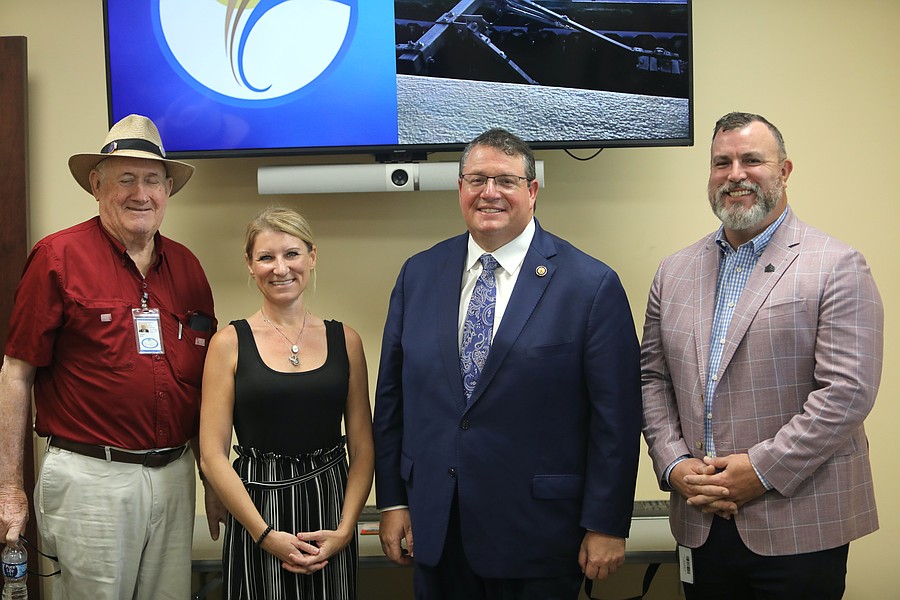
Councilman David Sullivan, Vice Mayor Theresa Carli Pontieri, Congressman Randy Fine and Councilman Ty Miller pose after a tour of Palm Coast's Wastewater Treatment Plant 1. Photo by Brent Woronoff
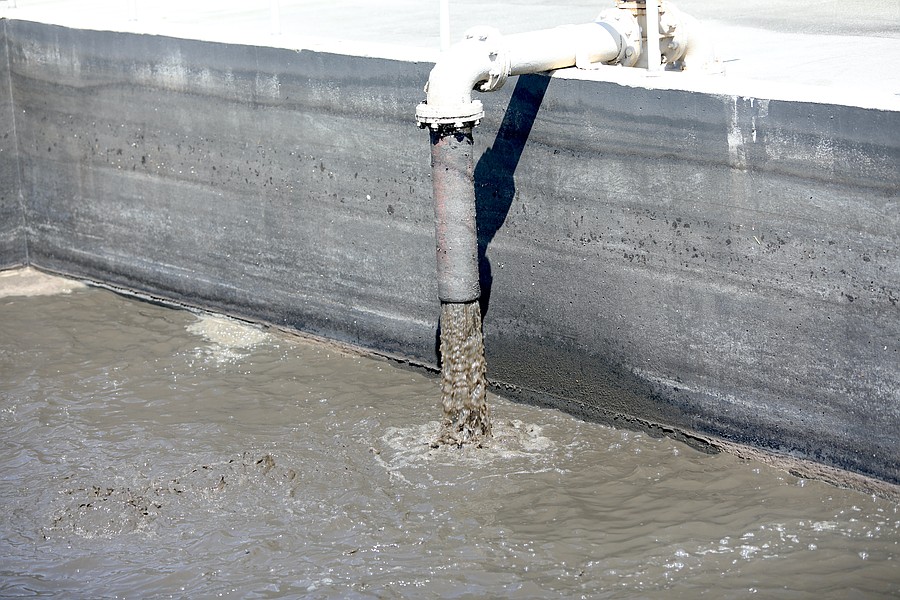
A pipe releasing liquid sludge at Palm Coast's Wastewater Treatment Plant 1. Photo by Brent Woronoff
Congressman Randy Fine views a presentation at Palm Coast's Wastewater Treatment Plant 1. Photo by Brent Woronoff
Congressman Randy Fine did not close the door on helping Palm Coast in its quest to fund upgrades to its aging Wastewater Treatment Plant 1, but he didn’t leave that door wide open either.
Fine’s first stop in his trip to Flagler County on Wednesday, Aug. 13, was at the city’s older and larger treatment plant at 26 Utility Drive. The plant serves nearly all of the city’s residents south of Palm Coast Parkway and east of U.S.1.
When the treatment plant was built in the late 1970s by ITT, it had a capacity of 300,000 gallons a day. It now has a capacity of 6.83 millon gallons a day, and the city is planning to expand capacity by 4 million gallons to 10.83 million gallons a day. They city is currently finishing up the design, Palm Coast Wastewater and Reuse Manager Danny Ashburn said. The plans also include a treatment upgrade to the Advanced Water Treatment process.
But Palm Coast is woefully short on funds to pay for the needed projects.
The city has recently received a total of about $5 million from the state for a new equalization tank and critical upgrades to the plant. The AWT conversion is currently unfunded.
As Ashburn was showing Fine, city officials and the media a PowerPoint detailing the plant’s operation, Vice Mayor Theresa Carli Pontieri described the city’s dire needs.
“Last year, we raised our impact fees in the capacity piece to the statutory max, and we also had to raise utility rates on our users. We're looking down the pipe of a roughly $280 million bond right now, which is what we're trying to avoid, but that's what we're faced with,” Pontieri said.
Along with over $100 million in future projected impact fees that is what is needed to provide capacity for 19,000 future homes that there are entitlements for, Pontieri said.
“That's not the total amount for every project that would help our system,” she added. “That is leaving a lot of projects out, but we decided we didn't want to raise rates any higher on our residents right now.”
The plant has an average daily capacity of 6.5 million gallons, which is 300,000 gallons from its capacity.
The recent expansion and upgrades to Wastewater Treatment Plant 2 at 400 Peavy Grade off U.S. 1, has helped. Treatment Plant 2 now has a capacity of 4 million gallons a day. With its added capacity, about 800,000 gallons of wastewater per day from Plant 1 can now be redirected to Plant 2.
The two plants serve the entire 110,000-plus residents of Palm Coast.
The regular process is to send the treated wastewater for reuse for irrigation purposes for golf courses, resident lawns and common areas. But city staff estimated that the plant had to release treated and dechlorinated wastewater into the intracoastal two days last year.
“We actually put 14 million gallons through this plant in one day during Hurricane Milton last year,” Ashburn said.
Fine noted that while millions of gallons flowing into the waterways can have negative effects with nitrogen and phosphorus feeding algae, the release during a storm is mostly rainwater.
“If you think about it, during a hurricane people generally aren’t running their washing machine. They’re not flushing the toilets, they’re evacuating, so that’s when stormwater infiltrates. It’s not wastewater.”
Fine said fundamentally, according to his philosophy of government, utilities are a local responsibility.
“We have this thing called home rule,” he said. “With the ability to home rule, there are options. There's the impact fees and the user fees and state (representatives) often go and get appropriations projects to help these kinds of things.”
Which is not to say the federal government can’t help. In fact, Fine recently obtained $5,160,000 in federal funds for the town of Bunnell for its wastewater treatment project.
The federal government can help and I'd be happy to help. My primary interest though are the things that extend beyond Palm Coast. So, when sewage gets dumped into the intracoastal, that doesn't just affect Palm Coast.
— CONGRESSMAN RANDY FINE
“The federal government can help and I'd be happy to help,” he said. “My primary interest though are the things that extend beyond Palm Coast. So, when sewage gets dumped into the intracoastal, that doesn't just affect Palm Coast that affects all of Flagler County. That doesn't just affect all of Flagler County, that affects the whole east coast of Florida. So that's really where the justification can come in. Making sure that the next 20,000 homes in Palm Coast have sewer, that's fundamentally a Palm Coast responsibility. But making sure we're not polluting the environment of Florida — the Intracoastal, that’s a very unique thing that we have here in Florida.
“People come (to Florida) because they want to live near the ocean or the intracoastal or the St Johns (River),” he said. “That's why they come here. We have to continue to allow the state to develop, but we have to make sure we do it responsibly, and that's why these things matter.”
Pontieri said she is a full believer in autonomy and home rule.
“The state, though, has implemented laws that are forcing development on us to help make affordable housing ... but at the same time not providing that funding for infrastructure that development is causing, so it’s a hard contradiction that we’re having,” she said.
Councilmen Ty Miller and David Sullivan, Acting City Manager Lauren Johnston and new Utility Director Brian Roche were also in attendance at the presentation. Afterward, Dan Niemann, the treatment plant’s lead operator, led Fine and company on a tour of the facility.
When asked what Palm Coast is looking for federally to help the city’s wastewater situation, Pontieri said, “I think we're really looking for eyes and ears on the issue, not just this year, but in future years, because we're going to continue to have to invest in our system — just to make sure that again we're exhausting all funding sources, rather than having to go just to our residents to shoulder a lot of the burden of this growth.
“And, to the congressman's point, to make sure this is connected environmentally, to make sure that this isn't just a funding source to improve our condition, but also improve the conditions for our waterways on Florida's East Coast. I think that that's something that the congressmen seems to be very interested in. And obviously, that's something that Palm Coast is very concerned about as well,” she said.