- March 18, 2026

As of April 1, 2025, Palm Coast has 18,883 residential units in the pipeline, some from development orders issued in the 1990s.
Of those, 13,335 have a final plat and technical site plan approval and could go into the ground immediately. The data was part of a presentation to the Palm Coast City Council on Aug. 12 that detailed the development approval process at the city and the city’s remaining waste water treatment capacity.
Deputy Development Director Ray Tyner said the approval process for just the subdivision platting phase – not including technical site plans or final plats – can take up to three years on its own. A whole team of staff members from different departments review the applications, he said.
“When we're doing a presentation,” Tyner said, “you're probably just seeing one or two people, and it seems pretty quick. But this is a very long process.”
The approved projects include a remaining 1,820 units in the Town Center Development of Regional Impact, 3,104 units in the Palm Coast Park DRI, 6,829 units in a mix of other projects approved between 1999 and 2025, and over 7,000 remaining ITT lots. The Town Center and Palm Coast Park DRIs were approved in 2004.
The 7,080 remaining ITT lots would not need to go through the city’s approval process and could feasibly begin work immediately, senior planner Jose Papa said.
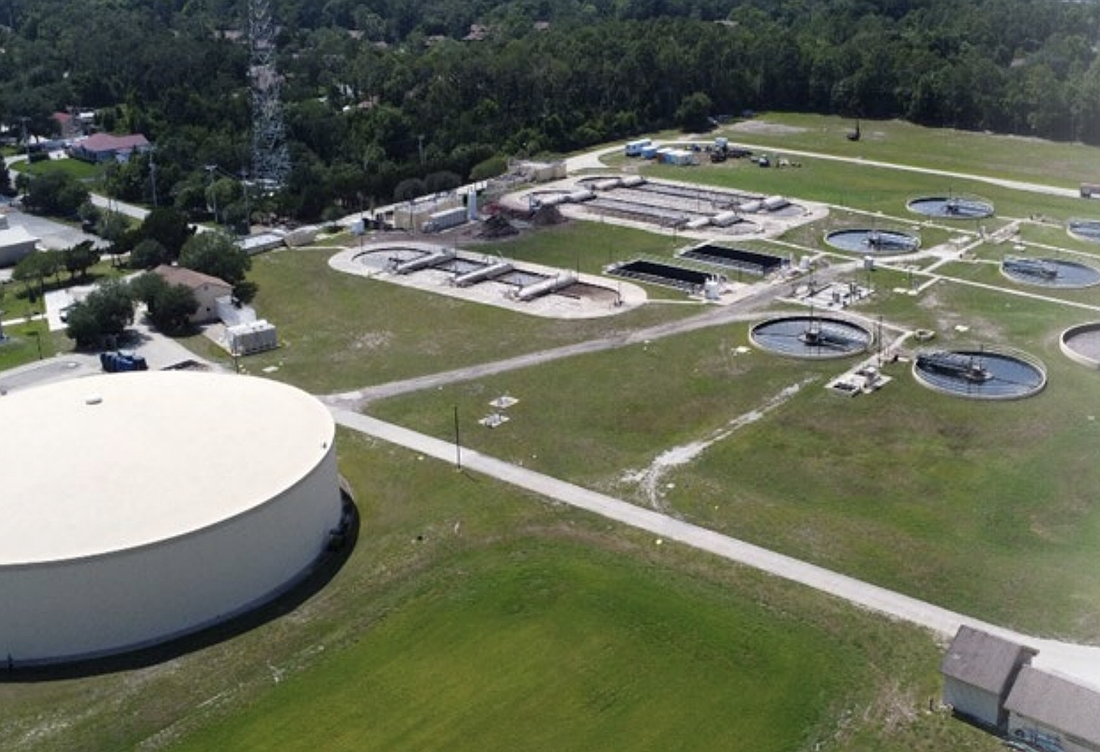
Palm Coast Utility Deputy Director Peter Rousell said that despite these number of projects, the city’s waste water treatment plants will keep up with the demand, once the planned expansions are completed.
Over 13,300 of the approved projects will be serviced by Waste Water Treatment Facility 1 while the remaining 5,400 units will be served at WWTF 2.
WWTF 1 has a current average daily flow of 6.3 million gallons per day, and needs another 2.4 million gallons per day to support the additional 13,300 units. But, Rousell said, the city has planned an expansion to WWTF 1 that will be completed in 2028 and bring the facility’s permitted capacity up to 10.8 MGPD.
That would leave capacity for an additional 2 MGPD, or for an estimated 11,496 additional units, he said.
The recent upgrades to WWTF 2 added an additional 1.4 MGPD to its capacity, bringing its total capacity to 4 MGPD. That leaves 1.6 MGPD, or room for 8,974 additional units.
Vice Mayor Theresa Carli Pontieri wanted to know what the city’s current capacity was without the expansion. Rousell did not have that number on hand, but, Tyner said, as part of the application approval process, utility staff have to sign off that there is currently capacity for the developments.
Staff would not recommend approval to any project that the city does not have waste water capacity for, he said.
“If there was not capacity at that stage of the game, then we would not issue a development order,” Tyner said.
Councilman Ty Miller said the city still needs to complete its expansion and other other projects but it was good to know projects are not approved without having capacity.
“This, to me, paints a less bleak outlook in terms of capacity,” Miller said, “once we get through these expansions that we need to do.”