- March 17, 2026

Mayor Mike Norris said the treatment plant's expansion and upgrade "is a significant step." Photo by Brent Woronoff
Wastewater Treatment Plant 2 Chief Operator Mike Baldwin provided a tour of the facility. Photo by Brent Woronoff
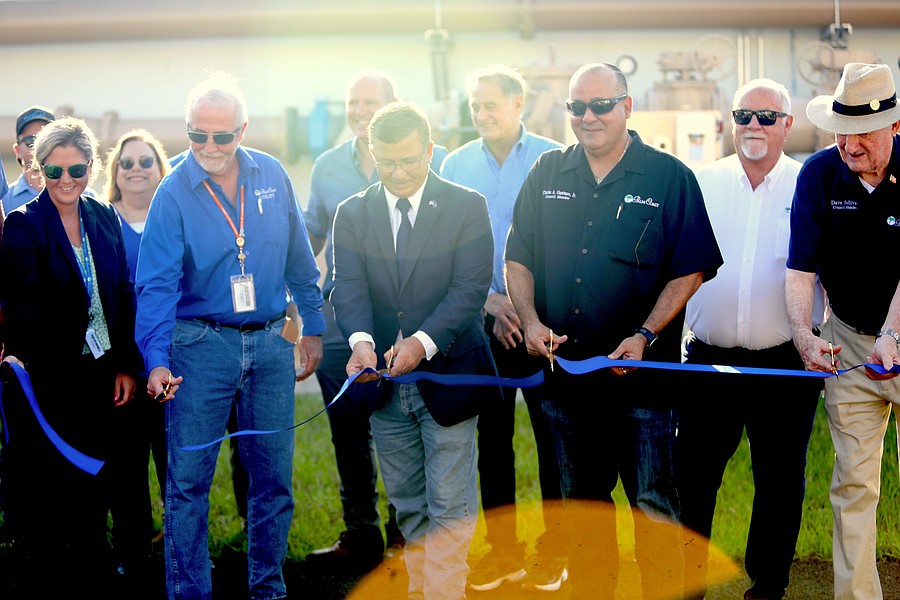
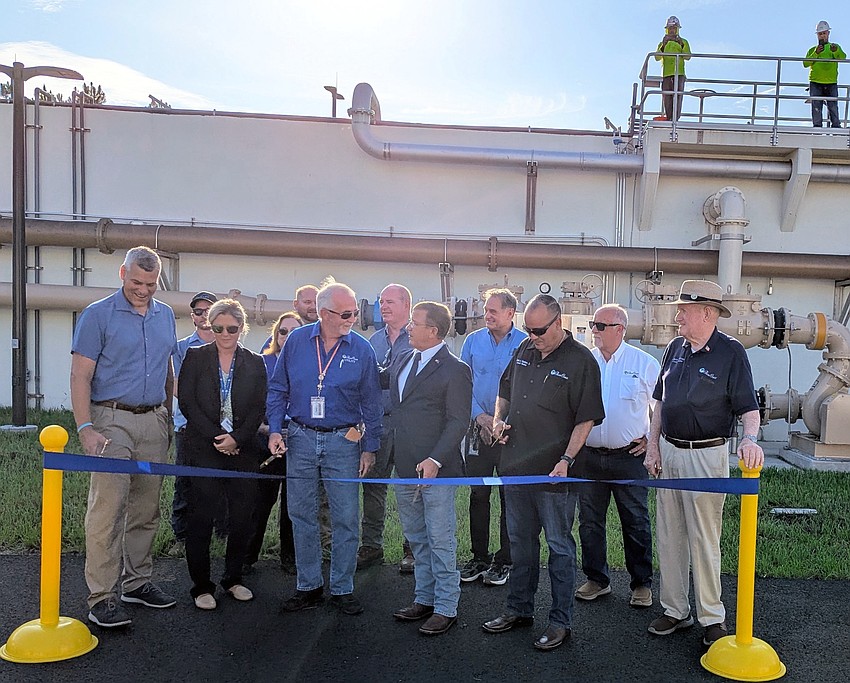
Palm Coast city officials cut the ribbon on the expanded Wastewater Treatment Plant 2. Photo by Brent Woronoff
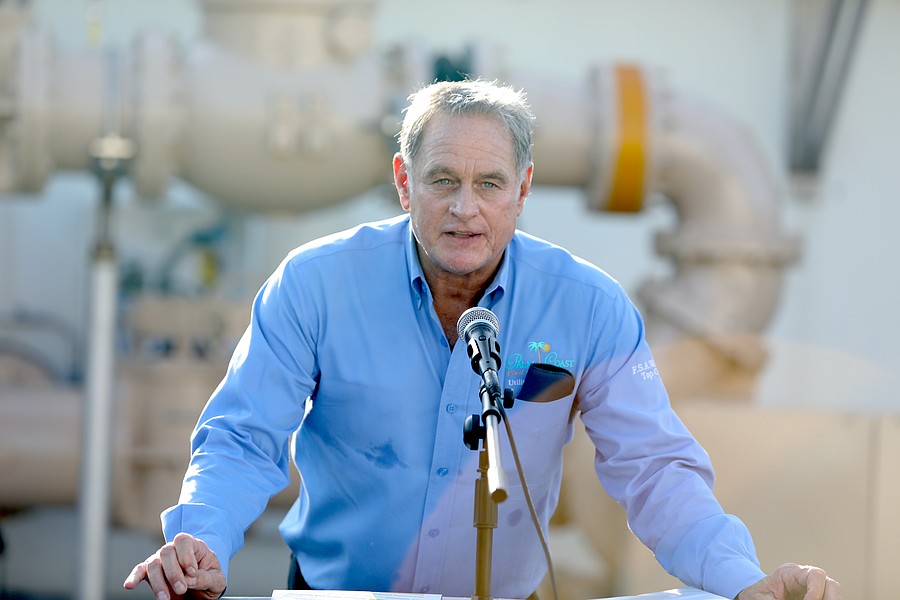
Palm Coast Deputy Utility Director Pete Roussell. Photo by Brent Woronoff
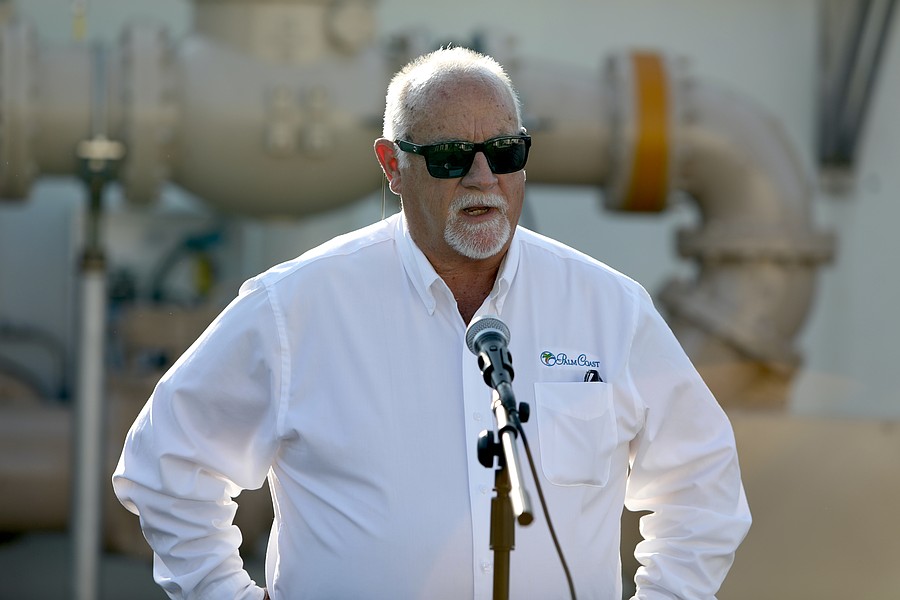
Wastewater Utilities Systems Manager Danny Ashburn. Photo by Brent Woronoff
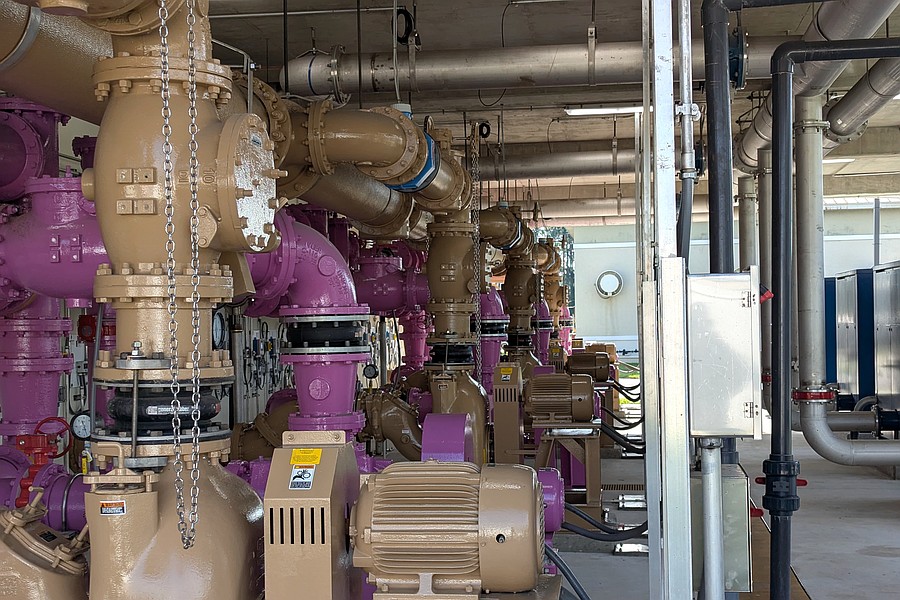
The purple pipes contain reclaimed water; brown is for inflows. Photo by Brent Woronoff
The City of Palm Coast held a ribbon cutting Monday, Aug. 4, for the completion of the expansion project at the city’s Wastewater Treatment Plant 2.
The expansion of the plant at 400 Peavy Grade off U.S. 1, which included the installation of advanced systems, doubles the capacity of the plant from 2 million to 4 million gallons per day.
“This is a significant step,” Mayor Mike Norris said at the ribbon cutting ceremony. “This is going to greatly improve our ability to process water that can convert flows over from Plant 1 (on 26 Utility Drive) over here and vice versa. And it's all going to continue to expand with the money we're investing in our infrastructure.”
To comply with a consent decree from the Florida Department of Environmental Protection, Palm Coast must expand capacity at Treatment Plant 1 by 2028. The city plans to expand the older treatment plant from 6.83 million gallons per day to almost 10 million gallons per day. That project is currently in the design phase.
The Florida Legislature recently approved $2.5 million for a new equalization tank that will relieve overflow pressure at Treatment Plant 1, and another $2.5 million to assist with critical upgrades at that facility.
Pete Roussell, the city’s deputy utility director, said the newly constructed exansion of Treatment Plant 2 “represents not only progress to infrastructure, but also our community's commitment to growth, sustainability and public health.
Today is about more than just pumps, pipes and concrete,” he said. “It's about preparing and planning for the future.
— PETE ROUSSELL, Palm Coast deputy utility director
“Today is about more than just pumps, pipes and concrete,” he said. “It's about preparing and planning for the future. … As our population increases, so too does the need for resilient systems that support our daily lives and protect the environment that we all share.”
Roussell said the city is “now able to treat significantly more wastewater safely, efficiently and with higher environmental standards.”
The project broke ground in 2022 and was funded through the State Revolving Fund Loan Program, which provided financing in the amount of $30,859,801.76 at a low interest rate of 0.67%, according to a city press release. The program, administered by the FDEP, offers affordable financing to communities for water infrastructure improvements.
In addition to doubling capacity, the expansion allows up to 800,000 gallons per day to be redirected from Wastewater Treatment Plant 1, according to city officials. The older plant has faced capacity strain during heavy rainfall.
The reclaimed water from Treatment Plant 2 is used for irrigation with excess safely discharged into nearby wetlands. The plant’s Advanced Wastewater Treatment technology uses a membrane bioreactor process that filters out most debris before flows are treated. The process is moved through “trains” of tanks with live microorganisms doing much of the work by feeding on organic waste.
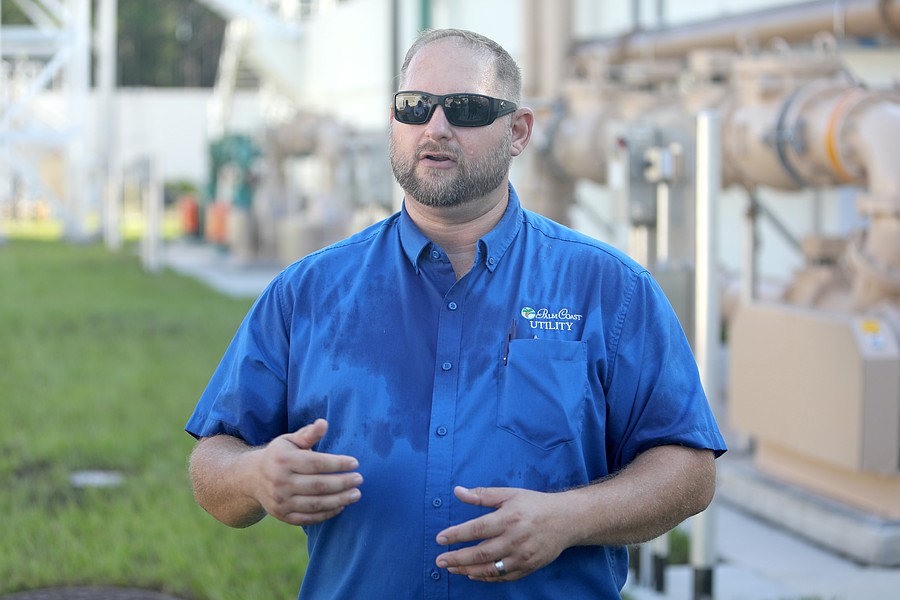
Mike Baldwin, the chief operator of Treatment Plant 2, provided a tour of the facility.
The two-story plant is divided into four areas with each providing a different purpose in the treatment process, Baldwin said, providing air, filtration or equalization storage.
“The first section is the EQ (equalization) tank that will hold around 400,000 gallons on each side,” Baldwin said. “There are two trains for each of these tank systems. So, when all the inflow will come into the EQ tanks, it starts going through the treatment process and then to the filtration area.”
Pumps and blowers help move the water.
Baldwin said the four different trains of treatment all work around the same flows in the same design but they're all separate.
“So, in case we have to do maintenance on one of them, we can rely on the other three trains to maintain,” he said.
Baldwin said staff has to maintain the population of mocroorganisms.
“Too many microorganisms, they start getting combative. So, we will waste some,” he said. “And that's where, in the back of the plant, we will actually process into a biosolids material, and that can get sent out and turned into a fertilizer.”
The newly equipped plant is the new way of treating wastewater, said Danny Ashburn, the city’s wastewater utilities systems manager.
“This plant represents the future,” he said. “If you've ever been over to our other plant, you can see how massive and expansive it is. This type of treatment right here is a smaller footprint. Less property and more advanced treatment helps the environment and the future growth of Palm Coast.”